The diplomatic rift between Lebanon and Ukraine has reached a flashpoint over allegations that the Ukrainian embassy in Beirut provided sanctuary to a suspected Mossad operative. This confrontation goes beyond a simple breach of protocol. It reveals a deep-seated anxiety within the Lebanese security apparatus regarding foreign intelligence penetration during a period of extreme regional volatility. While the Lebanese General Security Directorate remains tight-lipped about the specific evidence, the mere accusation has forced a chilling effect on diplomatic relations that were already strained by the geopolitical realignment caused by the ongoing conflict in Eastern Europe.
The Breach of Sovereign Trust
Lebanese authorities contend that an individual sought for questioning in connection with Israeli intelligence activities was traced directly to the Ukrainian diplomatic mission. This claim is not made lightly. In Lebanon, where the shadow of Mossad is viewed as an omnipresent threat to national stability, any suggestion that a friendly nation is harboring agents of the "Zionist entity" triggers immediate and severe legal and diplomatic consequences. The Ukrainian embassy, for its part, has issued a categorical denial, characterizing the accusations as a "provocation" designed to damage its standing in the Arab world.
The tension is palpable. Security cordons around the embassy have tightened, and the usual channels of intelligence sharing between Beirut and Kiev have effectively frozen. This is a high-stakes standoff. If Lebanon produces concrete proof, it could lead to the expulsion of diplomats and a permanent rupture in ties. If the evidence is flimsy, it suggests that Lebanese internal security is being manipulated by factions more interested in regional power plays than in actual counter-espionage.
Why Kiev Became a Target for Suspicion
Ukraine’s relationship with Israel has long been a subject of intense scrutiny in the Middle East. While Kiev has sought Israeli military hardware and air defense technology to counter Russian aggression, it has also had to balance this with its need for support from Arab nations. This delicate dance has made Ukrainian diplomatic missions fertile ground for rumors of clandestine cooperation.
Lebanese intelligence sources, speaking on condition of anonymity, suggest that the suspect in question is not a high-profile case officer, but rather a technical asset—someone capable of facilitating encrypted communications or managing local informant networks. The theory being floated in Beirut is that the Ukrainian embassy provided a "safe house" environment under the guise of diplomatic immunity, a tactic that, if true, would be a flagrant violation of the Vienna Convention on Diplomatic Relations.
The Mechanics of Diplomatic Cover
Diplomatic missions are legally inviolable. This means local police cannot enter the premises without the express permission of the head of the mission. It is the perfect blind spot for intelligence work. For a country like Lebanon, which is currently a patchwork of competing influences from Hezbollah, Iran, and the West, maintaining the integrity of these diplomatic zones is nearly impossible.
The suspected agent reportedly entered the country on a European passport, a common tactic for intelligence officers seeking to avoid the scrutiny applied to Israeli or American nationals. The trail went cold for several weeks until signal intelligence allegedly placed the individual’s hardware within the vicinity of the Ukrainian mission. This is where the narrative splits. Ukrainian officials argue that the presence of high-end communication equipment is a standard requirement for any embassy operating in a high-risk environment. Lebanese officials see it as a smoking gun.
Domestic Pressure and the Hezbollah Factor
One cannot analyze Lebanese security decisions without acknowledging the role of Hezbollah. The group maintains its own sophisticated counter-intelligence wing that often operates in tandem with—or superior to—official state organs. For Hezbollah, any Western-aligned embassy is a potential hub for Mossad or CIA activity. The pressure on the Lebanese government to act decisively in this case likely stems from a need to satisfy these internal power brokers.
By targeting the Ukrainian embassy, the Lebanese state avoids a direct confrontation with larger powers like France or the United States, while still sending a clear message: no one is exempt from scrutiny. It is a strategic move that serves domestic political interests as much as national security. The Ukrainian government, currently fighting for its own survival, finds itself an easy target in this Lebanese internal drama.
The Cost of Neutrality
Ukraine has spent the last few years trying to prove it is a reliable partner to the Global South. It has sent grain ships to Lebanon during its economic collapse and sought to build a narrative of shared struggle against imperial aggression. These accusations of sheltering Mossad agents threaten to undo all that soft power work. If the Lebanese public begins to view Ukraine as a proxy for Israeli interests, Kiev loses its foothold in the Levant.
The Evidence Gap
Currently, no public evidence has been presented to the international community. This is typical of Lebanese security operations, which prefer to conduct "trial by leak" rather than open court proceedings. Without a formal presentation of facts, the situation remains a war of narratives. We are seeing a classic intelligence standoff where the truth is secondary to the strategic utility of the accusation itself.
The suspect's identity remains a closely guarded secret. Is it a dual-national? A "deep cover" asset? Or perhaps just a private security contractor who got caught in the wrong place at the wrong time? In the world of Middle Eastern espionage, the distinction is often academic. Once the label of "Mossad" is attached to an individual, the legal and social machinery of the state moves to crush them.
Regional Implications of the Standoff
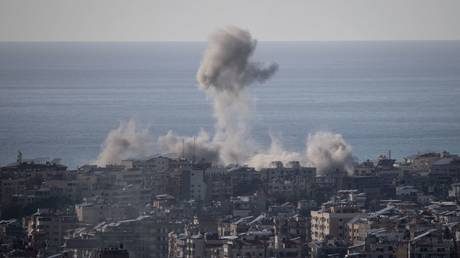
This incident does not exist in a vacuum. It happens against the backdrop of increased Israeli strikes on targets within Lebanon and Syria. Each time an Israeli missile hits a target with precision, the Lebanese security services look for the "human element"—the ground-based spotter or informant who provided the coordinates. The hunt for these individuals is relentless and often leads to the doorsteps of foreign nationals and diplomatic missions.
The Ukrainian embassy is now a focal point for this paranoia. Other missions in Beirut are undoubtedly watching this play out with concern. If Lebanon successfully forces the hand of the Ukrainian mission, it sets a precedent for how other "suspected" embassies might be treated. The thin veil of diplomatic immunity is being tested in a way we haven't seen in Beirut for decades.
A Fracture in International Law
The Vienna Convention is the bedrock of global diplomacy, but it was written for a world that didn't include the hyper-integrated, digital-first intelligence gathering of 2026. When a mission is accused of using its sovereign status to hide an active intelligence threat, the host nation has very few tools beyond declaring people persona non grata. Lebanon is pushing those boundaries. By publicly accusing the embassy of sheltering a suspect, they are effectively bypassing diplomatic channels to incite public pressure.
The Road Ahead for Beirut and Kiev
There is no easy exit from this situation. For Ukraine to hand over anyone would be an admission of guilt and a betrayal of diplomatic norms. For Lebanon to back down without an arrest would be a sign of weakness that the current government cannot afford. The most likely outcome is a quiet departure—a "voluntary" exit of the suspect under the cover of night, followed by a series of low-level diplomatic expulsions to save face on both sides.
But the damage to the relationship is done. Ukraine’s attempt to be a neutral, supportive actor in the Middle East has hit a wall of regional reality. Lebanon has shown that its priority is internal security and the appeasement of its most powerful factions, even at the cost of its international standing.
The focus now shifts to the Lebanese judiciary. If a formal indictment is issued, the Ukrainian government will be forced to choose between protecting a single individual or maintaining its presence in one of the most critical geopolitical hubs in the world. In the cold math of international relations, individuals are often sacrificed for the sake of the mission. Whether this suspected agent is a phantom or a reality, their presence has already changed the trajectory of Lebanese-Ukrainian relations.
The shadows in Beirut are long, and they are growing darker. Every foreign national working in a diplomatic capacity is now looking over their shoulder, wondering if they will be the next one named in a General Security report. This isn't just about Ukraine or Mossad; it's about the total erosion of the safe spaces that once allowed for the messy, necessary work of international diplomacy. The walls of the embassy in Beirut are no longer thick enough to keep out the storm of regional politics.