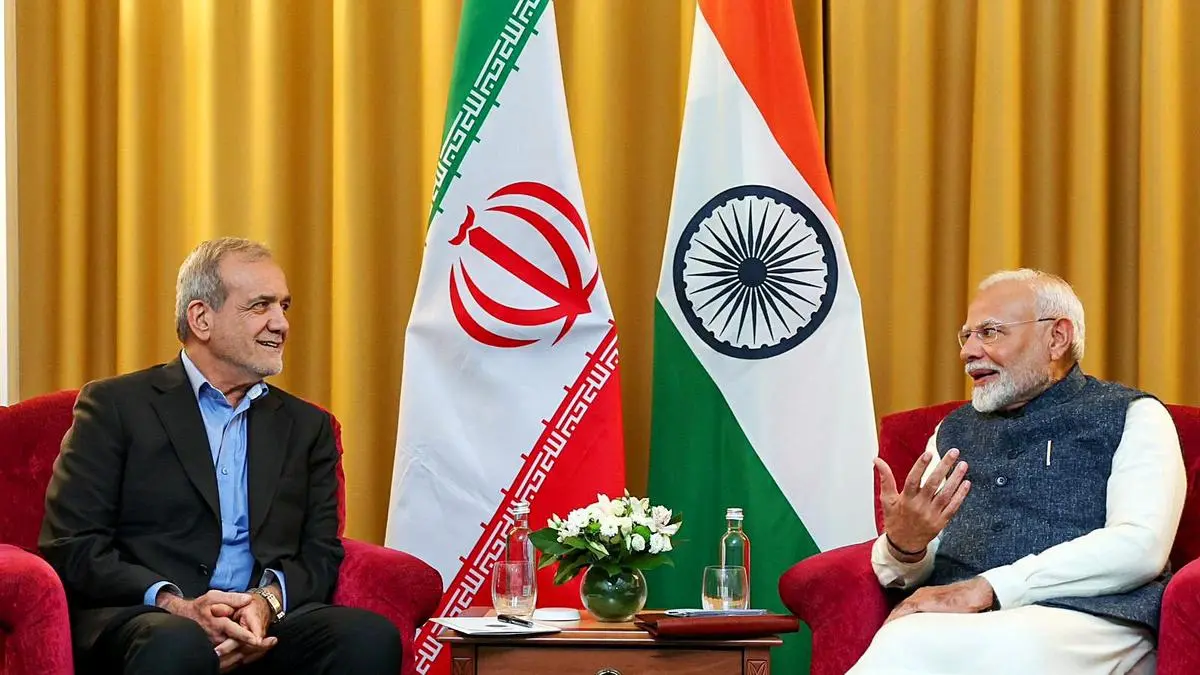
A phone vibrates on a mahogany desk in New Delhi. On the other end, 1,500 miles away in Tehran, a voice crackles through the encrypted line. For most of the world, this is a "diplomatic engagement" or a "bilateral consultation." But for the merchant sailor navigating the narrow, suffocating waters of the Strait of Hormuz, or the small-business owner in Mumbai waiting for a shipment of bitumen that is three weeks late, this phone call is the difference between a livelihood and a catastrophe.
President Masoud Pezeshkian of Iran and Prime Minister Narendra Modi were not just exchanging pleasantries. They were attempting to sketch a map of a world that hasn't been built yet.
The Middle East—or West Asia, depending on which side of the map you are standing on—is currently a jigsaw puzzle where the pieces have been melted by the heat of old grievances. We watch the news and see the explosions. We see the rising oil prices at the local pump. What we don't see are the invisible threads of the BRICS alliance being pulled tight, trying to weave a safety net over a region that feels like it is falling into an abyss.
The Architect and the Anchor
Pezeshkian is a man trying to manage a storm. He inherited a country at a crossroads, squeezed by sanctions and isolated by decades of frost. When he speaks to Modi, he isn't just seeking an ally; he is seeking an anchor. India represents a specific kind of gravity. It is the world’s most populous democracy, a growing economic titan, and, crucially, a founding member of the expanded BRICS family.
The proposal Pezeshkian laid out during this call was bold: a regional security framework.
Think of it as a neighborhood watch for the world’s most volatile cul-de-sac. For decades, the security of this region was outsourced to Western powers. The "blue-water" navies of the West kept the lanes open, or closed them, depending on the geopolitical weather. But Pezeshkian’s pitch suggests a shift in the wind. He is arguing that the people who live in the house should be the ones to lock the doors.
He wants BRICS—Brazil, Russia, India, China, South Africa, and the new invitees—to step into the role of the mediator.
It is a radical departure from the status quo. If you are an Indian exporter, the status quo is terrifying. You send your goods through the Red Sea or the Persian Gulf, and you pray that a drone doesn't find your hull. You watch the insurance premiums on your shipping containers skyrocket until your profit margin evaporates. When the President of Iran suggests a framework to end hostilities, he isn't just talking about grand strategy. He is talking about the cost of bread in Tehran and the price of gas in Gujarat.
The BRICS Weight
BRICS used to be a catchy acronym coined by a bank. Now, it is a heavy reality.
When Iran looks at BRICS, it sees a shield. When India looks at BRICS, it sees a bridge.
During the call, Pezeshkian emphasized the role BRICS could play in ending the "unjust" hostilities plaguing the region. He wasn't just referring to the immediate fires in Gaza or the tensions with Israel. He was speaking to a systemic feeling in the Global South: the sense that the current international order is a suit that doesn't fit them.
India, however, plays a delicate game. Modi’s "Vishwa Mitra" (Friend of the World) policy means India doesn't want to pick a side in a street fight. It wants to stop the fight so it can get back to business. This is where the human element gets messy. Diplomacy is often portrayed as a game of chess, but it’s more like a group of people trying to hold a sheet of glass in a windstorm. If one person lets go, everyone gets cut.
The Ghost in the Machine: Chabahar
Underlying all this talk of security frameworks is a physical, concrete project: the Port of Chabahar.
To the casual observer, it’s just a patch of coast in southeastern Iran. To India, it is a lung. It is the way India breathes into Central Asia, bypassing the logistical stranglehold of Pakistan. For Iran, it is a lifeline to the world’s fastest-growing major economy.
When Pezeshkian and Modi talk, they are talking about the cranes moving at Chabahar. They are talking about the International North-South Transport Corridor (INSTC).
Consider the journey of a single crate of spices. Historically, it might have to travel a winding, expensive route through the Suez Canal. With a stable, secure West Asia and a functional Chabahar port, that crate moves faster, cheaper, and more reliably.
But a port is only as good as the water it sits in. If the region is a theater of war, the port is a graveyard. This is why Pezeshkian’s proposal for a security framework is so vital. You cannot build a trade route through a minefield.
The Stakes of the Silence
What happens if these talks fail?
The "invisible stakes" are the families who will never meet, the businesses that will never open, and the regional stability that remains a mirage. We have become accustomed to a world where the United States is the sole arbiter of peace. But the call between Tehran and New Delhi suggests that the monopoly on peace-making is expiring.
Pezeshkian is betting that India’s voice carries enough weight to tilt the scales. He is betting that the economic gravity of the BRICS nations can pull the region away from the brink of a wider, more devastating conflict.
It’s easy to be cynical. It’s easy to say that these are just words exchanged between two men in high-backed chairs. But words are the precursors to treaties, and treaties are the precursors to the absence of war.
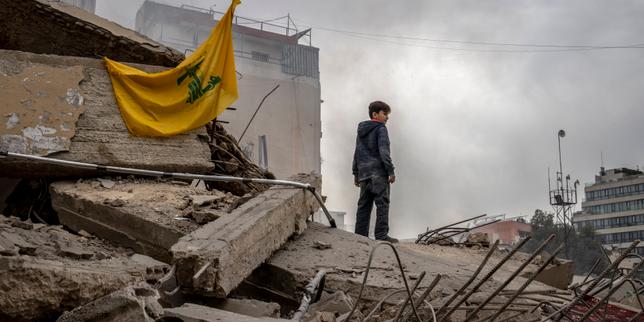
The conversation touched on the horrors in Gaza, the instability in Lebanon, and the general sense that the Middle East is a powder keg with a very short fuse. Pezeshkian’s call for a BRICS role in ending hostilities is an admission of a hard truth: the old ways of keeping the peace aren't working.
The New Architecture
India’s response has been characteristically measured. Modi reiterated India’s commitment to peace and its desire for a quick resolution to the humanitarian crises. But the subtext is clear. India is no longer just a spectator in the Middle East. It is a stakeholder.
The security framework Pezeshkian proposes is not just about soldiers and ships. It is about a different kind of sovereignty. It is about the idea that the East can solve its own problems without waiting for a directive from the West.
It is a frightening prospect for some. For others, it is the only way forward.
Imagine the map again. Not the one with the borders drawn in 1945, but the one being drawn today. It is a map where the trade routes flow horizontally across Eurasia, where the ports of Iran and the markets of India are stitched together by a shared interest in survival.
The phone call ended. The mahogany desk in New Delhi went silent. The crackle on the line in Tehran faded. But the proposal remains on the table, a blueprint for a structure that might—just might—hold the weight of a billion dreams.
Whether this framework becomes a reality or remains a footnote in a diplomatic archive depends on whether the world is ready to let the East lead itself.
The map is being redrawn. The ink is still wet.
We are all living in the spaces between the lines.
India and Iran are holding the pen, and the rest of the world is holding its breath.
The sailor in the Strait of Hormuz looks at the horizon. The water is calm, for now. He doesn't know about the security framework or the BRICS role in ending hostilities. He only knows that he wants to get home.
In the end, that is the only security framework that actually matters.
The true test of the Pezeshkian-Modi dialogue won't be found in a press release. It will be found in the arrival times of ships, the price of grain in a marketplace, and the silence of guns that were supposed to fire, but didn't.