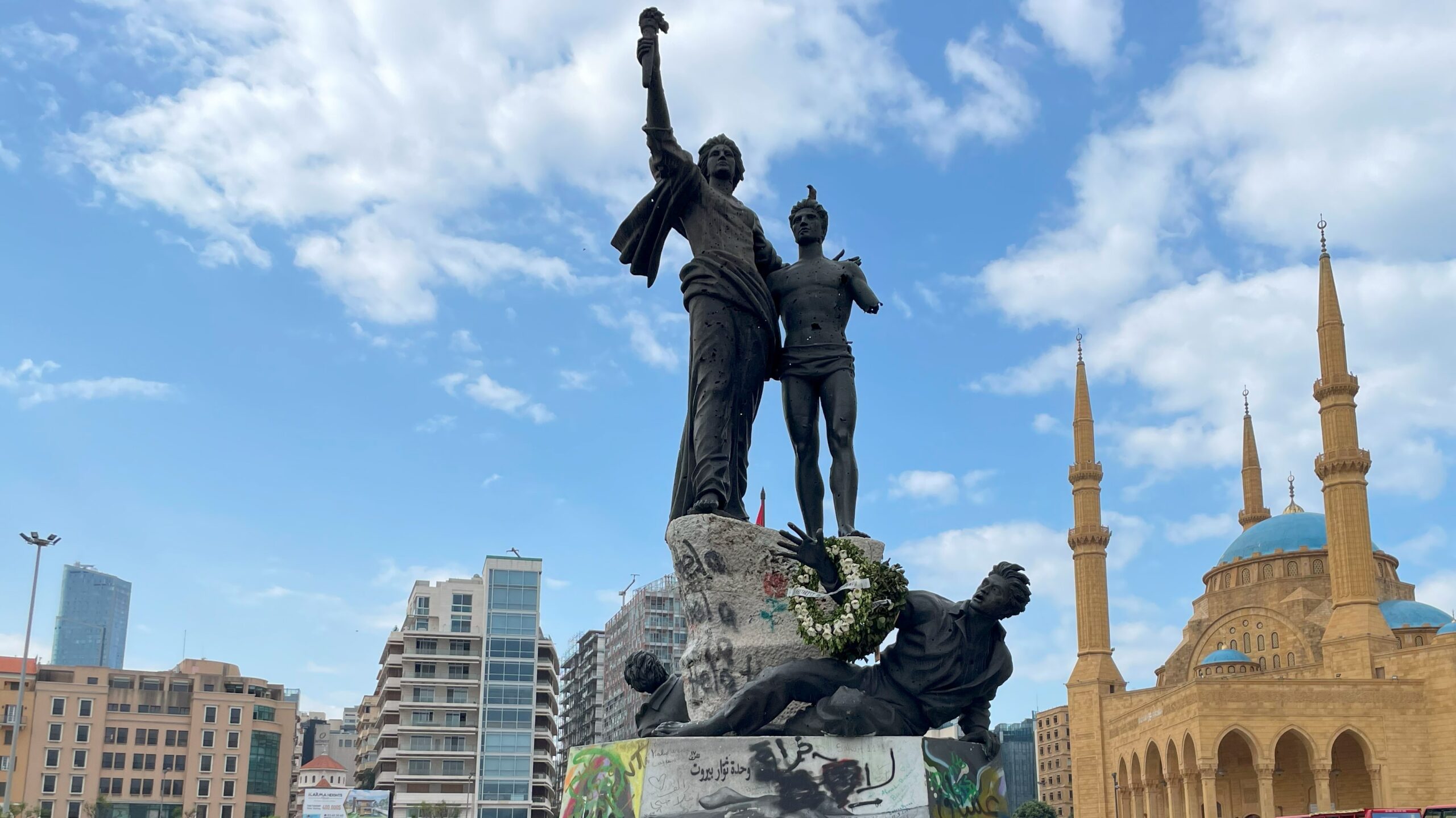
Walking through the streets of Beirut today feels like stepping into a glitch in time. The shattered glass, the hum of private generators, and the anxious scanning of the horizon for smoke aren't just modern inconveniences. They're echoes. If you speak to anyone who lived through the 1970s or the 1980s, they'll tell you the same thing. The smell of the air is the same. The rhetoric from the political elite is the same. Even the sense of abandonment by the international community feels pulled from a decades-old script. Lebanon isn't just facing a crisis. It's living through a hauntingly precise repeat of its own darkest chapters.
The current escalation between Israel and Hezbollah, the total collapse of the banking sector, and the paralysis of the state aren't isolated accidents. They're the result of a system designed to fail its people while protecting its masters. People often ask why a country with so much talent and culture keeps hitting the same brick wall. The answer is uncomfortable. The civil war that "ended" in 1990 never actually stopped. It just changed clothes. The warlords traded their fatigues for Italian suits and moved from the bunkers to the parliament building. You might also find this related story useful: Strategic Asymmetry and the Kinetic Deconstruction of Iranian Integrated Air Defense.
The Myth of the Post War Recovery
We were told for years that Lebanon was the "Phoenix of the Middle East." It's a tired cliché that locals have grown to hate. The idea was that after the 15-year civil war ended, the country would rebuild and become a financial hub again. Under the leadership of figures like Rafik Hariri, billions flowed in. Skyscrapers went up in Downtown Beirut. But that recovery was built on a foundation of sand. It was a massive Ponzi scheme disguised as state building.
The central bank, Banque du Liban, spent decades paying out high interest rates to local banks to attract US dollars. These dollars were then used to prop up a fixed exchange rate and fund the wild spending of a corrupt government. When the music stopped in 2019, the life savings of millions of Lebanese citizens simply evaporated. This wasn't a "financial crisis" in the way Westerners think of one. It was a heist. It’s the same greed that fueled the militias in the 70s, now channeled through ledgers and bank accounts. As reported in recent reports by NPR, the effects are significant.
Sovereign State or Proxy Battlefield
Lebanon has always been a place where regional powers settle their scores. During the 1970s, it was the PLO, Syria, and Israel. Fast forward to 2026, and the players have shifted, but the game remains identical. Hezbollah operates as a state within a state, possessing a military wing more powerful than the national army. This creates a dual-sovereignty trap. The official government has the responsibility of a state but none of the authority.
When Hezbollah entered the current fray following the events in Gaza, they didn't ask the Lebanese people for permission. They didn't consult the parliament. They acted based on a regional "Unity of Arenas" strategy directed by Tehran. On the other side, Israel’s military response has followed a predictable and devastating pattern seen in 1982 and 2006. They strike infrastructure. They displace hundreds of thousands. They claim they're targeting militants while the civilian fabric of the country is torn apart.
History repeats because the structural causes were never addressed. In 1982, the goal was to push out the PLO. Today, it's to push Hezbollah back from the Litani River. The geography hasn't changed. The civilian suffering hasn't changed. Even the tactical maps look eerily familiar.
The Sectarian Cage
The heart of the problem is the sectarian power-sharing system known as the Taif Agreement. It was supposed to be a temporary fix to stop the bleeding in 1989. Instead, it became a permanent cage. By dividing every government post—from the President to the low-level clerk—along religious lines, the system ensures that nobody is ever truly accountable.
If a minister is caught stealing, his sect protects him. They claim an attack on the individual is an attack on the entire community. This "consensus" politics means that nothing ever gets done. Lebanon hasn't had a president for massive stretches of time because the factions can't agree on a piece of the pie. It’s a paralyzing deadlock that allows the electricity to stay off for 22 hours a day while the elite live in solar-powered villas.
Breaking the Cycle of Displacement
Right now, schools in Beirut and Mount Lebanon are filled with displaced families from the south. This isn't the first time they've fled. For many grandmothers in those classrooms, this is the fourth or fifth time in their lives they’ve had to pack a bag in the middle of the night.
- 1978: Operation Litani displaced thousands.
- 1982: The full-scale invasion reached Beirut.
- 1993: "Operation Accountability" caused a mass exodus.
- 1996: "Grapes of Wrath" saw civilians fleeing shells.
- 2006: A 34-day war that leveled entire neighborhoods.
- Today: The cycle continues with terrifying precision.
When you see the photos of traffic jams on the highway heading north, it’s impossible not to feel a sense of déjà vu. The international community usually responds with "concern" and a few shipments of blankets. They hold a conference in Paris. They pledge money that never arrives because the reforms never happen. Then they wait for the next explosion.
Why This Time Feels Different and Deadlier
While the patterns are the same, the floor is much lower now. In 2006, the Lebanese state still had some functional institutions. The banks were working. People had their savings to fall back on. The infrastructure was somewhat intact.
Today, Lebanon is a failed state in all but name. The currency has lost over 95% of its value. The port of Beirut—the lungs of the country—was destroyed in the 2020 blast, an event for which zero high-ranking officials have been held responsible. The doctors and nurses have left in a massive "brain drain," heading to the Gulf or Europe.
If a full-scale ground war erupts now, there's no safety net. There's no money to rebuild. There's no trust in the government to manage a crisis. The repeat of history isn't just a tragedy; it’s an existential threat to the country's very survival. Lebanon is being hollowed out from the inside by its leaders and battered from the outside by its neighbors.
What Needs to Happen Beyond the Rhetoric
The usual talk of "de-escalation" is a band-aid on a gunshot wound. To actually stop history from looping, the fundamental nature of the Lebanese state has to change. That sounds like a tall order, and honestly, it is. But there are specific, non-negotiable steps that have been ignored for decades.
First, the total implementation of UN Security Council Resolution 1701. This isn't just a talking point. It requires the Lebanese Armed Forces to be the only military presence in the south. For that to happen, the army needs more than just leftover equipment from the US and France. It needs the political mandate to actually govern the borders.
Second, the decoupling of the Lebanese economy from the political elite. This means a full, independent forensic audit of the central bank and the prosecution of those who spirited billions out of the country while freezing the accounts of teachers and retirees. Without financial justice, there is no social peace.
Third, an end to the sectarian system of governance. As long as people vote for "their" strongman to protect them from the "other" sect, the warlords win. Lebanon needs a civil state where citizenship is more important than religious identity. This was the demand of the 2019 protests, and it remains the only way out.
If you're watching from afar, don't just look at the explosions. Look at the people. They are remarkably resilient, but they shouldn't have to be. Resilience is often just a polite word for being forced to survive the unthinkable over and over again. The tragic repetition of history in Lebanon isn't an act of God. It's a series of choices made by men who value power more than the lives of their fellow citizens.
To help, focus your support on independent NGOs that bypass the government. Organizations like the Lebanese Red Cross or local food banks in Beirut are doing the work the state refuses to do. Demand that your own representatives stop treating Lebanon as a secondary theater in a regional war and start treating it as a nation of six million people who deserve to live without the constant fear of the sky falling. Stop accepting the "Phoenix" narrative and start demanding accountability for the people who keep lighting the fire.