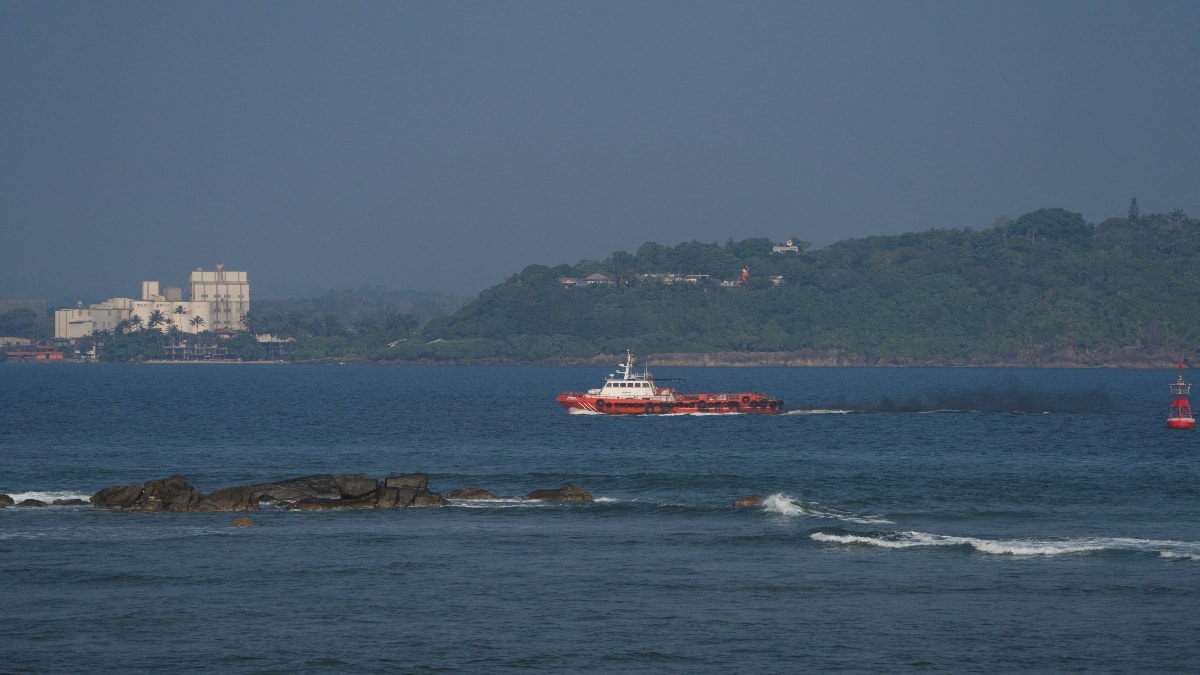
Sri Lanka’s coast is currently the site of a grim recovery operation that highlights just how dangerous the Indian Ocean can be even for heavy military hardware. Rescue teams have already pulled 87 bodies from the water after an Iranian warship went down in a sudden, violent maritime disaster. Another 61 sailors are still missing. While official reports are trickling in, the scale of this loss is staggering. It's one of the worst naval accidents we've seen in the region in recent years.
When a massive vessel like an Iranian destroyer or frigate sinks, it isn't just a mechanical failure. It’s a humanitarian catastrophe that triggers a massive logistical nightmare. Sri Lankan authorities are working against time, shifting tides, and the sheer vastness of the search area to find any sign of the remaining crew. But as the hours pass, the hope of finding survivors in the deep waters off the coast is fading fast.
What went wrong for the Iranian vessel
We don't have all the answers yet, but ships of this size don't just disappear without a massive catalyst. Usually, it’s a combination of severe weather, structural fatigue, or a catastrophic internal failure like an engine room fire. The Iranian Navy has been pushing its fleet harder lately, sending older ships on long-range deployments to show presence in the Indian Ocean and beyond.
Sometimes, that ambition outpaces the maintenance schedule.
The Indian Ocean is notoriously fickle. You've got deep-sea trenches, sudden monsoon-driven swells, and heavy maritime traffic. If a ship loses power in the middle of a storm, it becomes a multi-ton piece of floating steel at the mercy of the waves. Once it takes on water and loses stability, the "point of no return" happens in minutes. Sailors often don't even have time to reach life rafts.
The massive recovery effort in Sri Lankan waters
The Sri Lankan Navy and Coast Guard are leading the charge here. They've deployed divers, fast attack blocks, and surveillance aircraft to scan the surface for debris or life jackets. Recovering 87 bodies is a Herculean task that takes a toll on the recovery teams. They aren't just looking for people; they're trying to piece together where the ship actually went down based on drift patterns.
Currents in this part of the world are strong. A body or a piece of wreckage can move miles in just a few hours. This makes the search area for the remaining 61 sailors expand exponentially every single day. Sri Lanka has experience with maritime disasters—think of the X-Press Pearl fire—but a military sinking involves different protocols. You're dealing with sensitive technology and potentially hazardous materials on board the sunken vessel.
Why this matters for regional security
This isn't just a local news story. Iran has been trying to project power far from the Persian Gulf. By sailing near Sri Lanka, they’re signaling that they can operate in the backyard of other major powers. When a ship sinks during such a mission, it raises serious questions about the readiness and safety of their fleet.
- Maintenance gaps: Older vessels repurposed for long-haul missions are prone to hull breaches.
- Training issues: In high-stress sinking scenarios, crew training determines if 10 people die or 150.
- Regional cooperation: Sri Lanka’s quick response shows how vital local partnerships are, even if the nations aren't traditional allies.
The Iranian government is likely going to conduct its own internal investigation, but they'll keep the details close to the chest. We might never know the exact mechanical failure that led to this. What we do know is that the families of 148 sailors are now waiting for news that likely won't be good.
The technical difficulty of deep sea recovery
The depth of the water where the ship went down is a huge factor. If it’s sitting on the continental shelf, divers can get down there. If it slid into the deep ocean, you're talking about needing ROVs (Remotely Operated Vehicles) just to see the wreckage.
When a ship sinks, it often traps air pockets. In theory, someone could survive for a short time, but the pressure at those depths makes that almost impossible. The focus now is strictly on "recovery," a polite word for finding the deceased so they can be sent home. It's a grisly, necessary job that the Sri Lankan teams are performing with a lot of grit.
Managing environmental risks after a sinking
Everyone talks about the loss of life, and rightly so. But we also have to look at what that ship was carrying. Warships are packed with fuel, lubricants, and sometimes munitions.
- Oil leaks: Even a partial hull breach can release tons of heavy fuel oil into the ecosystem.
- Coral damage: Sri Lanka’s coastline is famous for its biodiversity; a chemical leak could be devastating.
- Navigation hazards: A sunken warship is a massive hunk of steel that can snag fishing nets or interfere with shipping lanes if it's in shallow enough water.
Authorities are likely monitoring the surface for oil slicks. If a major leak starts, the recovery mission will have to pivot into an environmental containment mission. That's a double-front war no navy wants to fight at the same time.
Navigating the aftermath
For now, the priority remains the 61 missing. If you're following this, watch the weather reports for the region. Bad weather will grounded the search flights and pull the divers out of the water. Every day of delay makes the "search and rescue" phase look more like a "search and identify" mission.
It's a reminder that the ocean doesn't care about your flag or your mission. It's a high-stakes environment where a single mistake or a rusted bolt can lead to 87 bodies being pulled from the surf. If you're tracking maritime safety, keep an eye on the official statements from Colombo. They're the ones on the ground—or in the water—doing the actual work.
Check for updates on maritime tracking sites or official Sri Lankan Navy press releases. They usually post coordinates for exclusion zones if the wreck poses a danger to local vessels. If you’re a mariner in the area, stay well clear of the recovery coordinates to give the divers the space they need to work.