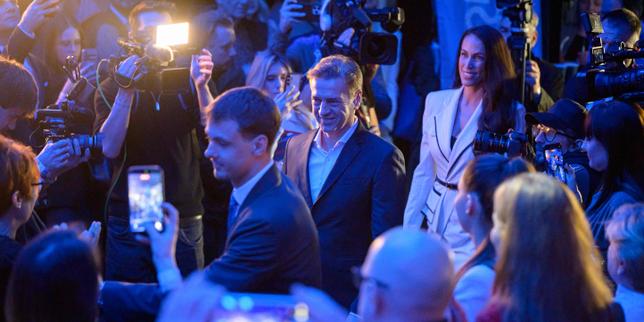
Robert Golob secured his position as Slovenia’s Prime Minister in the latest legislative cycle, but the narrow margin of his victory signals a precarious future for the country’s liberal experiment. While the headlines suggest a continuation of the status quo, the data reveals a fractured electorate and a government struggling to maintain its grip on a rapidly shifting economic environment. This was not the landslide many in Ljubljana’s corridors of power expected. Instead, it was a desperate hold on authority that leaves the Freedom Movement (Gibanje Svoboda) vulnerable to both internal dissent and a resurgent right-wing opposition.
The immediate takeaway is clear. Golob remains in power, but the political capital he once wielded has evaporated. The voters who propelled him to a massive win in 2022 are no longer handing out blank checks. They are demanding results on healthcare reform, energy stability, and the rising cost of living—areas where the administration has, until now, offered more rhetoric than substance. Also making headlines recently: The Kinetic Deficit Dynamics of Pakistan Afghanistan Cross Border Conflict.
The Illusion of Stability in Ljubljana
To understand why this victory feels like a defeat, one must look at the shifting composition of the National Assembly. Golob’s coalition survives on a razor-thin edge. This isn't just about seat counts; it’s about the ideological friction between the centrist Freedom Movement and its more left-leaning partners. Every piece of legislation now becomes a grueling negotiation.
During the campaign, the opposition, led by Janez Janša’s Slovenian Democratic Party (SDS), hammered away at the government’s perceived incompetence in managing the post-pandemic recovery and the energy spikes caused by regional instability. Janša’s base is disciplined and angry. By contrast, Golob’s supporters are disillusioned. When a leader promises a "new era" and delivers a bureaucratic slog, the enthusiasm gap becomes a chasm. Further insights on this are explored by The Washington Post.
The numbers don't lie. A slight shift in a few key districts would have seen a return to the populist-conservative alignment that dominated Slovenia for years. Golob didn't win because of a surging mandate. He won because the alternative still frightens a specific segment of the urban middle class. That is a negative mandate, and negative mandates have a very short shelf life.
The Economic Pressure Cooker
Slovenia’s economy is the silent driver of this political volatility. As a manufacturing hub deeply integrated into the German supply chain, the country is feeling the tremors of the Eurozone’s industrial slowdown. When German factories sneeze, Slovenian subcontractors catch pneumonia.
Energy Prices and Industrial Competitiveness
Golob, a former energy executive, was supposed to be the man who understood these gears. However, the business community is becoming increasingly vocal about the lack of a coherent long-term energy strategy. Electricity costs remain high for heavy industry, threatening the margins of the country’s export engines.
- Manufacturing Output: Small and medium enterprises (SMEs) report a tightening of credit and a slowdown in orders from Northern Europe.
- Labor Shortages: Despite the economic cooling, skilled labor remains scarce, driving up wages and putting further pressure on domestic firms.
- Infrastructure Delays: Key projects, including rail upgrades and energy grid modernization, are mired in the very "bureaucratic swamp" Golob promised to drain.
There is a growing sense that the government is reactive rather than proactive. They respond to crises as they happen but fail to set a clear direction for where the Slovenian economy should be in 2030. This lack of vision is exactly what the opposition exploited during the election, painting the Prime Minister as a technocrat who is out of his depth in a real-world storm.
Healthcare as the Third Rail
If there is one issue that could topple this government before the next scheduled election, it is the state of the public health system. Long waiting times and a perceived exodus of medical professionals to the private sector or abroad have made healthcare a primary concern for the average citizen.
The government’s attempts at reform have been clumsy. They have managed to alienate the doctors' unions while simultaneously failing to satisfy the public’s demand for shorter queues. In politics, if you try to please everyone, you usually end up pleasing no one. Golob’s "middle path" on healthcare has left the system in a state of suspended animation. The public sees the taxes leaving their paychecks but doesn't see the corresponding quality of care at the clinic.
The Janša Shadow and the Populist Surge
Janez Janša is not going away. Despite the loss, his party remains the most organized political force in the country. He has successfully framed the narrative that Golob is a puppet of the "old elites" and the "deep state," terms that resonate with a significant portion of the rural population and those who feel left behind by the green transition.
Janša plays the long game. He knows that thin victories lead to fragile coalitions. He is waiting for the moment when the junior partners in Golob’s government—the Social Democrats or the Left—decide that staying in the coalition is more politically expensive than leaving it.
The Media War
The battleground is also in the media. The government’s efforts to "depoliticize" the national broadcaster RTV Slovenija have been met with accusations of government overreach from the right. This tug-of-war over the media landscape ensures that the country remains in a state of perpetual cultural conflict, distracting from the urgent economic reforms that are actually needed.
Strategic Failures in the Green Transition
For a Prime Minister who built his brand on the green energy transition, the lack of tangible progress is a glaring weakness. Slovenia has the potential to be a leader in niche green technologies, but the regulatory environment remains a maze of contradictions.
Investors want certainty. They want to know that if they put capital into a solar farm or a biomass plant, the rules won't change in eighteen months because of a shift in a coalition subcommittee. Under Golob, that certainty has been lacking. The "green" agenda is often seen as a series of taxes and restrictions rather than an opportunity for growth and innovation.
A Government on Life Support
What we are witnessing is a government that has lost its "outsider" appeal but has not yet mastered the "insider" mechanics of effective governance. The "Golob Miracle" of 2022 has been replaced by the "Golob Grind" of 2026.
The narrowness of this victory means that the Prime Minister will be forced to spend more time managing his own cabinet than managing the country. This internal focus is a gift to the opposition. It prevents the government from taking the bold, perhaps unpopular, steps needed to fix the structural issues in the pension system and the labor market.
Slovenia is at a crossroads. It can continue with this tepid, defensive style of governance, or it can realize that the narrow victory was a final warning. The public’s patience is not an infinite resource. If the cost of living continues to rise and the quality of public services continues to stagnate, the next election won't be a narrow win for the center-left; it will be a wholesale rejection.
The Prime Minister must now decide if he is a leader or merely a placeholder. Being a placeholder in a period of global economic volatility is a dangerous game. The cracks are already visible. The question is no longer whether they can be ignored, but whether there is enough political will left to fill them before the entire structure gives way.
Analyze the voting patterns in the peripheral regions where the SDS made the most significant gains. That is where the next election will be won or lost. Focus on the disconnect between Ljubljana's tech-driven optimism and the industrial reality of the Savinja or Drava regions. You will find the blueprint for the next political upheaval right there in the employment stats of the small manufacturing towns. This victory was a reprieve, nothing more. It bought Robert Golob time, but it did not buy him a legacy. Time is the one thing his government is rapidly running out of.
Check the latest reports from the Chamber of Commerce and Industry of Slovenia (GZS). They are no longer whispering their frustrations about the lack of industrial policy; they are shouting them. If the government doesn't listen to the people who actually sign the paychecks, the narrow win they just celebrated will be the last one they ever see. Don't look at the speeches in the Assembly. Look at the capital flight and the brain drain of the under-30s. That is the real scorecard for Robert Golob. It tells a much darker story than the official election results ever will.