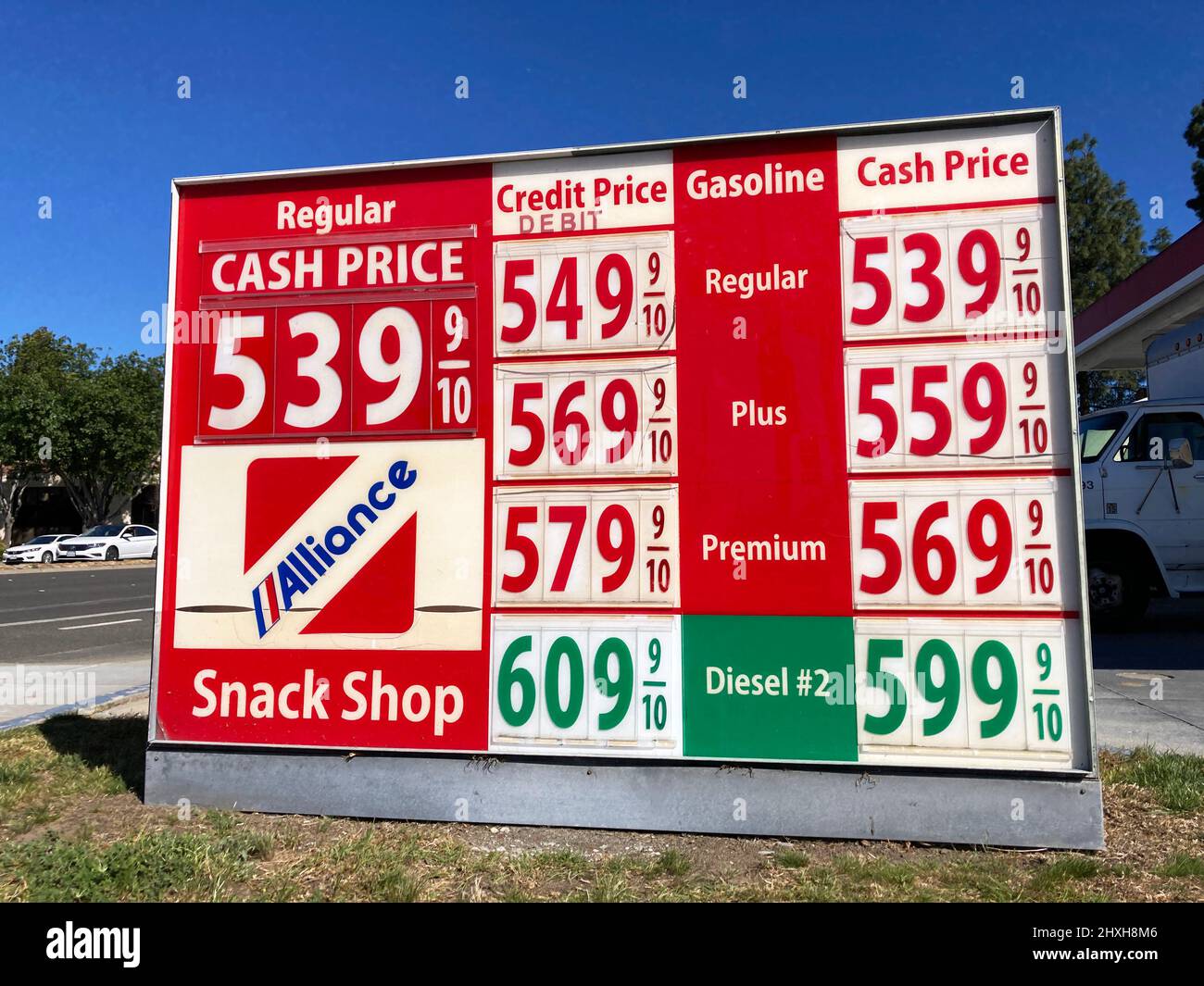
The United States is the largest oil producer on the planet, yet the White House is essentially a spectator when gas prices start climbing. It’s a frustrating reality for any administration. You see the numbers ticking up at the pump, the headlines start screaming about inflation, and the political pressure becomes a physical weight. But the truth is that the "tools" everyone talks about are mostly blunt instruments or empty boxes.
When global crude prices surge, the U.S. government finds itself staring at a control panel where most of the buttons aren't connected to anything. We’ve reached a point where the Strategic Petroleum Reserve (SPR) is lean, domestic drillers are answering to shareholders rather than politicians, and international "allies" in the energy space have their own agendas. If you’re waiting for a magic policy to drop gas back to two dollars a gallon, you’re going to be waiting a long time.
The Strategic Petroleum Reserve is no longer a safety net
For decades, the SPR was the ultimate "break glass in case of emergency" option. It worked. Whenever a hurricane hit the Gulf or a war broke out in the Middle East, the Department of Energy could flood the market with crude to stabilize prices. That era is over.
Following the massive drawdowns in 2022 and 2023, the reserve sits at its lowest levels in about forty years. We used it to blunt the impact of the Russia-Ukraine conflict, and while that worked temporarily, you can’t spend the same dollar twice. Refilling it is a slow, expensive process.
If a major supply disruption happens tomorrow—say, a total closure of the Strait of Hormuz or a massive cyberattack on colonial pipelines—the U.S. simply doesn't have the same volume of "spare" oil to dump onto the market. The cushion is gone. Attempting to use the remaining oil for anything other than a dire national security crisis would be reckless. It’s a one-shot pistol with very few bullets left.
Why U.S. oil companies won't just drill more
People often scream, "Just drill more!" It sounds simple. It isn't.
The U.S. is already producing record amounts of crude, often hovering around 13 million barrels per day. But the American oil industry has changed its DNA since the shale boom of the 2010s. Back then, companies spent every cent they had on growth. They drilled constantly, burned through cash, and eventually went bust when prices dipped.
Today, Wall Street runs the show.
Investors aren't interested in "drill, baby, drill" if it means lower dividends. They want capital discipline. They want buybacks. If an oil CEO announces a massive increase in production that might crash the price of oil, their stock price will likely tank. These companies are private entities. The President can't order ExxonMobil or Chevron to ruin their balance sheets just to help out with the Consumer Price Index.
The refining bottleneck nobody talks about
Even if we pulled a billion barrels out of the ground tomorrow, we have a massive problem: we can't turn it into gasoline fast enough.
The U.S. hasn't built a major new refinery with significant capacity since the 1970s. We're actually losing refining capacity as older plants shut down or convert to biofuels. Refining is a dirty, low-margin, and highly regulated business. No sane company is going to drop $10 billion on a new refinery that takes a decade to build when the government is simultaneously signaling an end to internal combustion engines. This creates a permanent ceiling on how much "cheap" gas can actually reach your car.
The myth of energy independence
We hear the phrase "energy independence" tossed around in every stump speech. It’s a total fantasy in a globalized market.
Oil is a fungible commodity. That means a barrel of West Texas Intermediate (WTI) is linked to the price of Brent crude in London or Urals crude in Russia. Even if we produced every single drop of oil we consumed, a war in the Middle East would still send U.S. gas prices soaring. Why? Because American producers would rather sell their oil to the highest bidder in Europe or Asia than give you a discount at the local station.
Unless we nationalize the industry—which isn't happening—or ban exports—which would destroy our trade balance and freak out our allies—we are tethered to the global price. When OPEC+ decides to cut production by two million barrels to keep prices high, Americans pay for it. There’s no "America First" island in the global energy ocean.
The OPEC plus problem is getting worse
For a long time, the U.S. could rely on a "special relationship" with Saudi Arabia to balance the scales. If prices got too high, a phone call from Washington to Riyadh often resulted in a supply bump.
That dynamic has shifted.
The interests of the U.S. and the Saudi-led OPEC+ bloc are diverging. The Saudis need high oil prices—specifically north of $80 a barrel—to fund "Vision 2030," their massive economic diversification project. They aren't interested in doing the U.S. any favors that might jeopardize their own sovereign wealth. Furthermore, the inclusion of Russia in the "plus" part of OPEC+ means the cartel is now incentivized to use energy as a geopolitical lever against Western interests.
The limited impact of gas tax holidays
Whenever prices spike, some politicians suggest a "gas tax holiday." It’s the ultimate "feel-good" policy that does almost nothing.
The federal gas tax is 18.4 cents per gallon. In the grand scheme of a $4.50 or $5.00 gallon of gas, eighteen cents is a rounding error. More importantly, there’s no guarantee retailers would even pass that savings on to you. They might just keep their prices the same and pocket the extra margin. Meanwhile, the Highway Trust Fund, which pays for our roads and bridges, loses billions in revenue. It’s a short-term gimmick with long-term consequences.
The hard truth about the green transition
We’re in a messy middle ground. We’re trying to move toward electric vehicles (EVs) and renewables, but we’re still 100% dependent on the old fossil fuel infrastructure.
This transition period is naturally inflationary. Investment in long-term oil projects is down because the "green" future makes them risky. Yet, the demand for oil hasn't peaked. We’re stuck in a supply-demand crunch that creates volatility. Higher oil prices actually make EVs more attractive, but the political fallout of high gas prices often forces the government to take actions that subsidize the very fossil fuels they’re trying to move away from. It’s a policy paradox that no one has solved.
What you can actually do
Since the government isn't coming to save you with a magic wand, the only way to beat surging oil prices is to change your own exposure.
- Audit your commute. If you're driving a vehicle that gets 15 miles per gallon, you're high-fiving the oil cartels every morning. Small changes in aerodynamics or tire pressure are minor; changing the vehicle class is the only thing that moves the needle.
- Watch the refining margins. Don't just look at the price of crude. Look at "crack spreads." If crude is down but gas is up, the problem is at the refinery. This tells you that no amount of drilling will fix the price.
- Ignore the political theater. When you see a politician standing at a gas station blaming the other side, know they’re usually lying or uninformed. The global market is a $4 trillion beast that doesn't care who is in the Oval Office.
The U.S. energy position is strong, but our ability to dictate prices is at an all-time low. Stop looking for a policy fix and start looking for a way to use less of the stuff.