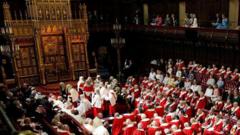
Labour's plan to boot the final 92 hereditary peers out of the House of Lords just hit a very British kind of roadblock. It wasn't a riot or a constitutional crisis. It was a standoff over some very old chairs and some very specific titles. But the news breaking today suggests a deal is finally on the table. Ministers are reportedly offering the Conservatives a "sweetener" to get the Hereditary Peers Bill through without a bloody parliamentary battle.
The offer is simple. If the Tories stop blocking the bill, the government will support the creation of more Conservative life peers. It's a classic political trade. You give up the inherited seats, and we'll let you nominate more people who actually earned their spot—or at least were appointed by a Prime Minister. This isn't just about clearing out the "aristocratic element" from our legislature. It's about how the UK actually functions as a modern democracy in 2026.
Why the Hereditary Peers Bill Matters Now
The presence of 92 people who sit in a national parliament simply because of who their great-great-grandfather was is an anomaly. Most of us agree on that. Even many of the hereditary peers themselves admit the system is bizarre. The 1999 reforms under Tony Blair were supposed to be a "temporary" compromise. Those 92 were left as a way to keep the Lords functioning while a "Stage Two" reform was figured out.
That "temporary" fix lasted over a quarter of a century.
Labour’s new bill seeks to finish the job. They want a chamber based on merit, not DNA. But the Conservatives have been digging in their heels. Their argument isn't necessarily that the hereditary principle is perfect. Instead, they argue that removing them without a broader plan for what the Lords should actually be is just a power grab. By threatening to filibuster or delay the bill, they've forced the government's hand.
The Art of the Political Bribe
Politics is often just high-stakes bartering. Baroness Smith, the Leader of the House of Lords, knows that she can't just steamroll the upper house. The Lords has a funny way of making life miserable for a government if it feels ignored.
By offering the Conservatives more life peerages, the government is solving two problems at once.
- It eases the transition by ensuring the opposition doesn't feel completely sidelined.
- It reduces the "mathematical" advantage Labour currently enjoys in the polls by balancing the benches with active, working peers.
It's a pragmatic move. Some purists on the left will hate it. They'll say it's just replacing one form of patronage with another. They're not entirely wrong. But in the world of Westminster, "perfect" is the enemy of "passed." If you want the hereditaries out by summer, you have to pay the price.
The Problem With an Unreformed House
The House of Lords is already the second-largest legislative chamber in the world, trailing only the Chinese National People's Congress. That's embarrassing for a mid-sized island nation. When the chamber is packed with people who don't show up, or people who are only there because of a medieval land grant, the quality of scrutiny drops.
We need a second chamber that can actually check the power of the Commons. We don't need a museum. The current standoff has delayed vital work on housing, climate policy, and tech regulation. Every hour spent arguing about whether the Earl of Something-or-Other gets to keep his pass is an hour not spent fixing the country.
Critics of the deal say that "packing" the house with more life peers just makes the overcrowding worse. They've got a point. Adding twenty new Tories to get rid of ninety hereditaries still leaves us with a massive, bloated house. But the government’s logic is that a "life peer" is at least accountable to the modern standards of the House. They can be suspended. They can be shamed. You can’t really "fire" an Earl.
What This Means for the Future of the UK Constitution
This isn't just a tiff about titles. It's a sign of how the Starmer government intends to handle the Lords going forward. They aren't looking for a "Big Bang" constitutional revolution. They aren't trying to move to a fully elected Senate tomorrow.
They're doing it bit by bit.
This incremental approach is frustrating for those who want a Republic or a totally revamped federal system. But it’s effective. By removing the hereditaries, they remove the easiest target for those who call the Lords "illegitimate." Once the 92 are gone, the focus shifts to the Appointments Commission.
The Hidden Impact on Legislation
When the Lords is in "revolt" mode, the government's entire legislative agenda slows to a crawl. The Tories have been using the hereditary bill as a shield. They've been threatening to "clog the pipes" of parliament if the government doesn't play ball.
If this deal sticks, expect a flurry of activity.
- The Rental Reform Bill will move faster.
- The New Homes Accelerator will face less procedural friction.
- The Clean Energy Mandates won't get stuck in committee as long.
The government basically bought themselves a clear runway for the rest of the year. It's a smart investment.
Is This Fair to the Hereditary Peers
Let’s be honest. Many of the 92 currently serving are incredibly hardworking. Some are the best legal and scientific minds in the country. They take their jobs seriously because they feel a historical duty to do so. The "hereditary" label often masks the fact that many of them are more active than the "life peers" who show up once a month for the cheap lunch.
But you can’t defend the principle in 2026. You just can’t.
The deal to allow more Tory life peers might actually allow some of those "hardworking" hereditaries to come back. There’s nothing stopping a former hereditary peer from being appointed as a life peer. It’s happened before. It’ll happen again. This allows the individual talent to remain while the outdated system is finally binned.
How to Track This Progress
If you're watching this play out, keep an eye on the "Order Paper" for the House of Lords over the next fortnight. That's where the real movement happens. If the amendments suddenly vanish, you'll know the deal is done.
Don't expect a big public announcement with fireworks. This kind of deal is usually confirmed through "the usual channels"—parliamentary shorthand for quiet chats in wood-paneled rooms.
The reality is that the UK constitution is a series of handshakes. This latest handshake might finally end a transition that began in 1999. It’s about time.
Check the official Parliament TV streams when the bill hits the committee stage. If the tone has shifted from "confrontational" to "procedural," the sweetener has worked. The next step is watching the Gazette for the list of new appointments. If we see a surge in Conservative names, the trade is complete. It’s messy, it’s cynical, and it’s exactly how the British government avoids a total collapse. Move on and get the work done.