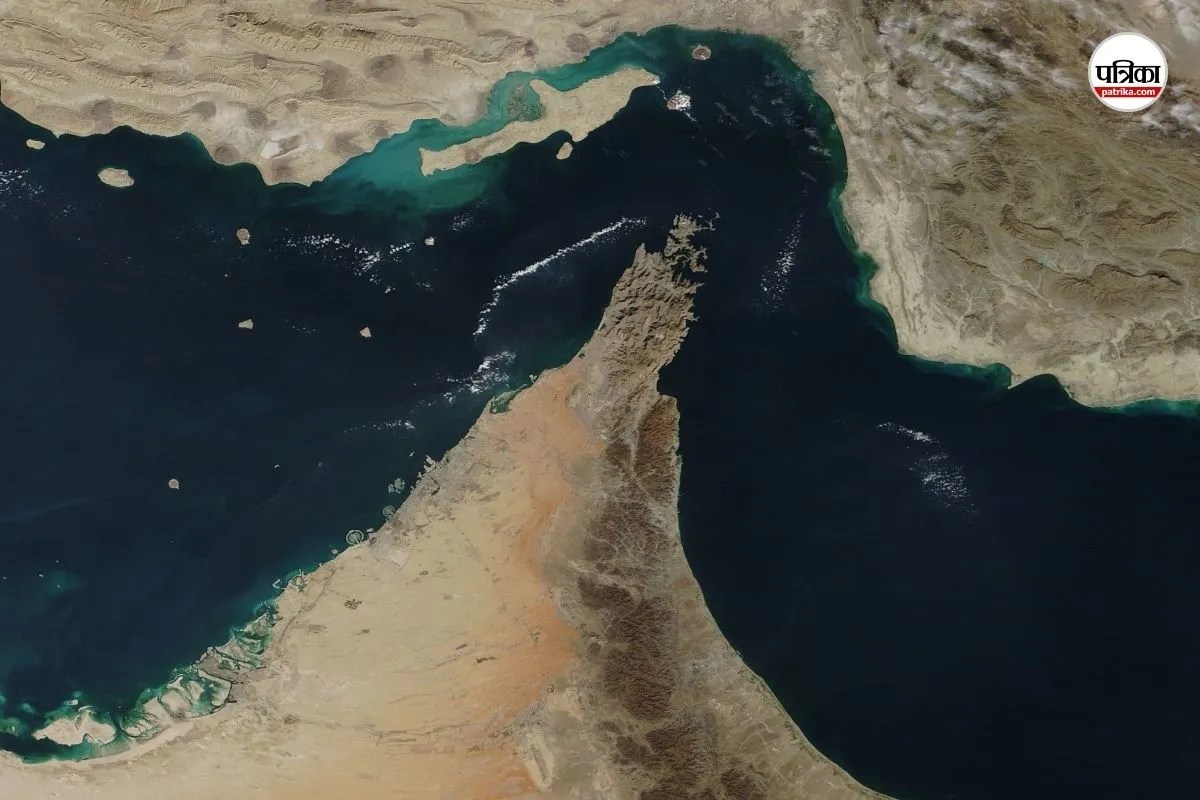
The failure of diplomatic de-escalation between Iran and Pakistan provides the immediate catalyst for a shift in Iranian naval doctrine, specifically regarding the Strait of Hormuz. While mainstream analysis often views border skirmishes and maritime blockades as separate spheres of conflict, the Islamic Revolutionary Guard Corps (IRGC) operates on a unified "strategic depth" framework. The breakdown in regional talks forces Tehran to recalibrate its leverage, moving from internal border stabilization to external maritime signaling. The Strait of Hormuz is not merely a geographic chokepoint; it is an economic weapon whose activation is inversely proportional to Iran's success in traditional diplomacy.
The Triad of Maritime Coercion
The IRGC’s recent assertions regarding the Strait of Hormuz function through three distinct operational pillars. Each pillar represents a specific mechanism of pressure designed to offset diplomatic setbacks on Iran's eastern flank with Pakistan.
- Supply Chain Interdiction: This involves the physical capacity to disrupt the transit of approximately 21 million barrels of oil per day. The IRGC utilizes a "mosquito fleet" of fast-attack craft (FACs) and sea mines to create a high-risk environment for commercial insurance.
- Psychological Deterrence: Public statements from IRGC commanders serve to increase the "risk premium" on global energy markets. Even without kinetic action, the threat of closure forces global powers to reconsider the cost of isolating Tehran.
- Sovereignty Assertion: By claiming the right to "police" the Strait, Iran challenges the international legal framework of transit passage under the UN Convention on the Law of the Sea (UNCLOS), asserting that the waterway is an extension of Iranian internal waters.
The Cost Function of Hormuz Closure
Total closure of the Strait is often discussed as a binary event, yet it functions as a sliding scale of economic and military costs. A full blockade represents a terminal move in the IRGC's playbook because it triggers a "suicide economy" scenario. Iran relies on the same waterway for its own imports and limited shadow-market exports.
The cost function of a closure involves:
- Energy Elasticity: As the Strait provides 20% of the world’s liquid natural gas and a significant portion of crude oil, even a 24-hour disruption causes an immediate spike in Brent Crude prices.
- Insurance and Freight Escalation: The "war risk" premium added by Lloyd’s of London can make shipping through the Persian Gulf prohibitively expensive, effectively creating a de facto blockade without the IRGC firing a single shot.
- Military Attrition: Any attempt to hold the Strait against a Western or coalition response necessitates a high burn rate of Iranian naval assets. The IRGC understands that its FACs are effective in asymmetric harassment but vulnerable to sustained aerial and electronic warfare.
From Eastern Borders to Maritime Chokepoints
The collapse of talks with Pakistan creates a strategic vacuum. When Iran cannot secure its borders through bilateral agreements, it seeks to project power in areas where it maintains a relative advantage. The IRGC’s pivot to the Strait is a direct response to the perception of weakened regional authority.
The logic follows a specific sequence:
- Failed Diplomacy: Inability to reach terms on cross-border militancy and "terrorist" safe havens.
- Internal Pressure: Domestic demand for a "strong" response to security breaches.
- External Projection: Redirecting military focus toward the Hormuz to remind global actors that instability in Iran has global economic consequences.
Operational Limitations and Counter-Pressures
There is a significant delta between IRGC rhetoric and the ability to maintain a sustained blockade. The US Fifth Fleet, headquartered in Bahrain, and the increasing presence of European maritime missions (like EMASoH) create a high-density surveillance environment.
The Electronic Warfare Variable
The efficacy of Iranian drones and fast boats is contingent upon the electromagnetic spectrum. Coalition forces have invested heavily in counter-UAS and signal jamming technologies that could neutralize the IRGC’s primary asymmetric tools before they reach visual range.
The Chinese Factor
Perhaps the most overlooked constraint on Iranian action in the Strait is the relationship with Beijing. China is the primary purchaser of Iranian oil and a major stakeholder in the stability of the Hormuz. Any prolonged disruption would hurt Chinese manufacturing and energy security, potentially alienating Iran's most vital economic partner. The IRGC must balance its desire to signal strength with the reality of its dependence on Eastern markets.
The Mechanized Response Framework
To understand the likelihood of a Hormuz event, one must track specific lead indicators. These are not political speeches, but physical movements and signatures:
- Mining Activity: The deployment of moored or bottom mines in the narrowest channels of the Strait (roughly 21 miles wide).
- FAC Dispersion: Moving small, missile-equipped boats from primary naval bases like Bandar Abbas to smaller, concealed "outposts" along the coast.
- GPS Jamming Signatures: An increase in reported "spoofing" or signal interference in the Persian Gulf, aimed at confusing commercial navigation systems.
Strategic Forecast: The Shift to Gray Zone Tactics
Given the risks of a full kinetic engagement, the IRGC is unlikely to attempt a traditional "closure" of the Strait. Instead, the strategy will evolve into Persistent Gray Zone Harassment. This involves the seizure of specific vessels under legalistic pretenses—environmental violations or safety concerns—rather than an overt declaration of war.
This approach achieves the goal of increasing global energy anxiety while providing Tehran with "plausible deniability" and a ladder for de-escalation. It forces the international community to engage in negotiations on Iran's terms, effectively weaponizing the geography of the Persian Gulf to compensate for diplomatic failures on the Asian continent.
The ultimate move for regional players is not to prepare for a "war in the Strait," but to mitigate the impact of prolonged, low-intensity maritime disruption. This requires a diversification of export routes—such as the East-West Pipeline in Saudi Arabia—and a significant increase in the adoption of autonomous maritime security platforms that can provide continuous escort for commercial tankers without escalating the human cost of conflict.