The air in the Situation Room doesn't move. It is filtered, chilled, and heavy with the scent of recycled oxygen and expensive wool. Deep beneath the West Wing, the world shrinks to a series of glowing pixels on a wall-sized monitor. On this particular afternoon, those pixels represent the Strait of Hormuz, a narrow strip of blue water that serves as the jugular vein of the global economy.
One spark here doesn't just start a fire. It stops the world.
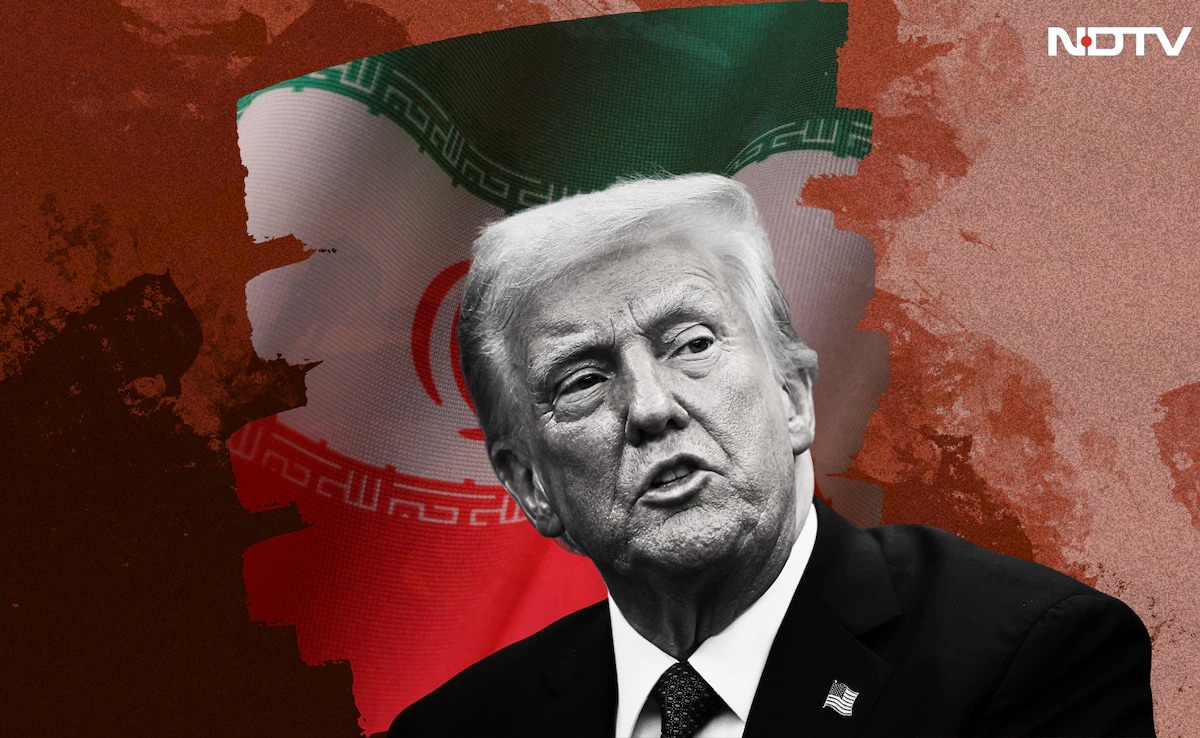
For weeks, the rhetoric has been sharpening like a blade. Donald Trump, never one for the nuanced dance of traditional diplomacy, has issued a directive that vibrates with the finality of a closing door. His "hit and obliterate" warning to Tehran wasn't just another post on social media or a stray comment to a hovering press pool. It was a deadline. A line drawn in the shifting sands of the Middle East, backed by the full, terrifying weight of the American military machine.
The Weight of a Single Word
To understand the stakes, you have to look past the headlines and into the eyes of a single merchant sailor. Let’s call him Elias. He is currently standing on the deck of a massive crude carrier, the hull vibrating beneath his boots as he navigates the narrowest point of the Persian Gulf. Elias doesn’t care about the intricacies of the Joint Comprehensive Plan of Action or the historical grievances of the 1979 revolution.
He cares about the horizon.
He knows that if the deadline passes without a blink from either side, the sky could turn white at any moment. For Elias, "geopolitics" isn't a theory. It is the sound of a drone overhead. It is the sudden, jarring impact of a limpet mine against steel.
The President’s language—"obliterate"—is a word designed to end conversations. In the world of high-stakes international relations, words are usually chosen for their flexibility. They are soft, pliable things that allow leaders to back away from a cliff without losing face. But "obliterate" has no give. It is a hard, jagged rock.
When a superpower uses language that absolute, the clock starts ticking in a way that is nearly impossible to stop. It creates a vacuum where diplomacy used to live.
The Calculus of Defiance
In Tehran, the view is mirrored and distorted. The leadership there doesn't see a peacemaker or a negotiator; they see a bully trying to choke their economy into submission through "maximum pressure." For the Iranian Revolutionary Guard, the American deadline isn't an invitation to talk. It is a challenge to their very existence.
Consider the psychology of a cornered power. History shows us that when a nation feels its back against the wall, it rarely reacts with a handshake. It reacts with a strike.
The "hit and obliterate" strategy operates on the assumption that the opponent will see the overwhelming force arrayed against them and choose survival over pride. But pride is a potent fuel in the Middle East. It has sustained empires and launched a thousand wars. If Iran feels that the deadline is an ultimatum for total surrender, they may decide that the only way to win is to make the cost of American "obliteration" too high for the world to bear.
How do they do that?
They don't need to win a naval battle against a U.S. carrier strike group. They only need to sink one ship in the right place. They only need to spike the price of oil to $150 a barrel overnight. They only need to remind the world that while the U.S. can hit, Iran can make the entire global financial system bleed.
The Invisible Threads
We often talk about war as if it happens "over there." We watch the grainy infrared footage of explosions and think of it as a distant tragedy. But the "hit and obliterate" deadline is tied to the lives of people who have never heard of the IRGC or the Pentagon’s CentCom.
Think about a small business owner in Ohio. Or a truck driver in Lyons. Or a family in Osaka.
If the deadline expires and the "obliteration" begins, the first casualty isn't a soldier. It’s the supply chain. The ripple effect of a conflict in the Gulf moves at the speed of light through the fiber-optic cables of the New York Stock Exchange. It moves through the pumps at every gas station. It moves through the cost of bread, which relies on the fuel that moves the grain.
The stakes are invisible until they are agonizingly real.
We are currently living in the "quiet" before the storm. It is a manufactured quiet, held together by the frantic efforts of back-channel diplomats and European intermediaries trying to find a "face-saving" exit for both men. They are searching for a bridge that doesn't exist yet.
The Architecture of the Cliff
There is a specific kind of vertigo that comes with watching two nuclear-adjacent powers move toward each other at full speed. This isn't a game of chess. It’s a game of "chicken" played with supersonic jets and ballistic missiles.
The U.S. position is clear: the era of "strategic patience" is dead. The administration believes that by projecting absolute strength and a willingness to use total force, they can force a new, more favorable deal. It is a gambler's move. If it works, it is hailed as a masterstroke of coercive diplomacy. If it fails, the "obliteration" isn't contained to a single country.
The problem with a "hit and obliterate" policy is that it leaves no room for the accidental.
In 1988, the USS Vincennes accidentally shot down an Iranian civilian airliner, killing 290 people, because the crew misidentified it as a f-14 Tomcat. In a high-tension environment where a deadline is looming, every radar blip is a potential threat. Every fishing boat is a potential minelayer. When everyone is waiting for the first shot, the first shot usually happens—whether it was ordered or not.
The Human Cost of the Final Hour
As the deadline approaches, the rhetoric in Washington and Tehran will only get louder. There will be more speeches, more parades of hardware, and more warnings of "unimaginable consequences."
But the real story isn't in the speeches.
It is in the quiet panic of a mother in Tehran wondering if she should stock up on rice and water. It is in the steady, focused breathing of a young Lieutenant in the cockpit of an F-18, checking his systems for the tenth time as his carrier pitches in the dark waters of the Arabian Sea. It is in the hands of the diplomats, trembling slightly as they realize they are running out of paper to write on.
We like to think of history as a series of grand, inevitable movements. But history is actually made of moments like this one. Short, sharp intervals where the ego of leaders and the geography of the earth collide.
The deadline is more than a date on a calendar. It is a test of whether we have learned anything from the last century of "limited engagements" that turned into forever wars. It is a test of whether "obliteration" is a viable tool of statecraft or just a terrifying ghost we’ve summoned from the past.
The sun sets over the Gulf, casting long, bloody shadows across the water. The tankers continue their slow, rhythmic crawl through the strait. The world holds its breath, waiting to see if the man in the Oval Office will move his pen, or if the men in Tehran will move their missiles.
In the end, the knife edge doesn't care who is right. It only cares who falls first.
The clock doesn't tick. It tolls.