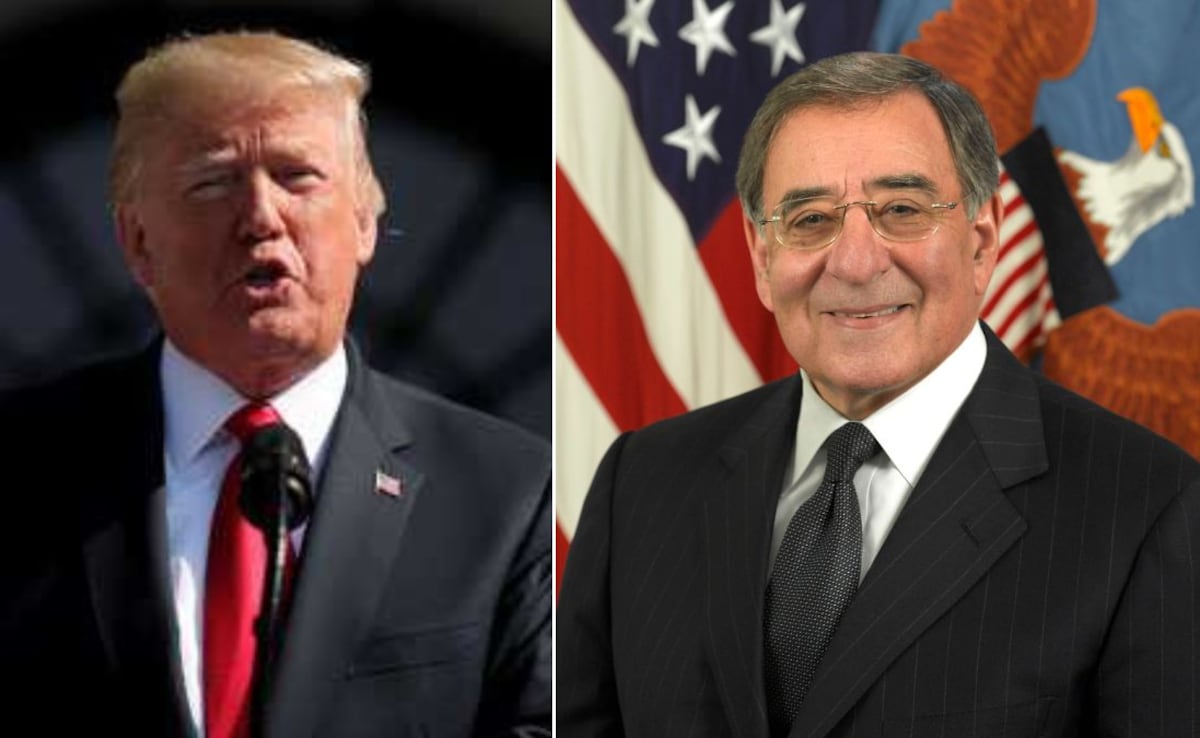
Donald Trump has officially pivoted from the Persian Gulf to the Potomac. After three weeks of a high-intensity, unauthorized military campaign labeled Operation Epic Fury, the President declared on Sunday that the "death of Iran" is effectively complete, immediately rebranding the American Democratic Party as the "greatest enemy" the United States now faces. This isn't just a rhetorical flourish. It is a calculated strategic shift designed to import the intensity of a foreign war into the domestic political theater just as the 2026 midterm elections begin to loom.
The President's Sunday morning proclamation on Truth Social was blunt. "Now with the death of Iran," Trump wrote, "the greatest enemy America has is the Radical Left, Highly Incompetent, Democratic Party."
By declaring victory over a foreign adversary that is currently retaliating with missile strikes against Israeli cities and mine-laying in the Strait of Hormuz, Trump is attempting to close a messy chapter of interventionism that his own "America First" base has struggled to swallow. The move signals a desperate need to consolidate power at home while the geopolitical costs of his Middle Eastern excursion—sky-high oil prices and a fractured NATO—begin to mount.
The Mirage of Total Victory
To listen to the White House briefing room, one would think Tehran had raised a white flag. Administration officials point to the "obliteration" of the Iranian Air Force and the systematic dismantling of the regime’s command-and-control infrastructure. On paper, the kinetic phase of the war has been a display of overwhelming technological superiority. U.S. Central Command reports that the Iranian Navy now "rests at the bottom of the Persian Gulf."
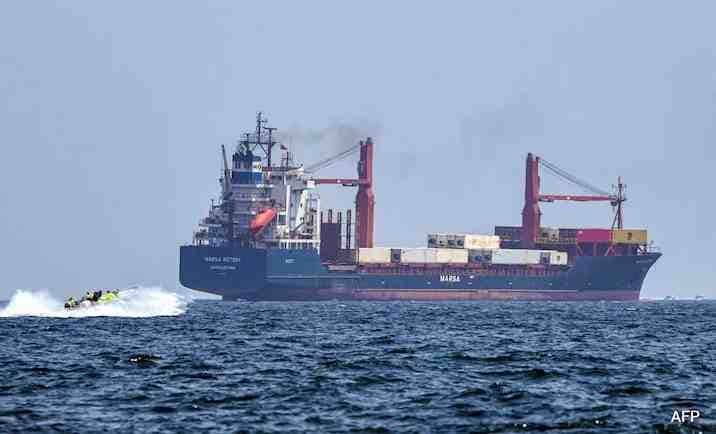
However, the reality on the ground is far more porous. While the "death of Iran" makes for a powerful campaign slogan, the Iranian regime has not collapsed. Instead, it has decentralized. The closure of the Strait of Hormuz remains a physical reality, with over 1,000 cargo ships currently stalled, sending global energy markets into a tailspin with crude oil settling above $112 a barrel.
Trump’s declaration of victory is an exit strategy disguised as a triumph. By framing the foreign threat as "dead," he creates the necessary vacuum to redirect the military-grade urgency of his administration toward his domestic "enemies." This is a classic diversionary tactic, but executed with the scale of a multi-front war.
Importing the Battlefield
The shift in language is precise. Throughout March, Trump used "sinister," "radical," and "terrorist" to describe the leadership in Tehran. This week, those exact descriptors are being applied to Hakeem Jeffries, Jasmine Crockett, and the broader Democratic leadership.
The investigative reality is that this war was never just about nuclear centrifuges in Natanz. It was a stress test for executive power. Trump launched the largest military operation since the 2003 Iraq invasion without a single vote of Congressional authorization. Having successfully bypassed the War Powers Resolution abroad, he is now testing whether that same "commander-in-chief" authority can be leveraged against political opposition at home.
The "Enemy Within" narrative serves three distinct purposes:
- Neutralizing the Shutdown: With the government partially shuttered over a border funding impasse, the President is framing Republican intransigence as a national security necessity against a "treasonous" opposition.
- Justifying Emergency Powers: Sources within the administration suggest the White House is drafting executive orders that would treat "domestic interference" in energy production—specifically protests against rising gas prices—under the same umbrella as Iranian sabotage.
- The Midterm Pivot: By labeling the Democratic Party the "greatest enemy," Trump is effectively criminalizing political dissent before the first 2026 ballots are cast.
The Cost of the Pivot
The pivot comes at a steep price for American credibility. While Trump claims the war is "militarily won," the Pentagon is simultaneously requesting $200 billion in supplemental funds to manage the "wind-down." Allies are not buying the victory lap. European leaders, already reeling from the energy crisis, have begun to view the U.S. as a source of global instability rather than a guarantor of security.
A recent nine-country poll shows that 48% of Europeans now regard the current administration as a greater threat to regional stability than the regime it just "obliterated." This sentiment is fueled by Trump's transactional approach to NATO, recently calling alliance members "cowards" for refusing to join the naval task force in the Gulf.
The irony is thick. Trump campaigned on ending "forever wars," yet he has initiated a conflict with no clear occupation plan or successor government in Tehran. The "death" he speaks of is likely just the beginning of a long, shadowy insurgency that will haunt the region for a generation.
Arithmetic of the New Normal
The strategy here is not about stability; it is about the "exchange rate" of political capital. In the Middle East, Iran’s strategy was to draw the U.S. into a prolonged conflict that drains resources. Domestically, Trump is using that same exhaustion to his advantage. If the public is tired of war, he offers them a new target that doesn't require carrier groups or drone strikes—just a ballot box and a relentless media campaign.
The danger of this transition cannot be overstated. When a President identifies half of the domestic electorate as a more significant threat than a nuclear-capable hostile state, the guardrails of democratic discourse aren't just bent; they are melted down.
The "Greatest Enemy" is no longer a foreign cleric in a turban. It is the person living next door who votes for the other party. By declaring the Iranian war over, Trump hasn't brought peace. He has simply brought the war home.
Keep a close eye on the Department of Justice over the next 48 hours to see if this rhetoric translates into specific legal actions against "radical" political organizers.