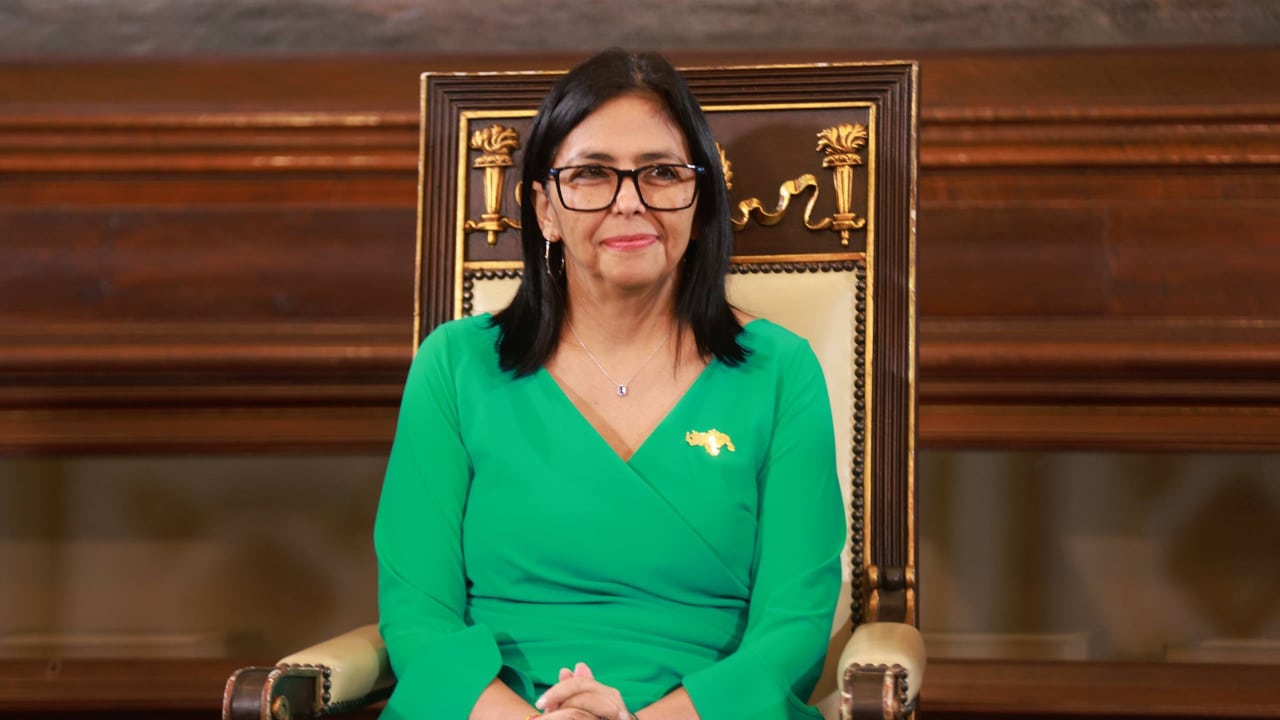
The era of the "forever general" is over. On Wednesday, March 18, 2026, Venezuela’s acting President Delcy Rodriguez dismissed Defense Minister Vladimir Padrino Lopez, the man who served as the indispensable anchor for the Chavista regime for over a decade. He was not just a minister; he was the primary guarantor of military loyalty through years of economic collapse, street protests, and international isolation. His removal marks the most aggressive move by Rodriguez to consolidate personal control since the January 3 capture of Nicolas Maduro by U.S. forces.
By replacing Padrino Lopez with General Gustavo Gonzalez Lopez—a hardline intelligence veteran—Rodriguez is not signaling a democratic opening. She is battening down the hatches. While the official narrative focuses on a "new stage" for the Bolivarian Revolution, the reality is a desperate surgical strike to prevent a military fracture. Padrino was Maduro’s man, and in the power vacuum left by the former president’s detention in the United States, his presence had become a liability to Rodriguez’s own survival.
The Architect of the Military State
To understand why Padrino’s exit is a seismic event, one must look at what he built. Appointed in 2014, he transformed the National Bolivarian Armed Forces (FANB) from a traditional military into a massive corporate conglomerate. Under his watch, generals were not just soldiers; they became CEOs. They took control of oil production, mining, food distribution, and ports.
This was a deliberate strategy of "coupproofing" through corruption. By giving the high command a direct stake in the economy, Padrino ensured that the fall of the regime would mean the end of their personal fortunes. He managed a delicate hierarchy of over 2,000 generals—more than all NATO countries combined—keeping them satisfied with lucrative import contracts and mining concessions in the Orinoco Mining Arc.
However, this system relied on a central figurehead to adjudicate disputes between rival military factions. With Maduro gone, Padrino remained the only figure with enough institutional weight to command the respect of the old guard. For Delcy Rodriguez, that made him too powerful to keep.
Why the Swap Happened Now
The timing of this reshuffle is not accidental. It follows weeks of quiet negotiations between the interim Rodriguez government and U.S. officials, including recent visits from high-ranking Southern Command officers. Rodriguez has been walking a razor-thin line, attempting to secure sanctions relief and oil investment while maintaining the "anti-imperialist" rhetoric necessary to keep her base from revolting.
Padrino Lopez was a vocal critic of the January intervention, labeling it a "kidnapping." His continued presence at the head of the military was a constant reminder of the old Maduro orthodoxy. By removing him, Rodriguez is clearing the path for a more pragmatic, if no less authoritarian, approach to the military.
General Gustavo Gonzalez Lopez, the new minister, is a significant choice. As the head of the SEBIN intelligence service and the DGCIM (military counterintelligence), he is the man who knows where the bodies are buried. He is a specialist in internal surveillance rather than external defense. His appointment suggests that the administration is less worried about a foreign invasion and more concerned about a domestic mutiny.
The Gonzalez Lopez Dossier
- Background: Former head of SEBIN and commander of the Presidential Honor Guard.
- Reputation: Known as a ruthless enforcer of internal discipline.
- Objective: To monitor and neutralize dissent within the 2,000-strong generalate.
The Oil Factor and the US Shadow
Beneath the political theater lies the cold reality of Venezuelan crude. The Trump administration has made no secret of its desire to "fix" the broken oil infrastructure. For this to happen, the military's grip on PDVSA, the state oil company, must be recalibrated.
Padrino Lopez represented the old "Military-Industrial-Socialist" complex. He oversaw the decline of production to historic lows while military-run front companies siphoned off the remaining value. Rodriguez knows that to stay in power, she needs the oil money flowing again, and that requires a military leadership that will stay in the barracks—or at least out of the boardrooms—while foreign engineers return to the fields.
The dismissal of Padrino is a signal to Washington and Houston that the old guard is being sidelined. It is a gamble that the military, tired of poverty and the stigma of international sanctions, will trade their "loyalty to Maduro" for a chance to remain relevant in a post-Maduro economy.
A Fractured Command
The risk of this move is immense. Venezuela’s military is not a monolith; it is a collection of cartels and interest groups. Some are deeply involved in the "Cartel of the Suns" and drug trafficking; others are professional officers disgusted by the corruption.
Padrino was the "great balancer." He was the only one who could talk to the Cubans, the Russians, and the local garrison commanders simultaneously. Without him, the competition for resources between the Army, the National Guard, and the various intelligence agencies could turn violent.
If Rodriguez cannot satisfy the financial appetites of the mid-level officers who actually lead the troops, she may find that replacing the man at the top does little to secure the foundations of her presidency. The "national day of jubilation" declared after the recent World Baseball Classic victory provided a temporary distraction, but it does not change the fact that the soldiers are still paid in a currency that is virtually worthless.
The End of an Era
Vladimir Padrino Lopez was the last major link to the Hugo Chavez era within the high command. He survived coups, assassination attempts, and the total collapse of the national economy. His "new responsibilities," mentioned vaguely by Rodriguez, are likely a polite term for house arrest or a symbolic post with no real power.
The move marks a shift from the ideological military of the Maduro years to a security state focused on survival and resource management. Rodriguez has chosen a master of spies to lead her soldiers, signaling that the primary mission of the FANB is now the preservation of the current interim order against all threats, both foreign and—more importantly—domestic.
The transition is fraught with danger. A military that has been told for a decade that they are the "pillars of the revolution" may not take kindly to being treated as a security detail for a transitional civilian leader. Whether Gonzalez Lopez can maintain the same level of discipline through fear that Padrino maintained through a mix of charisma and corruption will determine if Venezuela stabilizes or descends into further chaos.
One thing is certain. The structure that Padrino Lopez built is being dismantled, piece by piece, by the very people it was designed to protect.
Would you like me to analyze the specific economic shifts occurring within the Venezuelan military-run mining sector following this leadership change?