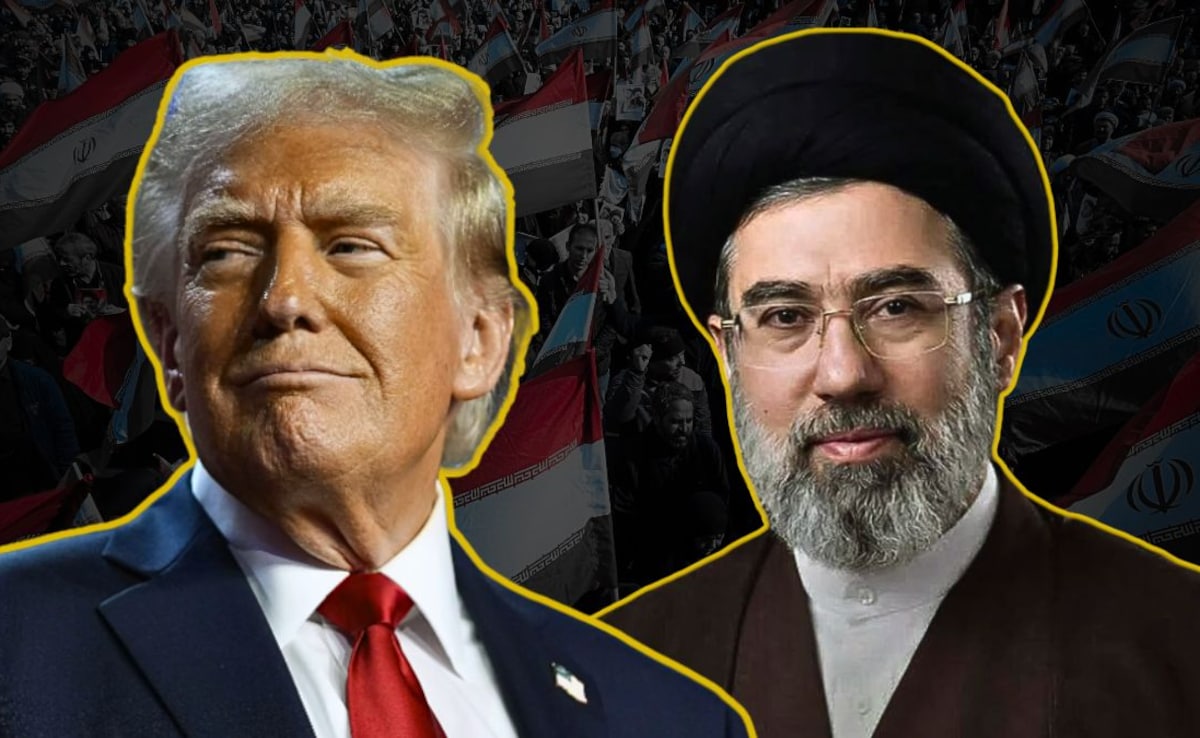
A single number can sometimes weigh more than a mountain. In a quiet office in Washington, D.C., a digital ledger was updated with a figure so precise it felt like a mathematical insult to the man it targeted: $11,000,000. When converted to Iranian rials, the digits spill off the page, a staggering sum of 92,47,48,000—over 92 crore—meant to buy the secrets of a man who has spent his entire life mastering the art of being invisible.
Mojtaba Khamenei does not hold an official government post. He does not give televised addresses. He does not have a verified social media account where he posts updates about his day. Yet, the United States government believes his influence is so pervasive, and his role in the shadows of the Iranian state so critical, that they are willing to pay a king’s ransom just to understand how he operates.
This isn't just about money. It’s about the architecture of power in a world where the most dangerous people are the ones you never see.
The Son in the Sidebar
To understand why the U.S. State Department’s "Rewards for Justice" program is flashing this figure, you have to look past the official portraits of the Supreme Leader, Ayatollah Ali Khamenei. You have to look at the man standing two steps behind him.
Mojtaba is the second son. In the traditional hierarchy of Tehran, that might suggest a secondary role. But power in the Islamic Republic doesn’t always follow the public flow chart. For decades, whispers have trailed Mojtaba like smoke. He is the purported gatekeeper, the man who manages the "Beit-e Rahbari"—the Office of the Supreme Leader.
Imagine a hypothetical businessman in Isfahan or a tech developer in Tehran. They don't fear the local police. They fear the reach of an organization that answers to no one but the top. The U.S. Treasury alleges that Mojtaba has represented his father in official capacities and worked closely with the Islamic Revolutionary Guard Corps (IRGC) and the Basij—the paramilitary force often seen on the front lines of domestic crackdowns.
The bounty isn't for his head. It’s for his digital footprint, his financial networks, and his associations. The U.S. wants to know exactly how the gears turn when the public cameras are off.
The Anatomy of an Eleven Million Dollar Secret
Why this amount? Why now?
The timing isn't accidental. It reflects a growing realization that the stability of the Iranian leadership may hinge on a succession plan that has been debated in secret for years. For a long time, Ebrahim Raisi, the late president, was seen as the frontrunner to replace the aging Supreme Leader. But with Raisi’s sudden death in a helicopter crash, the spotlight shifted violently toward Mojtaba.
The U.S. government is essentially betting that someone, somewhere, is tired of the silence. They are looking for information on his financial assets, his methods of bypassing international sanctions, and his role in "malign activities" ranging from regional proxy wars to the suppression of internal dissent.
Consider the logistics of such a bounty. It isn't paid out in a briefcase full of cash on a dark pier. It involves secure channels, relocated lives, and the permanent erasure of an informant's previous identity. The $11 million is a "life-changing" figure because it has to be—it’s the price of a person's entire world.
The Ghost in the Machine
We often think of power as something loud. We think of rallies, speeches, and military parades. But Mojtaba Khamenei represents a different kind of authority: the power of the shadow.
He is linked to the "Setad," a massive conglomerate controlled by the Supreme Leader that holds stakes in almost every sector of the Iranian economy, from telecommunications to birth control. This isn't just a business; it’s a parallel state. When the U.S. places a bounty on information regarding Mojtaba, they are trying to map a labyrinth that was built specifically to be unmappable.
The human cost of this shadow power is felt by the Iranian people in the most mundane ways. It’s felt in the rising price of bread when sanctions hit the opaque businesses he reportedly influences. It’s felt in the throttled internet speeds when the security apparatus he allegedly helps manage decides to go dark.
For the average citizen, Mojtaba is a rumor that has the power to change their reality. He is the personification of a system that prioritizes its own survival over the transparency of its institutions.
The Logic of the Reward
Some critics argue that these bounties are mere theater—a way for Washington to look busy while diplomacy stalls. But there is a cold, calculated logic to it.
Even if no one ever collects the $11 million, the mere existence of the offer creates friction. It breeds paranoia within the inner circle. It makes every advisor, every bodyguard, and every financial courier a potential liability. If you are Mojtaba Khamenei, you now have to wonder if the person pouring your tea or managing your offshore accounts has seen the latest "Rewards for Justice" tweet.
It turns trust into a commodity. In a regime built on loyalty and ideological purity, the introduction of a massive financial incentive is a toxin. It’s a psychological operation disguised as a reward.
Beyond the Numbers
But let’s step back from the geopolitics. What does it say about our world that we can put a price tag on the influence of a human being?
The $11 million figure is a testament to the failure of traditional diplomacy and the rise of "asymmetric transparency." We live in an era where data is the ultimate currency. The U.S. doesn't want to stop Mojtaba with a bullet; they want to stop him with a spreadsheet. They want to know the account numbers, the shell companies in Dubai, the luxury real estate in Turkey, and the encrypted messaging apps used to coordinate with the IRGC.
The tragedy of the story is that the people who have the most to lose—the millions of Iranians living under the weight of this struggle—will likely never see a cent of that bounty. They are the collateral in a high-stakes poker game between a superpower and a shadow.
The U.S. is hunting a ghost. They are using the only bait they think can lure a ghost out of the darkness: the promise of a different life.
Whether anyone takes the bait remains to be seen. But the price has been set. The ledger is open. And in the hushed corridors of Tehran, the air just got a little colder.
The silence that Mojtaba Khamenei has cultivated for decades is no longer his shield. It is now his most expensive attribute.
The hunter doesn't always need to see the prey to know where it's hiding. Sometimes, you just have to wait for the wind to change, or for someone to decide that eleven million dollars is worth the weight of a betrayal.
One day, the shadow will have to move. And when it does, the world will be watching to see if the man matches the myth, or if he is just another architect of a crumbling house, waiting for the lights to finally turn on.
Would you like me to analyze the specific financial networks the U.S. Treasury has previously linked to the Office of the Supreme Leader?