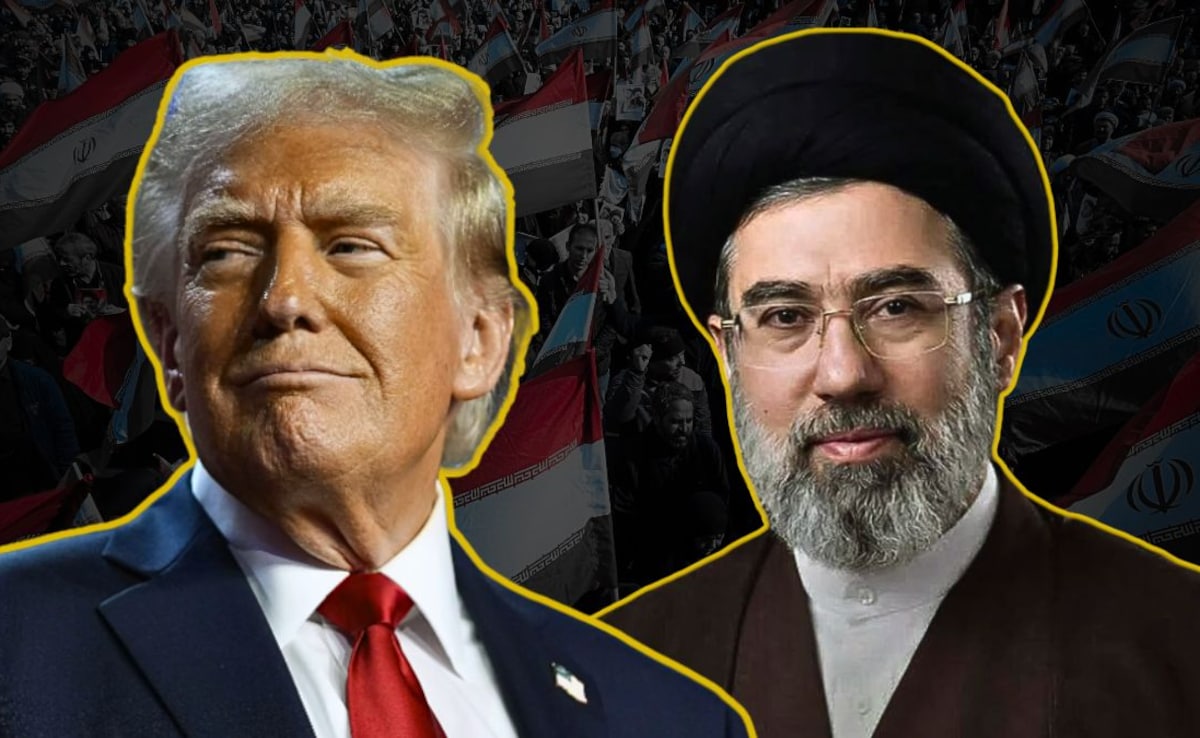
The headlines are screaming about "obliteration" and the end of Iranian energy dominance. If you believe the mainstream ticker tape, the strike on Kharg Island is the definitive checkmate in a decades-long chess match. It isn't. It’s a loud, expensive, and ultimately hollow gesture that ignores the fundamental mechanics of how modern energy markets and proxy warfare actually function.
Most analysts are stuck in 1991. They think you can bomb a terminal and erase a nation’s leverage. I have spent years watching markets react to "surgical strikes," and the pattern is always the same: the West overestimates the physical damage and completely ignores the adaptive resilience of a regime that has lived under the thumb of sanctions for forty years.
The Myth of the Unreplaceable Terminal
The lazy consensus suggests that Kharg Island is the "jugular" of the Iranian economy. The logic is simple: Kharg handles roughly 90% of Iran's crude exports. You hit Kharg, you kill the cash flow.
This is a fundamental misunderstanding of crude logistics.
Iran isn’t a standard corporate entity with a supply chain optimized for efficiency. It is a survivalist state. For every fixed pier on Kharg, there is a "ghost" protocol ready to take its place. Ship-to-ship (STS) transfers in the Gulf aren't just a workaround; they are the primary mode of operation for a sanctioned state.
When you "obliterate" a pier, you don't stop the oil. You just move the transfer point five miles offshore into international waters where the targeting becomes a diplomatic nightmare. The "obliteration" narrative satisfies a domestic political urge to look strong, but it fails to account for the fact that oil is liquid. It finds the path of least resistance.
The Invisible Buyer Problem
If the US actually destroyed Iran’s ability to export every single drop of oil tomorrow, the biggest loser wouldn't be Tehran. It would be Beijing.
We talk about these strikes as if they happen in a vacuum of "US vs. Iran." In reality, we are firing missiles at China’s energy security. China is the primary recipient of Iranian "Teapot" refinery crude. By striking Kharg, the US isn't just punishing a regional adversary; it is effectively imposing a massive tax on the Chinese manufacturing sector.
Does anyone honestly believe China will sit back and watch their primary discounted energy source evaporate?
I’ve sat in rooms where "hardline" strategists swear that cutting off Iranian supply will force a regime collapse. They said it in 2012. They said it in 2018. It never happens because the black market is more robust than the white market. When you destroy a formal terminal, you push the trade further into the shadows where the US has zero visibility and zero oversight. You aren't winning; you’re blinding yourself.
The Mathematical Fallacy of Oil Prices
Let’s look at the numbers the pundits are ignoring.
$$P_{oil} = f(S, D, R)$$
Where $P$ is price, $S$ is supply, $D$ is demand, and $R$ is the risk premium.
Mainstream news focuses entirely on $S$—the physical barrels. They argue that removing 1.5 million barrels per day (bpd) from the global market will send crude to $150. This ignores the $R$ factor. The market has already priced in the "Middle East Chaos" premium.
Furthermore, the global spare capacity held by Saudi Arabia and the UAE currently sits at roughly 3.5 to 4 million bpd. The math doesn't support a permanent price spike. If Kharg goes dark, the Riyadh taps open. Iran knows this. The US knows this. The "obliteration" of Kharg is a psychological operation, not an economic one. It’s a high-stakes theatrical performance designed to satisfy a voting base that wants to see "decisive action" without paying $7 at the pump.
The Infrastructure Trap
I’ve seen military planners fall into the "infrastructure trap" time and again. They see a target on a satellite map and assume its destruction equals the destruction of the capability.
Infrastructure is just steel and concrete.
The real power of the Iranian energy sector isn't the dock at Kharg; it’s the network of front companies, the sovereign wealth maneuvering, and the technical expertise of engineers who have spent half their lives repairing equipment with smuggled parts.
If you want to actually "obliterate" a target, you don't hit the terminal. You hit the banking switches. But the US won't do that effectively because the collateral damage to the global financial system—specifically the Eurodollar market—would be catastrophic.
Instead, we get the Kharg Island fireworks show. It’s the geopolitical equivalent of a "security theater" at the airport. It makes you feel safer while the real threats walk through the back door.
The Retaliation Reality Check
The competitor piece treats the Kharg strike as a finality. "Targets obliterated. Mission accomplished."
This is dangerously naive.
In the real world, asymmetric warfare dictates that the response won't be a conventional naval battle. Iran isn't going to sail a destroyer at a US Carrier Strike Group. They are going to use $20,000 drones to hit $500 million desalination plants in the UAE. They are going to cut fiber optic cables on the sea floor.
The cost-to-damage ratio is heavily skewed in Iran's favor.
- US Strike on Kharg: Costs millions in ordnance, billions in regional deployment, and risks a global oil shock.
- Iranian Response: Costs a few thousand dollars in suicide boats and shuts down water for 5 million people in a neighboring "neutral" state.
Who is actually winning that exchange?
Stop Asking if the Strike Was Successful
People are asking: "Did we hit the targets?"
That is the wrong question. Of course we hit the targets. We have the best targeting technology in human history.
The right question is: "What did we actually change?"
The regime is still there. The IRGC is still funded. The ghost tankers are still sailing. The only thing that changed is that we’ve used up a "red line" card that we can't play twice. Once Kharg is gone, what’s the next move? Bombing the oil fields themselves? That leads to an environmental and economic catastrophe that would make the 1970s look like a golden age of stability.
We are watching a strategy of diminishing returns. We are trading long-term regional stability for a short-term headline that says we "obliterated" something.
The Hard Truth About "Obliteration"
If you are an investor or a citizen trying to make sense of this, ignore the "all-out war" rhetoric.
True "obliteration" in the 21st century doesn't look like a burning oil terminal. It looks like a slow, grinding isolation that renders a nation’s currency worthless and its youth desperate. Kinetic strikes—like the one on Kharg—actually provide the regime with a "rally around the flag" moment. It gives them an external enemy to blame for their own internal economic failures.
By hitting Kharg, the US just gave the Iranian leadership a massive PR win. They can now blame every power outage, every food shortage, and every currency dip on "American aggression" rather than their own systemic corruption.
How to Actually Navigate This
If you want to stay ahead of the curve, watch the Straits of Malacca, not the Persian Gulf. Watch how many tankers "change" their transponders in the next 72 hours. Watch the discount rates on "Grade A" crude in the Chinese independent refinery markets.
That is where the war is being won or lost.
The fires on Kharg Island will eventually go out. The smoke will clear. And when it does, you’ll realize the fundamental power balance hasn't shifted an inch. We are just deeper into a cycle of performative violence that costs blood and treasure while solving exactly zero of the underlying structural issues.
Stop falling for the "obliteration" hype. The world is far more resilient—and far more cynical—than a headline about a burning island suggests.
If you want to see the real impact, look at who is buying the oil next week, not who bombed the pier today.