The Night Public Safety Became a Target
On a quiet Sunday night in North London, the thin line between civil protest and domestic terrorism dissolved into the smell of burning rubber and chemical accelerants. The target was not a government building or a high-profile political figure. Instead, it was a fleet of private ambulances operated by a Jewish community-led medical service. This was a surgical strike against the infrastructure of mercy.
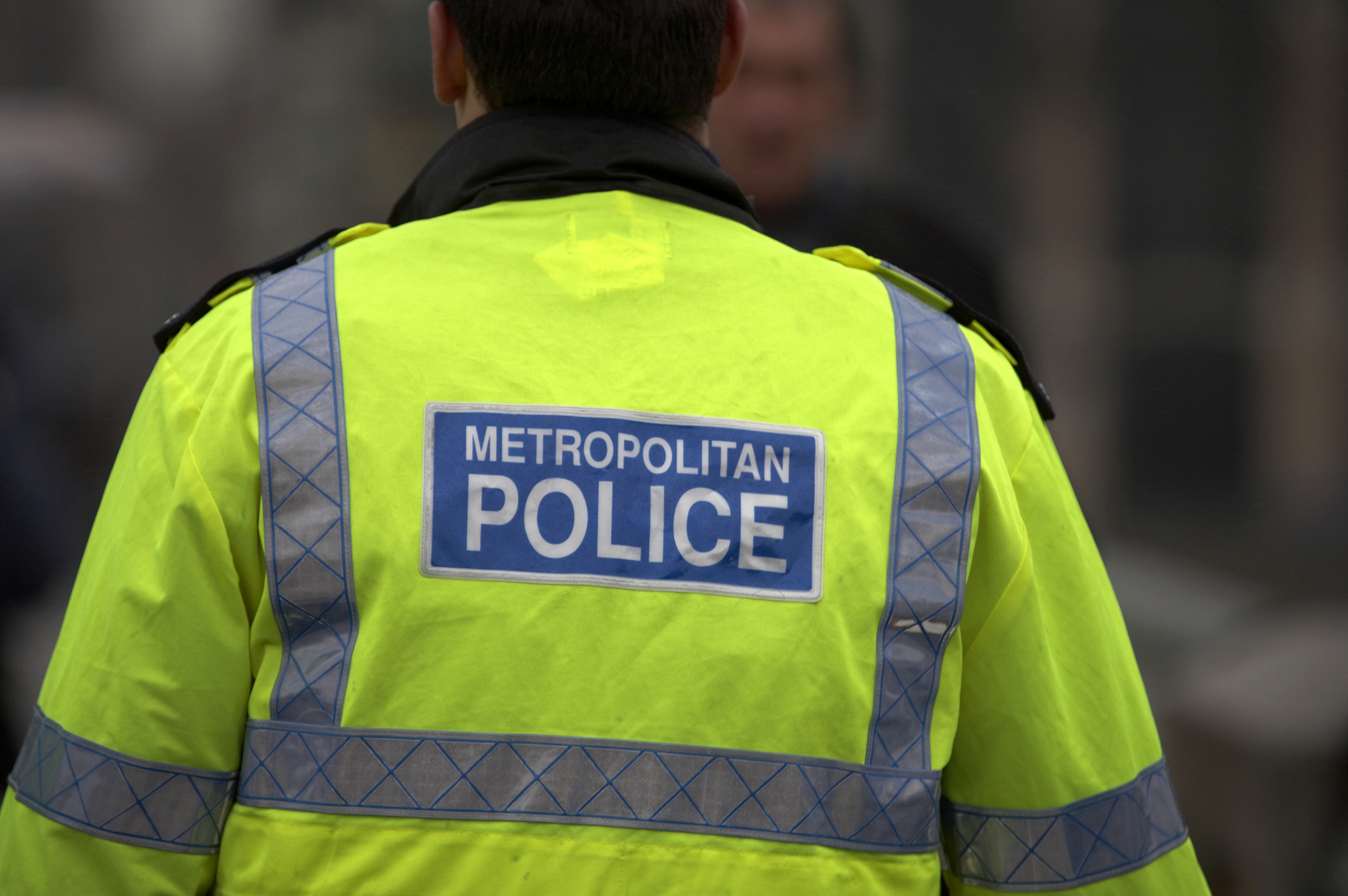
Early investigations by the Metropolitan Police and the Community Security Trust (CST) have confirmed what the charred remains of the vehicles already signaled. This was a targeted antisemitic attack. By disabling vehicles meant to provide life-saving care to a specific demographic, the perpetrators moved beyond symbolic violence. They entered the realm of systemic endangerment.
The logistics of the attack suggest more than a random act of hooliganism. The speed with which multiple vehicles were engulfed, and the timing—exploiting a moment of heightened global tension—points to a premeditated attempt to intimidate the Jewish community at its most vulnerable point: its health and safety.
Beyond the Smokescreen of Political Grievance
We have reached a point where "geopolitical tension" is frequently used as a polite euphemism for raw, unfiltered bigotry. In the wake of the fire, social media corridors were filled with attempts to contextualize the crime within the broader framework of Middle Eastern conflict. This is a dangerous fallacy. There is no political calculus that justifies the incineration of an ambulance.
When investigators look at the "why," they aren't just looking for a culprit with a lighter. They are looking at a radicalization pipeline that has spent the last year dehumanizing Jewish institutions. If you tell a group of people long enough that every facet of a community is an extension of a foreign government’s policy, someone will eventually believe that a medical vehicle is a legitimate military target.
This isn't just about North London. This is about the collapse of the unwritten rule that says certain things—hospitals, ambulances, schools—are off-limits. When those boundaries fail, the social contract doesn't just bend. It snaps.
The Weaponization of Proximity
The choice of target reveals a chilling understanding of community dynamics. Private ambulance services in London, particularly those like Hatzola, fill critical gaps in the overstretched NHS framework. They are deeply embedded in the neighborhoods they serve. By striking these vehicles, the attackers aren't just causing financial damage; they are injecting a permanent sense of dread into every emergency call.
Imagine being an elderly resident in Stamford Hill, chest pains blooming, and wondering if the help you call for has been sabotaged. That is the psychological payload of this arson. It is a form of "slow-motion" violence that outlasts the actual flames.
The Failure of Deterrence and the Digital Echo Chamber
For years, analysts have warned that the rhetoric found in encrypted chat groups and fringe forums would manifest as physical violence. The London ambulance fire is the physical manifestation of that digital bile. We are seeing a total failure of deterrence because the perpetrators believe they are acting on behalf of a "higher" moral cause, fueled by a relentless stream of dehumanizing content.
The Metropolitan Police are now playing catch-up. While their "hate crime" designation is a necessary legal step, it does little to address the vacuum of security that allowed the attack to happen. Private organizations are now being forced to divert funds from life-saving equipment to high-grade surveillance and private security details.
The cost of antisemitism is no longer just social; it is a massive, unallocated tax on community survival.
Analyzing the Accelerant
Arson is a coward's tool, but it is also an effective one. It requires minimal skill but yields maximum visual impact. The images of blackened ambulances serve as "trophy shots" for extremist recruiters. They use these images to prove that the community is reachable, that the "enemy" is soft, and that the state cannot protect its own citizens.
To understand the "how," we must look at the lack of friction in the attackers' path. The site was known. The vehicles were clearly marked. The security was scaled for a peaceful city that no longer exists. We are operating on a 2010 security mindset in a 2026 threat environment.
The Broader Pattern of Institutional Erosion
This incident does not exist in a vacuum. It follows a series of incidents across Europe where the machinery of civic life—libraries, neighborhood centers, and transport—has been targeted based on the perceived identity of the users. When an ambulance burns, the message is that the community’s right to exist in a healthy, functioning state is being revoked by an anonymous mob.
We must also confront the uncomfortable reality of the "bystander effect" in modern policing. There is a palpable hesitation to crack down on the radicalization hubs that produce these attackers for fear of sparking wider unrest. This hesitation is perceived as permission.
- The First Phase: Rhetorical exclusion and the labeling of community services as "partisan."
- The Second Phase: Low-level vandalism that goes largely unpunished or is dismissed as "activism."
- The Third Phase: The physical destruction of essential infrastructure, such as the North London arson.
If the state cannot secure an ambulance, it cannot claim to have a handle on public order.
A Reckoning for London’s Security Infrastructure
The response to this attack cannot be limited to a few arrests and a press release. It requires a fundamental shift in how the city protects its diverse components. The burden of security has been unfairly shifted onto the victims. When a religious or ethnic group has to turn their medical centers into fortresses, the city has already failed them.
The intelligence community needs to stop treating these as isolated "lone wolf" incidents. There is a shared language, a shared target list, and a shared intent. These attackers are reading from the same playbook, one that views the destruction of a Jewish ambulance as a victory for a global cause.
London prides itself on being a global hub of co-existence. But co-existence is not a passive state. It is a fragile equilibrium that must be defended with the full weight of the law. If the fire in North London is allowed to become just another Tuesday headline, we are signaling that the infrastructure of mercy is fair game.
The investigation must move upward. Tracking the person who held the match is the bare minimum. We need to track the money, the influence, and the digital platforms that told that person that an ambulance was a weapon. Without that, we are just waiting for the next plume of smoke to rise from a different borough.
Secure your own local community’s emergency response protocols and demand a public audit of the hate crime task force’s recent effectiveness rates.