Lebanon’s government just did something that seemed impossible only a year ago. After a chaotic dawn attack by Hezbollah on northern Israel, Prime Minister Nawaf Salam didn't just issue a standard "concerned" press release. He effectively outlawed the group's entire military wing. In an emergency cabinet meeting that lasted over five hours on Monday, March 2, 2026, the Lebanese state declared that the era of a "state within a state" is officially over. It’s a bold move, but it’s one born of desperation as Israeli jets already began pounding Beirut’s southern suburbs in retaliation.
You’re probably wondering why this is happening now. For decades, Hezbollah’s military power was a fact of life in Lebanon, often eclipsing the national army itself. But after a year of brutal warfare, the 2024 ceasefire, and the recent death of Iranian Supreme Leader Ali Khamenei, the political winds in Beirut have shifted. The government has basically said: "Enough." They’re tired of being dragged into regional wars they didn't choose.
The straw that broke the camel's back
Hezbollah claimed their Monday morning rocket and drone barrage was a response to the killing of Ali Khamenei and ongoing "Israeli aggressions." They didn't ask the Lebanese government. They didn't consult the army. They just fired. Within hours, the cabinet met at the Baabda Presidential Palace. President Joseph Aoun—a man who has never been a fan of Hezbollah’s independent arsenal—chaired the meeting.
The outcome was a hammer blow to the group. Prime Minister Salam announced an immediate, absolute ban on all of Hezbollah's military and security activities. It’s not a suggestion. It’s a law. He made it clear that "the decision of war and peace rests exclusively with the state." If you’re a Hezbollah fighter today, the Lebanese government officially considers you an outlaw.
Lebanon's new political reality
The most shocking part of this isn't just the ban. It’s who signed off on it. Reports indicate that even ministers from the Amal Movement—Hezbollah’s longtime Shiite ally—approved the decision. This suggests a massive fracture in the traditional pro-Iran bloc in Lebanon. The country is still reeling from the 2024 conflict that displaced 1.2 million people and destroyed 100,000 homes. Nobody in Beirut wants a repeat of that nightmare.
The government's plan is aggressive. They’ve ordered the Lebanese Armed Forces (LAF) to:
- Confine all weapons strictly to state control north of the Litani River.
- Prevent any further launches of missiles or drones from Lebanese soil.
- Arrest anyone involved in the Monday morning attacks, including the "instigators."
This isn't just about Hezbollah's rockets. It's about the state finally trying to grab the steering wheel. Prime Minister Salam has even reduced the number of cabinet seats held by Hezbollah and stripped them of their previous veto power. They’ve been politically cornered.
Can the army actually enforce this
It’s one thing to pass a law; it’s another to enforce it against a battle-hardened militia. The LAF is currently under-resourced and facing a monumental task. They’re being asked to raid depots and disarm a group that still has thousands of fighters, even if they were severely degraded during the 2024 Israeli campaign.
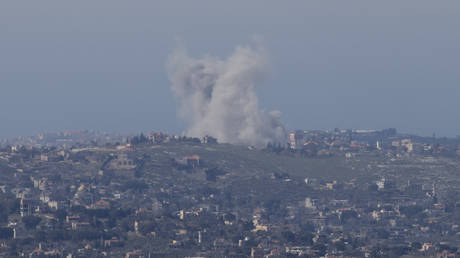
Israel isn't waiting around to see if the Lebanese army succeeds. On Monday alone, Israeli strikes killed at least 52 people and wounded 154 across Lebanon. The IDF claimed they hit a Hezbollah "precision-guided missile" store in Beirut. The stakes couldn't be higher. If the Lebanese army fails to act, Israel will likely keep bombing until there’s nothing left to hit.
What this means for you and the region
If you’ve been following Middle Eastern politics, you know that Lebanon's stability is the linchpin for the whole Levant. A real ban on Hezbollah's military wing could finally lead to the implementation of UN Resolution 1701, which calls for a demilitarized zone in the south. But it also risks a civil war.
Hezbollah’s parliamentary officials are already calling these "swaggering decisions" and accusing the government of abandoning the "resistance." There’s a very real chance of clashes between the army and Hezbollah militants if the state actually tries to seize weapons without a back-channel deal.
The Lebanese government is now calling on the U.S. and France to guarantee a ceasefire and get a commitment from Israel to stop the strikes. They've also stated they’re ready for "civilian-led negotiations" with international oversight. They're trying to prove they can be a normal country again.
If you’re in the region or have interests there, keep a close eye on the LAF’s movements in the coming days. The real test will be whether they actually move into Hezbollah strongholds to confiscate hardware. If they don't, this ban is just words on a page. If they do, Lebanon is entering its most dangerous—and perhaps most hopeful—chapter in decades. Watch for the Paris conference on March 5, where Lebanon will beg for the international funding it needs to actually make this ban stick.