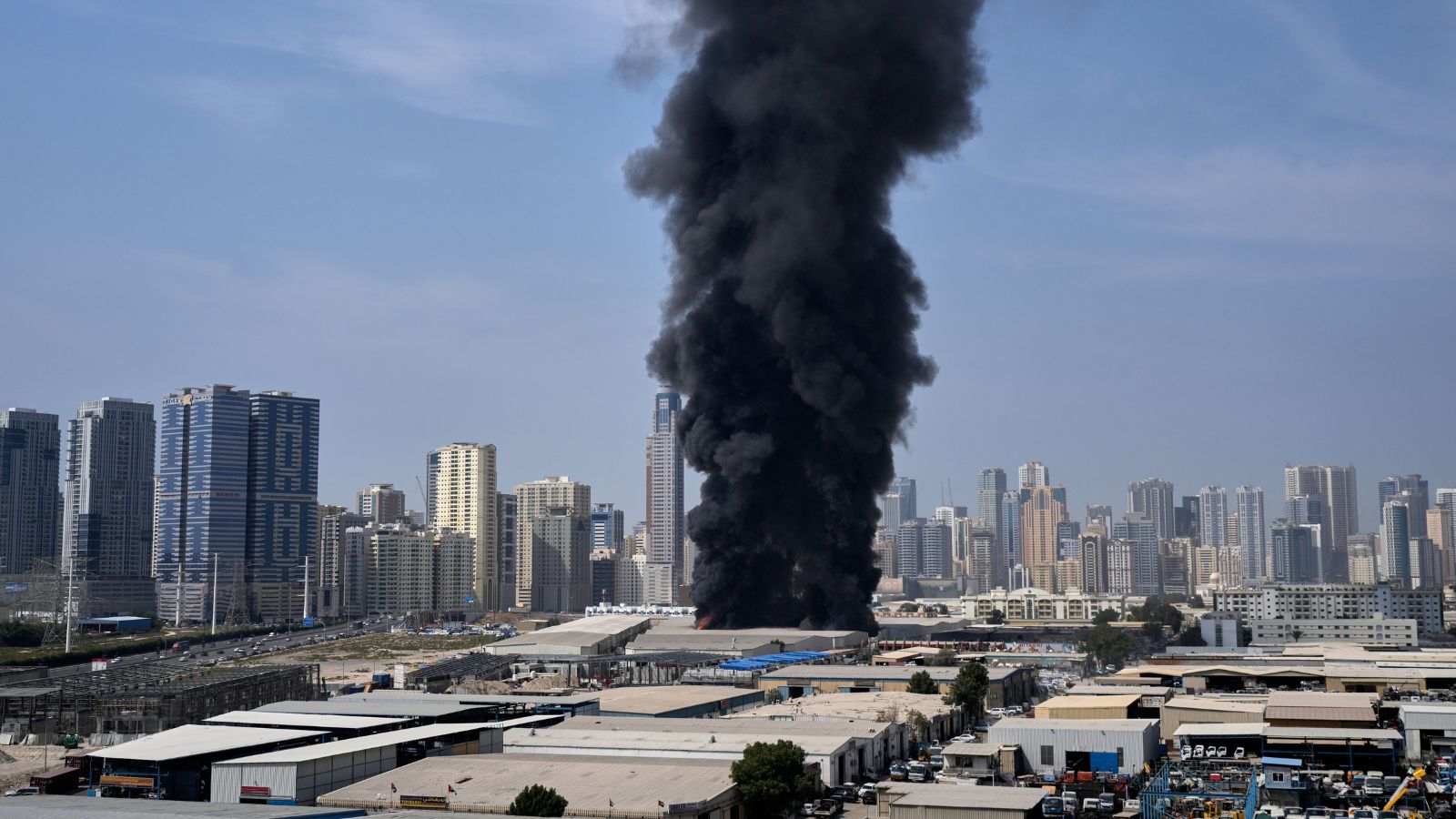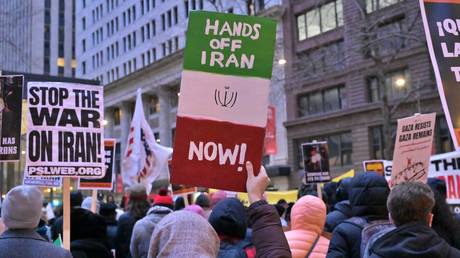
Military strategists in the Pentagon often speak of "kinetic options" with a clinical detachment that masks the explosive reality of warfare. However, when those options involve direct strikes on Iranian soil or assets, they collide with a domestic reality that few in the beltway care to acknowledge. The American public is exhausted. Recent polling data indicates a profound disconnect between the executive branch’s regional objectives and the will of the people paying for them. Most Americans do not support direct military escalation with Iran, viewing it as a predictable path toward another multi-decade entanglement with no defined exit strategy.
This isn't a fringe sentiment or a partisan outlier. It is a fundamental shift in how the average citizen calculates the cost of global influence. For years, the rationale for intervention was centered on "containment" and "stability," yet the results have often yielded the opposite. When voters look at the map of the Middle East, they don't see a chessboard. They see a sinkhole for trillions of dollars and thousands of lives.
The Architecture of Public Dissent
The lack of support for strikes on Iran stems from a sophisticated skepticism. It is no longer enough for an administration to point at a "malign actor" and expect a blank check for munitions. The public has learned to scrutinize the intelligence and the long-term projections. They are asking the questions that were skipped in 2003. What happens the day after the missiles hit? How does this lower the price of gas or improve national security at home?
Data reveals that the appetite for "limited" strikes is virtually non-existent because the public no longer believes a strike can stay limited. There is a widespread understanding of the "escalation ladder," where a single drone strike triggers a proxy response, which triggers a carrier group deployment, which eventually leads to boots on the ground. To the American taxpayer, this looks like a movie they have already seen, and they hated the ending.
The Economic Friction of War
While the humanitarian and moral arguments against war are significant, the current resistance is heavily anchored in domestic economic anxiety. Inflation and the national debt are not abstract figures; they are daily pressures. Every billion-dollar package sent to fund a regional conflict feels like a withdrawal from a bank account that is already overdrawn.
The math is brutal. A single Tomahawk cruise missile costs roughly $2 million. A full-scale campaign involves hundreds of these, plus the logistical tail of maintaining a massive naval and aerial presence. When this expenditure is weighed against crumbling infrastructure or a struggling healthcare system, the "national interest" of bombing a base in the desert becomes a hard sell. People are choosing bread over bombs, and the politicians are struggling to find a rhetorical workaround.
Why the Intelligence Community and the Public are Out of Sync
There is a growing gap between the threat perception of the intelligence community and the risk tolerance of the citizenry. Analysts in Washington see an Iran that is months away from a nuclear threshold and years into a project of regional hegemony through its "Axis of Resistance." They see a puzzle that must be solved.
The public sees a different puzzle. They see a country that has spent twenty years fighting shadows in the mountains of Afghanistan and the streets of Iraq only to see the status quo remain largely unchanged. This experience has created a "trust deficit." When officials claim that a strike is "necessary to prevent a larger war," the public hears the exact same justification used for every failed intervention of the last quarter-century.
The Proxy Paradox
One of the most complex factors in this lack of support is the nature of the conflict itself. Iran rarely engages directly, preferring to work through a network of proxies. This creates a strategic ambiguity that makes it difficult for the US government to build a clear, undeniable case for a direct retaliatory strike.
If a militia group in Syria or Iraq attacks a US outpost, the logical response in a military manual is to strike the source of the funding and orders. But to the American public, striking Iran for the actions of a militia feels like a massive leap in logic that carries too much risk. They see it as picking a fight with the boss because a low-level employee threw a stone. This nuance is often lost in high-level briefings, but it is a primary driver of the "No" vote in public opinion surveys.
The Specter of the 1979 Playbook
History hangs heavy over this relationship. For older generations, Iran is synonymous with the hostage crisis and the failed Desert One mission. For younger generations, it is the boogeyman that has been "ten years away" from a bomb for the last thirty years. This saturation of threat rhetoric has led to a boy-who-cried-wolf effect.
If everything is an existential threat, then nothing is. By constantly framing Iran as the ultimate regional villain without ever successfully resolving the tension through diplomacy or decisive (yet supported) action, the US government has exhausted its own credibility. The public has opted for a policy of "managed tension" rather than "decisive escalation." They would rather live with a cold war than die in a hot one.
Information Warfare and the Domestic Front
We are also seeing the first major geopolitical tension of the fully decentralized media era. In the past, a president could go on the three major networks, lay out a case for war, and expect a "rally 'round the flag" effect. That era is dead.
Today, every claim made by the State Department is instantly fact-checked, deconstructed, and countered by a thousand different voices on social media. Some of this is foreign disinformation, certainly, but much of it is organic skepticism from veterans, historians, and frustrated citizens. The government no longer has a monopoly on the narrative. When the Pentagon says a strike was "surgical and successful," independent satellite imagery and local social media feeds provide a counter-narrative within minutes. This transparency has made it impossible to hide the messy, inconclusive reality of modern air wars.
The Strategic Miscalculation of the Beltway
The biggest mistake analysts make is assuming that public opposition is rooted in isolationism. It isn't. It’s rooted in a demand for efficacy. If there were a clear, documented path where a strike on Iran would lead to a safer world and a more stable economy, the numbers might shift. But there isn't. Even the most hawkish think tanks admit that a strike would likely only delay Iran's nuclear program by a few years while simultaneously radicalizing the population and triggering a global oil crisis.
The public is doing a better job of "Red Teaming" the situation than the experts are. They are looking at the second and third-order effects.
- Oil Volatility: A conflict in the Strait of Hormuz could send global oil prices into a tailspin, potentially triggering a global recession.
- Domestic Terror Risk: Escalation abroad often brings the threat of asymmetric retaliation at home.
- Resource Diversion: Every asset moved to the Persian Gulf is an asset not available for the growing tensions in the Indo-Pacific.
Diplomacy as a Discarded Tool
There is a palpable sense that the US has forgotten how to talk. The public support for "non-kinetic" solutions—sanctions, treaties, and regional summits—remains significantly higher than support for military action. Yet, the political infrastructure seems geared toward a binary choice: total capitulation or total war.
The Iranian government is not a monolith, but neither is the American electorate. By failing to offer a middle path that doesn't involve the threat of B-2 bombers, the US government has backed itself into a corner where its only remaining tool is the one its people have explicitly forbidden it to use.
The Cost of Ignoring the Room
The risk of a "Presidential pivot" to war despite public opposition is high. Historically, executive power in foreign policy has been largely unchecked by public opinion once the first shot is fired. However, in the current hyper-polarized environment, ignoring a majority consensus could be political suicide.
If an administration drags an unwilling public into a war with Iran, the domestic blowback would be unprecedented. We are not looking at the protests of the 1960s; we are looking at a fundamental breakdown in the social contract. The government cannot lead a nation into a conflict if the nation refuses to follow.
Military planners can map out the coordinates of every missile silo in Iran, but they have yet to map out a way to regain the trust of their own citizens. Until they do, any strike remains a tactical gamble with a guaranteed strategic loss at home.
You can check the latest polling data from the Chicago Council on Global Affairs or the Pew Research Center to see these trends in real-time.