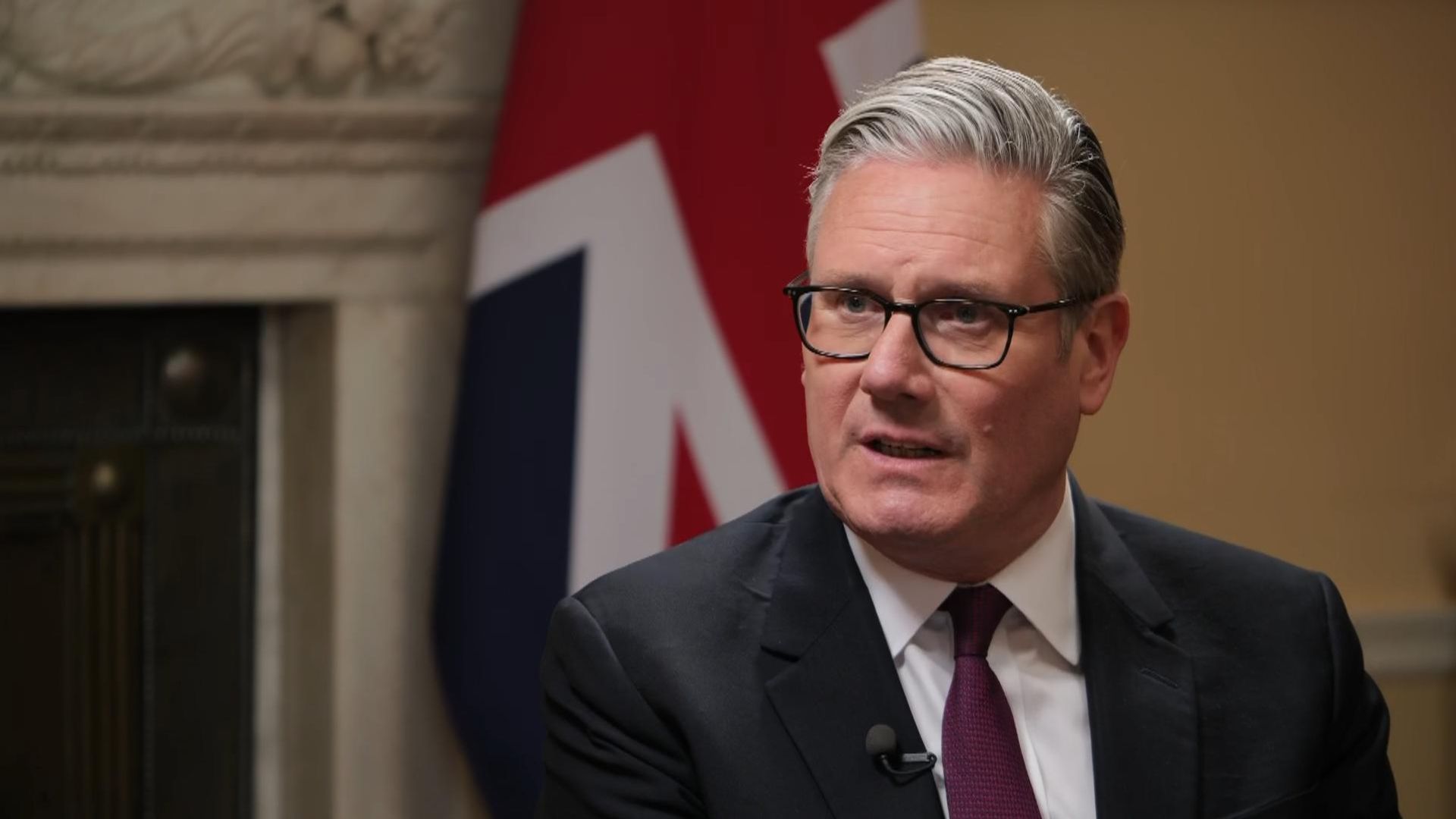
The Prime Minister’s recent warning that a widening conflict involving Iran could directly hit your weekly grocery bill and summer travel plans isn't just political rhetoric or an attempt to distract from domestic polling. It is a cold acknowledgement of how fragile the global supply chain remains. When the Strait of Hormuz or the Red Sea becomes a theater of war, the shockwaves don't just stay in the desert. They show up in the price of a pint of milk in Manchester and the cost of a family flight from Heathrow.
The logic is simple but the mechanics are brutal. Most people assume inflation is a product of central bank policy or corporate greed. While those factors play their part, the physical movement of goods is the true heartbeat of the economy. If Iran-backed forces or direct state actions disrupt the flow of tankers and cargo ships, the insurance premiums for those vessels skyrocket instantly. Those costs are never absorbed by the shipping conglomerates; they are passed directly to the retailer, and eventually, to the person standing at the checkout. You might also find this related story interesting: Why Sanctioning Superyachts is a Geopolitical Participation Trophy.
The Bottleneck at the Heart of the World
To understand why a regional war matters to a UK shopper, you have to look at a map of maritime chokepoints. The Strait of Hormuz is a narrow strip of water through which roughly a fifth of the world’s total oil consumption passes every single day. It is the jugular vein of the global energy market.
If Iran decides to restrict access to this waterway, or if active hostilities make it too dangerous for commercial traffic, the global oil price doesn't just rise—it jumps. Energy is the "input cost" for almost everything. It powers the tractors that harvest wheat, the factories that process food, and the trucks that deliver it to the supermarket loading bay. When crude oil prices spike, the cost of plastic packaging, fertilizer, and logistics follows an identical trajectory. As extensively documented in recent articles by Harvard Business Review, the implications are notable.
This isn't a hypothetical threat. We have seen how the Houthi rebels in the Red Sea have already forced major shipping lines like Maersk and MSC to reroute ships around the Cape of Good Hope. This adds ten days to a journey and millions of pounds in fuel costs per trip. A direct conflict with Iran would make these current disruptions look like a minor inconvenience.
Why Your Grocery Bill is the Front Line
Supermarkets operate on razor-thin margins, often between 1% and 3%. They cannot afford to eat a 20% increase in freight costs. We are already seeing "agrifood" inflation becoming a permanent fixture of the British economy.
The Fertilizer Trap
Modern industrial farming relies heavily on natural gas to produce nitrogen-based fertilizers. Iran is a massive player in the natural gas market, and any regional instability affects the global price of gas. If fertilizer becomes too expensive, farmers plant less or pass the cost to the wholesalers. By the time that head of lettuce reaches your basket, its price has been inflated at four different stages of the journey.
The Seasonal Reality
The UK imports nearly half of its food. During the winter and spring months, that figure climbs significantly for fresh produce. Much of this comes through trade routes that are sensitive to Mediterranean and Middle Eastern stability. Even if the food isn't coming from Iran itself, the global shipping containers it travels in are part of a massive, interconnected grid. If containers are stuck in a war zone or diverted thousands of miles off course, there is a physical shortage of "boxes" to carry goods elsewhere. This creates a bidding war for shipping space, and the consumer always loses that war.
The Summer Holiday Mirage
The travel industry is perhaps the most sensitive barometer of geopolitical tension. For the average British family planning a getaway, the Prime Minister’s warning points to two specific pressures: jet fuel prices and airspace closures.
Aviation fuel is one of the largest operating expenses for any airline. Most carriers "hedge" their fuel—buying it in advance at a fixed price to protect against volatility. However, those hedges only last so long. If a conflict breaks out and stays active for months, those protections expire, and airlines are forced to buy fuel at the new, inflated market rate. You see this reflected in "fuel surcharges" that can add hundreds of pounds to a long-haul ticket overnight.
Beyond the cost of fuel, there is the logistical nightmare of "re-routing." If large swaths of Middle Eastern airspace are declared no-fly zones, planes must take significantly longer paths to reach destinations in Asia or East Africa. Longer flights require more fuel, more crew hours, and more maintenance. The result is a reduced number of available flights and a sharp increase in the price of the remaining seats. Your "affordable" trip to Dubai or the Maldives can evaporate in the span of a single afternoon of military escalations.
The Strategy of Economic Attrition
Iran understands that its power isn't just in its missiles; it is in its ability to exert economic pressure on the West without firing a shot at a Western city. By creating a climate of "permanent instability," they force Western governments to deal with angry, cash-strapped voters at home.
The Prime Minister’s decision to speak so candidly about this on Sky News suggests that the intelligence community sees a high probability of prolonged disruption. This is about "expectation management." The government is signaling that if the cost of living takes another leg up, the culprit isn't necessarily 10 Downing Street, but a geopolitical crisis thousands of miles away that they cannot fully control.
The Great British Vulnerability
The UK is particularly exposed to these shocks because of its low levels of internal resilience. We have some of the lowest gas storage capacities in Europe. We rely heavily on "just-in-time" delivery systems for our supermarkets, meaning we usually only have a few days' worth of food in the national supply chain at any given time. We have offshored our manufacturing and our food production to a degree that makes us a hostage to the safety of international shipping lanes.
While the government talks about energy security and "home-grown" food, the reality is that changing a national economy takes decades. In the short term, we are tethered to the stability of the Middle East. If the situation in the Levant and the Persian Gulf deteriorates, the British public will feel it in their wallets before they see it on the news.
How Consumers Are Being Conditioned
There is a psychological element to these warnings. By framing the "Iran war" as a direct threat to the "supermarket shop," the political class is trying to build public support for whatever military or diplomatic actions might be required to keep those shipping lanes open. It is easier to justify a naval presence in the Red Sea when the public understands that the alternative is a five-pound loaf of bread.
However, the counter-argument is that this fear-based communication can become a self-fulfilling prophecy. When people hear that prices are going to rise, they change their spending habits immediately. They stop eating out, they cancel holiday bookings, and they hoard essentials. This "pre-emptive" economic slowdown can be just as damaging as the actual conflict itself.
The Reality of the "New Normal"
We have to move away from the idea that these are "one-off" crises. The era of cheap, frictionless global trade is ending. The geopolitical map is being redrawn, and the UK is finding itself at the mercy of forces that don't care about the British "cost of living crisis."
The "war on your shopping" isn't a future threat; it is a current reality that is simply waiting for a spark to turn it into a firestorm. Investors and savvy consumers should stop looking at these headlines as "foreign news" and start recognizing them as "personal finance news."
Move your liquid assets into more stable environments, reconsider any non-refundable travel plans to the region, and prepare for a retail environment where "out of stock" becomes a common sight once again. The peace dividend is over, and the bill is arriving at your local grocery store.
Stock up on essentials now before the insurance premiums hit the ports.