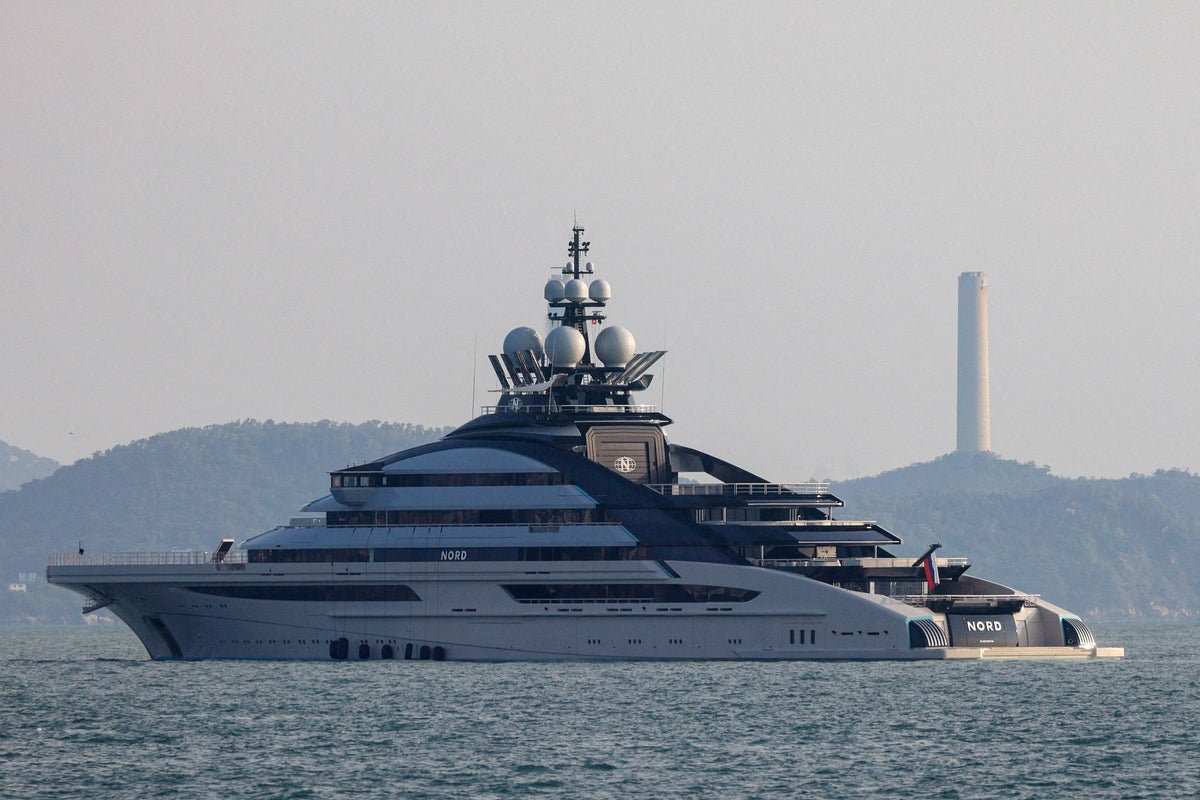
The headlines are breathless. A Russian-linked superyacht "slips" through the Strait of Hormuz, allegedly defying a blockade or evading the watchful eye of the West. The narrative is always the same: a cat-and-mouse game where the cat is incompetent and the mouse is a billionaire with a helipad.
It is a fairy tale for the bored.
If you believe a 500-foot vessel made of white steel and glass "slips" through one of the most monitored chokepoints on the planet, you don't understand modern maritime surveillance. You are falling for a theater of moral outrage that obscures the cold, hard mechanics of global capital. These yachts aren't escaping. They are moving exactly where the law—and the limitations of international jurisdiction—allow them to go.
The Myth of the Blockaded Strait
Let's start with the most offensive inaccuracy in the common narrative: the idea of a "blockaded" Strait of Hormuz.
The Strait of Hormuz is not a police checkpoint in a suburban neighborhood. It is an international waterway governed by the United Nations Convention on the Law of the Sea (UNCLOS). Even if every NATO vessel on Earth sat in those waters, "transit passage" is a right, not a privilege. Unless a vessel is actively engaging in hostilities, you cannot simply stop it because you dislike the ultimate beneficial owner (UBO).
The media treats maritime sanctions like a digital geofence. In reality, it is a messy, jurisdictional patchwork. A yacht moving through the Strait isn't "sneaking" past a blockade; it is utilizing a legal corridor that the West lacks the legal authority to close without declaring outright war. To suggest otherwise is to ignore the very international order we claim to protect.
Sovereignty is the Ultimate Stealth Coating
The public obsesses over Automatic Identification System (AIS) transponders. "They turned off their tracking!" the pundits scream.
So what?
Turning off AIS is the maritime equivalent of wearing sunglasses. It doesn't make the yacht invisible to X-band radar, synthetic aperture radar (SAR) satellites, or the dozens of MQ-4C Triton drones circling the region. The "disappearance" of a superyacht is a choice made by coastal states to look away, not a failure of technology.
I have spent years watching how high-net-worth individuals navigate global restrictions. The real "stealth" isn't tech; it’s paper. When a yacht enters the territorial waters of a non-sanctioning state—say, the UAE or Turkey—it is effectively on another planet.
- The UAE Gap: The Emirates are not party to EU or US sanctions.
- The Flag of Convenience: A ship flagged in the Cook Islands or Sierra Leone operating in neutral waters is a sovereign entity.
We see a "villain" escaping justice. The global banking and maritime sectors see a client exercising their rights in a non-aligned jurisdiction. If you want to stop these boats, you don't need more destroyers; you need to convince sovereign nations to commit economic suicide by alienating the world's wealthiest depositors. Good luck with that.
The Asset Trap: Why Seizing Yachts is a Bad Business
The "lazy consensus" says that seizing a superyacht is a win. It looks great on evening news segments. You see a French commando standing on a teak deck, and you feel like the bad guys are losing.
Actually, the taxpayer is losing.
When a government seizes a vessel like the Amadea or the Dilbar, they don't just get a free boat. They inherit a liability that eats $500,000 to $1,000,000 per month in maintenance, insurance, and crew wages. If you don't run the air conditioning, the interior—filled with rare woods and fine leathers—rots in weeks. If you don't cycle the engines, the mechanical systems fail.
Imagine a scenario where the US government seizes a $500 million asset, spends $20 million over two years to keep it from sinking, and then loses the legal battle because the ownership was hidden behind five layers of shell companies in the Cayman Islands. They have to return the boat in pristine condition or face a massive lawsuit.
Seizure is a PR stunt. It is not an effective economic weapon. The UBO of a $600 million yacht has a net worth in the billions. Losing access to a boat is an inconvenience, not a killing blow. It’s like taking a teenager’s Xbox for the weekend and expecting them to renounce their entire lifestyle.
The AIS Red Herring
People love to track these ships on public websites. They think they are "investigating." In reality, they are watching a curated feed of what the boat wants them to see.
Spoofing AIS data is trivial for a crew with basic technical proficiency. You can make a yacht appear to be a fishing trawler off the coast of Africa while it is actually docked in Port Rashid. The obsession with "finding" these boats on the map misses the point: we know where they are. We just can't do anything about it.
The "Strait of Hormuz escape" narrative persists because it frames the West as a diligent guard who was momentarily outsmarted. The truth is far more uncomfortable: the West is a guard standing in front of a door that isn't locked, in a building it doesn't own.
The Fallacy of "Targeted" Sanctions
We are told that targeting these "toys of the elite" will pressure the inner circle to change political direction. This is a fundamental misunderstanding of how power functions in autocratic systems.
In a high-stakes geopolitical environment, the loss of a boat is a cheap price to pay for loyalty to the center of power. By chasing yachts, Western governments are engaging in "symbolic decapitation." It feels satisfying, but it changes nothing on the ground.
- Capital is fluid: Wealthy individuals moved their liquid assets years ago.
- Hard assets are secondary: A yacht is a depreciating asset. It is a liability masquerading as wealth.
If the goal was true economic disruption, the focus wouldn't be on the boats. It would be on the maritime insurance providers in London and the yacht management firms in Monaco that continue to facilitate the "dark fleet" through nested subsidiaries. But we don't go after them with the same vigor because they are "ours."
Stop Looking at the Water
The public’s fascination with "blockade runners" is a distraction. While we argue about whether a yacht should have been intercepted in the Gulf, billions of dollars in oil and gas continue to flow through the same waters, often on ships with obscured ownership and dubious insurance.
That is where the power lies. Not in the swimming pool of a billionaire’s vacation home.
The Strait of Hormuz isn't a sieve; it's a mirror. It reflects the reality that international law is only as strong as the willingness of neutral parties to enforce it. As long as there are ports that prioritize capital over conflict, there will be no "blockade" for the wealthy.
The yacht didn't "slip through." It sailed through the front door because no one has the legal or political courage to lock it.
Stop cheering for the seizure of ships. Start looking at the jurisdictions that make those ships untouchable. Until you address the reality of non-aligned economic zones, every yacht seizure is just an expensive photo op for a government that has run out of real ideas.
The boat is a ghost. The law is the shadow. And the public is watching a puppet show.