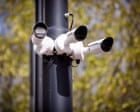
Sarah didn't notice the camera tucked inside the price tag of the organic kale. Why would she? She was worried about the dental bill sitting on her kitchen counter and whether her toddler would make it through the checkout line without a meltdown. She grabbed the greens, a gallon of milk, and a box of the expensive crackers that her son actually eats.
As she walked toward the exit, a screen flickered. It didn't show her face. It showed a data point. To the store's central nervous system, Sarah isn't a stressed mother of one; she is a "High-Value Recurring Persona" with a 72% probability of switching brands if a specific coupon hits her phone in the next four minutes.
Retail has stopped being a place where you buy things. It has become a place that watches you buy things.
The "Big Brother" moniker feels too loud, too Orwellian for what is actually happening. It isn't a jackbooted government agent staring through a grainy lens. It’s much more polite. It is a series of silent, sophisticated algorithms designed to turn your blink rate, your gait, and your hesitation over a jar of peanut butter into actionable intelligence. This is the era of Surveillance Retail, and the price of entry is more than just the total on your receipt.
The Ghost in the Aisle
Twenty years ago, a shopkeeper might remember your name or that you preferred your steak cut thick. That was human scale. It was a relationship built on mutual recognition. Today, the scale is mathematical. When you walk into a modern flagship grocery store, you are being "onboarded" the moment you cross the threshold.
Many stores now utilize Computer Vision (CV). Unlike traditional CCTV, which simply records footage for a security guard to ignore, CV interprets. It identifies the "dwell time" of a customer in front of the laundry detergent. It notes if you picked up the eco-friendly bottle, looked at the price, and put it back.
But the real magic—or the real horror, depending on your perspective—happens when that visual data merges with your digital footprint.
The industry calls it "Stitching." The store knows your MAC address from your phone’s Wi-Fi pings. It knows your credit card identity. It knows your loyalty card history. When the camera sees your face, it "stitches" these threads together. Suddenly, the store doesn't just see a woman in a blue coat. It sees a woman who hasn't bought coffee in three weeks, who recently searched for "best mattress for back pain" on her home computer, and who is currently standing in Aisle 4.
The air around you begins to change. The digital signage on the end-cap shifts. It’s no longer showing a general ad for soda; it’s showing a discount for the exact brand of caffeine you’re currently craving.
The Logic of the Panopticon
Retailers argue this is for our benefit. They call it "frictionless shopping." They point to the Amazon Go model, where you simply walk out and the bill arrives later. No lines. No waiting. No human interaction.
It sounds like a dream until you realize a dream is just a sequence of events you can't control. To make a store "frictionless," the environment must be total. Sensors in the shelves must detect the weight of a removed can. Cameras must track your hand movement to ensure you didn't hand that can to a friend.
In this environment, the customer is treated as a variable in a high-stakes physics equation. The goal is to maximize "throughput." If the data shows that people move faster when the lighting is a certain Kelvin or the music is 115 beats per minute, the store will adjust in real-time. You aren't just shopping; you are being steered.
Consider the "Emotion AI" currently being tested in high-end boutiques. These systems analyze facial micro-expressions. If the software detects frustration, it alerts a floor manager to intervene. If it detects delight, it might trigger a notification to offer a high-margin add-on. We are being read like open books, yet we cannot see the person doing the reading.
The Hidden Cost of "Free" Convenience
We have been trained to trade our privacy for tiny increments of ease. We give our email for a 10% discount. We use the store app to find where the pickles are. But the trade-off isn't a one-to-one swap.
The data collected in these physical spaces is often sold to third-party brokers. This creates a feedback loop that follows you out of the store and into every corner of your life. That "anonymous" data point about Sarah’s interest in organic kale? It finds its way to her insurance provider’s risk assessment model. It informs the ads she sees on her smart TV at 9:00 PM.
The physical world is losing its anonymity. It used to be that when you stepped out of your house, you could disappear into a crowd. You were just another face on the sidewalk. Now, the sidewalk is a data terminal.
The Fragility of the Digital Guardrail
There is a technical term for when these systems fail: "False Positive."
In a world where algorithms decide who is a shoplifter based on "suspicious" body language, the stakes become visceral. An AI might flag a person because they are wearing a hoodie and pacing, not realizing the person is actually having a panic attack or looking for a lost child. Once the system tags you as "high risk," that label can stick. It moves through the cloud, shared between retail networks. You walk into a different store three miles away, and the security team is already on high alert because of an error made by a piece of code in a server farm halfway across the country.
We are building a world where we are judged by machines that don't understand context. They only understand patterns. And patterns are often just biases dressed up in math.
The Quiet Resistance
Some people have started to push back, though the methods feel like something out of a cyberpunk novel. There are "dazzle" makeup patterns designed to confuse facial recognition. There are fabrics woven with infrared LEDs that blind cameras. But these are fringe solutions for a mainstream problem.
The real struggle is happening in the quiet moments at the checkout counter. It’s the choice to hit "No" when asked for a phone number. It’s the choice to use cash, the last truly anonymous financial instrument we have left.
We are told that the march of technology is inevitable. We are told that "if you have nothing to hide, you have nothing to fear." But privacy isn't about hiding something "bad." It’s about the right to be unobserved. It’s about the sanctity of the internal monologue. When we know we are being watched, we change. We become more performative. We become less ourselves.
The grocery store was once a mundane, almost boring place. It was a chore. Now, it is a laboratory where the human animal is studied, partitioned, and sold.
Sarah finally reached her car. She loaded the bags into the trunk, unaware that her "conversion" was already logged as a success. The system had calculated the exact amount of time she spent in the store and compared it to her historical average. She was three minutes slower today. The algorithm noted the discrepancy and adjusted its model for Thursday mornings.
As she drove away, she felt a slight buzz in her pocket. A notification. We saw you liked those crackers! Want to buy them in bulk next time?
She stared at the screen for a second, a small shiver running down her spine that she couldn't quite explain. She put the phone in the cup holder and started the engine. The invisible clerk behind the glass simply waited for the next person to walk through the door.