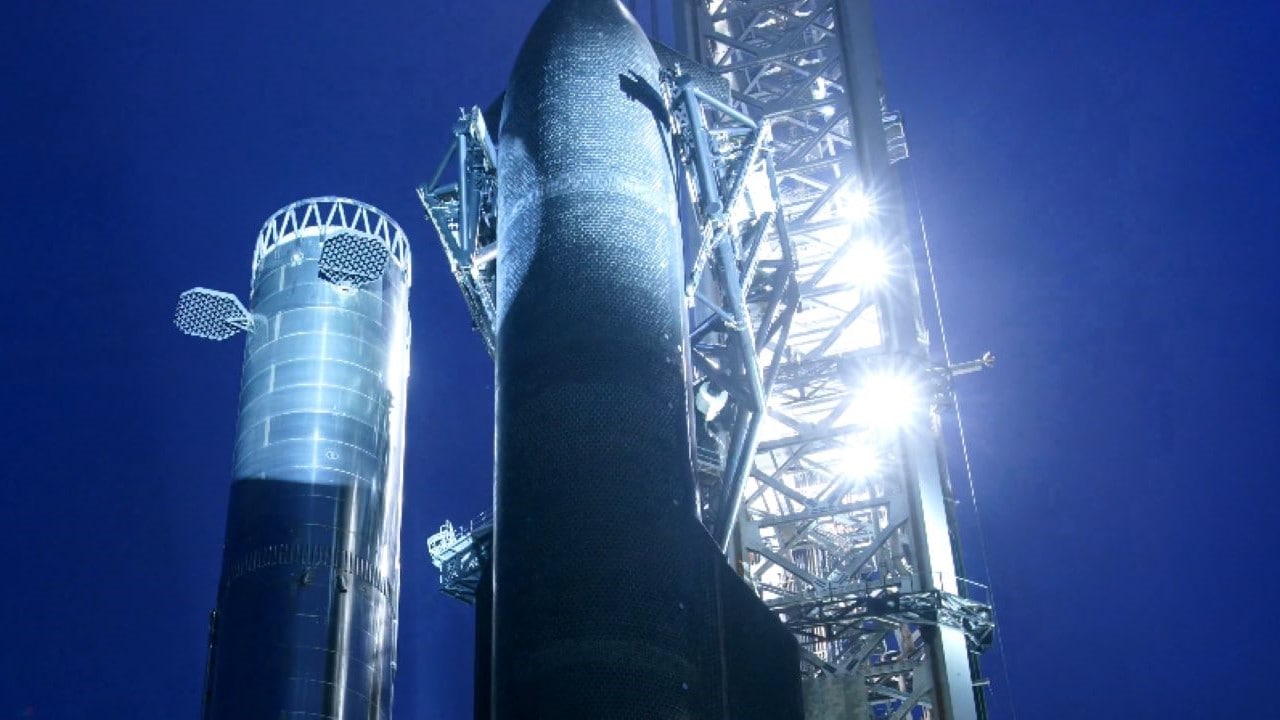
The aerospace industry moves on a timeline often measured in decades, but SpaceX is attempting to compress that history into a single afternoon on May 19. The scheduled debut of Starship Version 3 from the newly commissioned Launch Pad 2 at Starbase represents more than a simple hardware iteration. It is a fundamental pivot in the architecture of rapid reuse. While Version 2 focused on proving the ship could survive atmospheric reentry, Version 3 is built for the brutal economics of daily flight. This flight test aims to validate a stretched chassis, increased propellant capacity, and the reliability of the Raptor 3 engines, which eliminate much of the complex external plumbing that plagued earlier builds.
The Engineering Gamble of the Stretched Hull
The most visible change in the Version 3 hardware is the sheer scale of the vehicle. By lengthening the propellant tanks, SpaceX has increased the total mass of the stack, pushing the limits of the Raptor engine’s thrust-to-weight ratio. This isn't just about carrying more cargo. It is about the math of orbital refueling. Discover more on a connected issue: this related article.
To reach the Moon or Mars, Starship requires multiple tanker flights to top off its tanks while in low Earth orbit. Every extra ton of capacity in Version 3 reduces the number of tanker launches required for a single deep-space mission. If the previous versions required twelve refueling flights for a lunar landing, Version 3 aims to cut that number significantly.
The structural integrity of a taller, thinner rocket creates massive aerodynamic stress during the "belly flop" maneuver. Engineers have reinforced the internal stringers and modified the weld patterns to handle these loads, but the increased surface area makes the ship more susceptible to high-altitude winds. We are seeing a shift from a prototype that can fly to a ship that can work. Additional journalism by TechCrunch explores comparable perspectives on this issue.
Raptor 3 and the Death of Complex Plumbing
The heart of this mission lies in the engines. Previous iterations of the Raptor engine were a chaotic web of sensors, wires, and thermal protection blankets. They were difficult to build and even harder to maintain. Raptor 3 changes the design philosophy by integrating many of those external components into the internal castings of the engine itself.
This consolidation reduces the risk of fire during the high-vibration environment of ascent. It also lowers the mass. When you multiply those mass savings by the 33 engines on the Super Heavy booster, the performance gains are substantial. However, the move to internalize components makes the engines harder to repair on the fly. SpaceX is betting that the engines will be reliable enough that they won't need the constant tinkering seen during the early days of the McGregor test stands.
Pad 2 and the Logistics of High Frequency
Launching from Pad 2 is as significant as the ship itself. For years, Starbase has operated as a "one-off" facility, with a single orbital launch mount creating a massive bottleneck. A failure on the pad could sideline the entire program for months.
Pad 2 introduces redundancy. It also features an upgraded water deluge system designed to prevent the concrete "volcano" effect seen during the first integrated flight test. The new steel plate system is thinner but uses a more efficient cooling flow, intended to reset in hours rather than days. This is the blueprint for a spaceport that functions more like a busy international airport than a traditional government launch site.
The Hidden Risks of Rapid Iteration
There is a dark side to moving this fast. By skipping the long-term testing of Version 2 and jumping straight into the mass production of Version 3, SpaceX risks baked-in flaws. If a structural weakness exists in the new stretched design, it may not appear until the vehicle is under maximum dynamic pressure.
Industry veterans often point to the "Move fast and break things" mantra as a liability when dealing with cryogenic propellants and massive kinetic energy. If Version 3 fails during its ascent on May 19, the setback won't just be a lost ship. It will be a blow to the aggressive timeline of the Artemis program, which relies on Starship as its human landing system.
The heat shield remains the biggest technical hurdle. Even with Version 3, the ceramic tiles are fragile. Every flight sees some tiles shed, and while the underlying stainless steel is tough, it isn't invincible. The May 19 flight will test a new adhesive method intended to keep the shield intact during the white-hot heat of reentry over the Indian Ocean.
Financial Gravity and the Starlink Connection
The rush to Version 3 is driven by the need to deploy Starlink V2 satellites. These satellites are too large for the current Falcon 9 fleet to carry efficiently. Starship is the only vehicle capable of launching the hardware required to keep the Starlink constellation profitable and technologically ahead of competitors.
SpaceX is burning through capital at a rate that would bankrupt most nations. The company is no longer just a launch provider; it is an infrastructure firm. Success on May 19 secures the bridge between being a high-altitude experiment and a dominant global utility. Failure doesn't stop the program, but it forces a reckoning with the physics of how much weight a single booster can realistically carry.
The Operational Reality of Pad 2
The shift to Pad 2 also signals a change in how the Federal Aviation Administration (FAA) views Starbase operations. Managing two active pads requires a more complex safety perimeter and a more rigorous environmental monitoring system. The paperwork involved in clearing Version 3 for flight is nearly as heavy as the rocket itself.
This flight will be the first time the updated "Mechazilla" arms at Pad 2 are used for a full-scale launch sequence. While the goal is eventually to catch the booster and the ship, this mission will likely end with a controlled splashdown. The "catch" is the ultimate prize, but Version 3 needs to prove it can survive the ride up before it worries about the ride down.
A New Era of Heavy Lift
We are watching the end of the "boutique" era of spaceflight. Version 3 is a mass-produced machine. The welds are cleaner, the avionics are more integrated, and the mission profile is more ambitious. The May 19 window is a test of whether the world's most powerful rocket can become a reliable workhorse or if it remains a spectacular, expensive firework.
The stakes involve more than just a shiny hull in the Texas sun. They involve the viability of the American return to the Moon and the long-term survival of the commercial space industry. If SpaceX can turn the flight of Version 3 into a routine event, the cost per kilogram to orbit will drop to levels that make orbital manufacturing and large-scale habitation possible.
The countdown for May 19 is not just for a rocket launch; it is a countdown for the expansion of the human economic sphere. Watch the engines. If all 33 stay lit through the first three minutes, the architecture of the solar system changes forever.