The dirt beneath a remote corner of Inner Mongolia doesn't look like the future. It looks like rust and gray silt, a desolate stretch of earth that smells faintly of sulfur and chemicals. But inside those heavy clumps of soil lies the DNA of every modern obsession. If you are reading this on a smartphone, driving an electric vehicle, or relying on a missile defense system to keep the peace, you are tethered to that gray silt.
China owns that tether. And they are starting to pull.
For decades, the global economy operated on a convenient lie. We told ourselves that globalization made borders irrelevant, that a supply chain was just a series of efficient handshakes. But as a new administration takes the stage in Washington, that lie is evaporating. The trade war isn't just about tariffs on sneakers or steel anymore. It is about seventeen obscure elements on the periodic table—the rare earths—that China has spent thirty years quietly monopolizing while the rest of the world looked the other way.
The Magnet in the Motor
To understand the stakes, look at a hypothetical engineer named Sarah. She works for an American EV startup, trying to shave weight off a high-performance motor. To make that motor spin with enough torque to rival a gas engine, she needs permanent magnets. Those magnets require neodymium and dysprosium.
Without them, Sarah’s car is a heavy, expensive lawn ornament.
China produces roughly 60% of the world's mined rare earths and controls nearly 90% of the refining capacity. Refining is the dirty, difficult part. It involves dissolving rock in acid baths to separate elements that are chemically almost identical. It is toxic. It is expensive. And because China was willing to bear the environmental and financial cost when no one else was, they now hold the keys to Sarah’s lab.
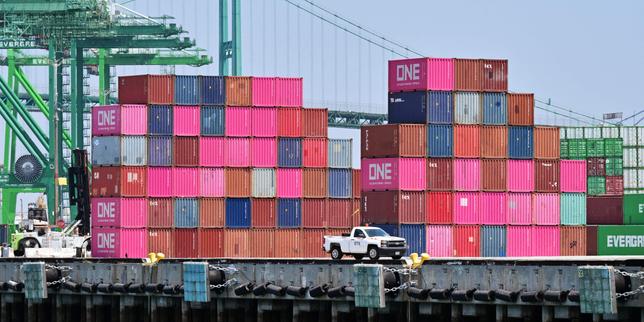
If Beijing decides to "review" its export licenses for these minerals, Sarah doesn't just face a price hike. She faces an existential halt. This is the "hidden" lever. While the headlines focus on flamboyant tweets and aggressive tariffs, the real movement happens in the silence of a shipping container that never leaves the port of Ningbo.
A History of Quiet Dominance
This didn't happen by accident. In 1992, Deng Xiaoping famously remarked, "The Middle East has oil; China has rare earths." It was a declaration of intent that the West treated as a footnote. While American companies chased quarterly profits by outsourcing messy mining operations to cheaper shores, China was playing a game measured in decades.
They built the infrastructure. They trained the chemists. They subsidized the losses.
Consider the 2010 incident with Japan. After a maritime dispute, China reportedly throttled rare earth exports to Tokyo. Prices for cerium—used in polishing glass and mirrors—shot up by 400% in weeks. The message was sent without a single shot being fired. Japan scrambled to diversify, but ten years later, the world remains stuck in the same loop. We talk about "de-risking" and "de-coupling," yet every wind turbine and F-35 fighter jet still requires a "thank you" to a Chinese refinery.
The Trump Factor and the Logic of Escalation
Donald Trump’s return to the White House signals a return to high-stakes brinkmanship. His platform is built on the idea of "Maximum Pressure." He views tariffs as a blunt force instrument to bring manufacturing home. But pressure creates a vacuum, and China is uniquely positioned to fill it with a sudden, sharp contraction of supply.
The math is brutal. If the U.S. imposes a 60% tariff on Chinese goods, China can respond in kind. But they can also respond with something far more surgical. By restricting the flow of processed rare earth hydroxides, they don't just hurt American retailers; they paralyze American innovation.
Imagine the Pentagon trying to source the samarium-cobalt magnets needed for precision-guided missiles when the only viable refinery is thousands of miles away and currently angry at you. We have the Mountain Pass mine in California, yes. But for years, even the ore pulled out of American soil had to be shipped to China for processing because we lacked the facilities to do it ourselves. We were mining our own dependency.
The Fragile Illusion of Alternatives
Critics often argue that "rare" earths aren't actually that rare. They are correct. You can find these elements in many places, including Australia, Vietnam, and Brazil. But finding them is the easy part. Building a refinery that doesn't turn the local water supply into a toxic cocktail takes five to ten years and billions of dollars in capital.
Investors are flighty. They remember 2011, when rare earth prices spiked and then crashed because China flooded the market to bankrup competitors. It is a classic predatory pricing trap. If an American company tries to build a refinery today, China can simply drop their prices tomorrow, making the American venture look like a financial suicide mission.
This is the psychological warfare of the supply chain. It isn't just about what China does; it is about what they might do. It keeps CEOs up at night. It makes boards of directors hesitant to greenlight new tech that relies on "at-risk" materials.
The Human Cost of the Squeeze
We often talk about these shifts in terms of GDP or trade deficits. But the reality is felt in the gut of a factory manager in Ohio who has to tell three hundred workers that the line is stopping because a specific grade of magnet didn't arrive. It is felt by the consumer who sees the price of a laptop jump by $200 because the "input costs" shifted overnight.
There is a specific kind of helplessness that comes with realizing your entire way of life is built on a foundation you don't control. We have spent half a century optimizing for "just-in-time" delivery. We forgot that "just-in-time" only works if the person sending the package likes you. Or at least, if they find you more valuable as a customer than as a geopolitical rival.
China’s control of rare earths is the ultimate "slow-motion" weapon. It doesn't explode. It doesn't create a flash on a satellite map. It just makes the gears of the world grind a little slower, and then a little slower, until they seize entirely.
The Long Game
As the rhetoric heats up between Washington and Beijing, the gray silt of Inner Mongolia remains the most important territory on earth. Every time a new tariff is announced, a technician in a Chinese laboratory likely looks at a vial of purified terbium and smiles. They know what we are only starting to admit.
You can print money. You can pass laws. You can build walls.
But you cannot conjure a magnet out of thin air.
The leverage isn't in the Oval Office or the Great Hall of the People. It is in the molecular structure of the world. We are living in an era where the most powerful weapon isn't a bomb, but a refusal to sell the dirt that makes the modern world spin. The chokehold is already in place. The only question left is how hard they intend to squeeze.