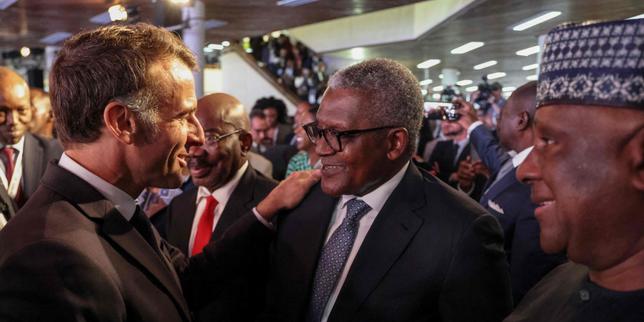
Nairobi is currently the stage for a geopolitical pivot that smells of both desperation and calculated ambition. As French President Emmanuel Macron and Kenyan President William Ruto wrap up the Africa Forward Summit this week, the sheer volume of capital being moved suggests more than just a friendly trade visit. This is a survival strategy. Facing a humiliating retreat from its traditional strongholds in West Africa—where military coups and "France-out" protests have become the new norm—Paris is betting billions that its future on the continent lies in the Anglophone East.
The centerpiece of this offensive is a massive $27 billion investment package aimed at energy, digital infrastructure, and the maritime economy. For France, this isn't just about finding new markets. It is about proving that French influence can exist without the baggage of the CFA franc or the ghosts of Françafrique. For Kenya, it is a chance to cement its status as the "Silicon Savannah" while playing world powers against each other for the best possible deal.
The West Africa Wound
To understand why Macron is in Nairobi, you have to look at where he isn't. In Bamako, Niamey, and Ouagadougou, French flags have been replaced by Russian tricolors. The Sahelian states have not only kicked out French troops but are actively dismantling the economic architecture that once made Paris the undisputed arbiter of West African affairs.
The loss of influence in the CFA zone is a structural blow to the French Treasury. For decades, the stability of the Euro was partially buttressed by the foreign exchange reserves of its former colonies. Now, that relationship is in terminal decline. Nairobi represents a "clean slate." By engaging with Kenya—a country France never colonized—Macron is attempting to frame French capital as a choice, not a colonial inheritance.
The Infrastructure Arms Race
The specifics of the 11 agreements signed at State House reveal a surgical focus on the sectors that define modern sovereignty. The heavy hitters of the French CAC 40 are leading the charge.
- CMA CGM has committed $700 million to transform the Port of Mombasa. This isn't just a logistics play; it’s a strategic grab for the gateway to the East African hinterland, including the booming markets of Uganda and Rwanda.
- EDF and Proparco are moving into the energy sector, specifically targeting the modernization of the National Electricity Control Center and the Masinga Dam.
- Digital Sovereignty is the new buzzword, with French firms securing contracts to build Kenya’s national digital highway.
These projects are designed to be "sticky." When you build a nation’s railway signaling system or its primary fiber optic backbone, you aren't just a vendor; you become a permanent fixture in their national security architecture. This is how France plans to stay relevant for the next fifty years.
The Ruto Doctrine
William Ruto is perhaps the most pragmatic dealer on the continent today. He knows exactly why the French are here, and he is making them pay a premium for the privilege. While West African leaders are looking inward or toward Moscow, Ruto is positioning Kenya as a neutral hub that can accommodate the US, China, and the EU simultaneously.
Ruto’s "Investment over Aid" mantra fits perfectly with Macron’s current predicament. France no longer has the excess liquidity to play the role of the benevolent donor, especially with its own domestic budget under intense scrutiny. By shifting the conversation to private equity and infrastructure bonds, both leaders can claim victory while masking the fact that the French state's direct financial muscle is waning.
The Hidden Risks of the French Pivot
Despite the handshakes and the carefully choreographed press conferences, the risks are immense. The primary concern among Kenyan civil society is the "debt trap" by another name. While French officials speak of "partnerships," an investment is fundamentally a search for yield.
When French firms take over essential services like commuter rail or electricity management, the pressure to deliver returns to shareholders in Paris often clashes with the need for affordable services in Nairobi. We have seen this play out in Senegal and Côte d'Ivoire, where French control over utilities has occasionally sparked public anger over rising costs.
Furthermore, France is entering a crowded room. China has already built the Standard Gauge Railway (SGR) and the Nairobi Expressway. The US is pushing its own "Build Back Better World" initiatives. France’s late arrival to the Anglophone market means they are often forced to take on higher-risk projects or offer more generous concessions to win the bid.
The Energy Gambit
One cannot discuss French interests in East Africa without mentioning TotalEnergies. While the Nairobi summit focuses on "green growth" and "digital highways," the underlying reality of French energy security remains tied to the East African Crude Oil Pipeline (EACOP).
Moving oil from Uganda to the Tanzanian coast is a logistical nightmare and a PR disaster for a president who wants to be seen as a climate champion. Yet, it remains a cornerstone of French strategy. The challenge for Macron is to balance the optics of "Green Nairobi" with the hard-boiled necessity of French energy giants securing their footprint in the Great Lakes region.
The Real Test
The success of this pivot won't be measured by the number of signed MOUs. It will be measured by whether these projects actually break ground and, more importantly, whether they survive the inevitable political shifts in both Paris and Nairobi.
Macron is in the final stretch of his presidency. His successor may not share his obsession with African "renaissance" through investment. Similarly, Ruto's administration faces domestic pressure over the cost of living and the transparency of these massive infrastructure deals.
The strategy is bold, but it is also fragile. France is trying to buy its way back into a continent that has learned how to say no. If the French firms fail to deliver tangible benefits to the average Kenyan—not just the elite in the boardroom—this "Nairobi Offensive" will go down as just another expensive attempt to hold onto a world that has already moved on.
The shift from colonial patron to commercial partner is a tightrope walk. One misstep, or one project that turns into a white elephant, and the anti-French sentiment currently burning in West Africa could easily migrate East. Paris is no longer the only game in town, and in Nairobi, everyone knows it.