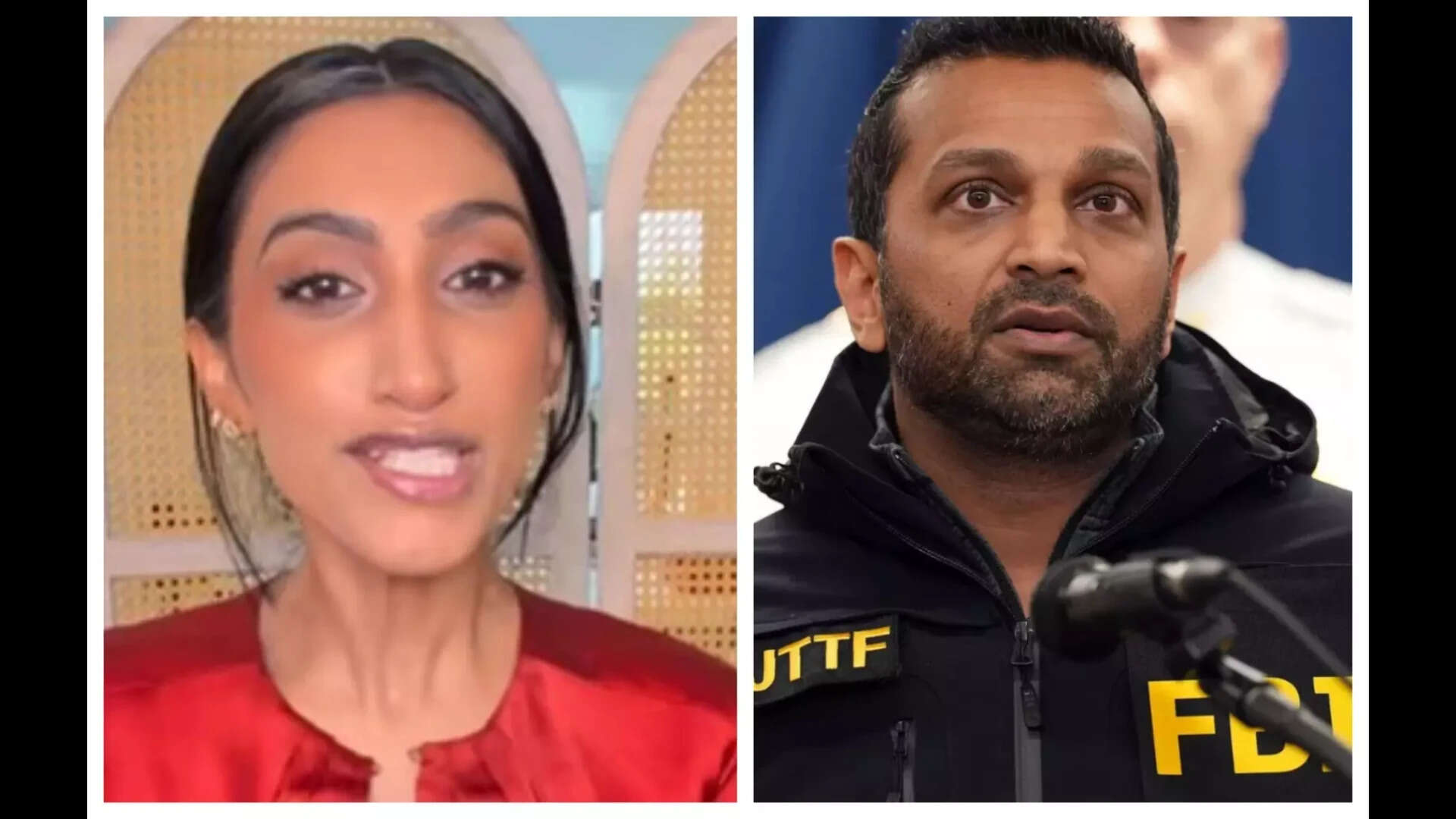
A viral video is currently tearing through social media and it’s a masterclass in the art of the subtle burn. At a recent high-profile gathering, an Indian-origin surgeon didn’t just meet FBI Director Christopher Wray. He used the moment to deliver a sharp, witty, and deeply cultural rebuttal to the political brand of Kash Patel. It wasn't a shouting match. It was a surgical strike.
The surgeon, Dr. Sarvepalli, looked Wray in the eye and made a distinction that many in the South Asian diaspora have been feeling for years. "We have beautiful eyes, we don't claim Kash Patel as our own," he told the FBI chief. The room laughed. The internet exploded. But why did this short exchange strike such a massive chord? It’s because it touches on the internal friction of immigrant identity and the high-stakes politics of 2026.
Why the Indian Diaspora is Drawing a Line
For a long time, there was a sense of "immigrant solidarity." If someone from your background made it to the highest levels of the U.S. government, you cheered. You didn't ask questions. You just felt proud. That era is officially over. The surgeon’s comment to Wray signals a shift where the community now prioritizes values and professional integrity over shared ethnicity.
Kash Patel has been a lightning rod for controversy since his days in the first Trump administration. As he continues to be a central figure in right-wing circles—often touted for massive roles in intelligence or law enforcement—a significant portion of the Indian-American professional class is distancing themselves. They’re worried that his "scorched earth" approach to institutional norms reflects poorly on the broader community's reputation for being stable, law-abiding, and academically driven.
The Beautiful Eyes Quip Explained
The "beautiful eyes" comment sounds like a random compliment, but it’s actually a clever play on a common observation about people from the Indian subcontinent. It was a way to keep the tone light while delivering a heavy message. By starting with a positive physical trait shared by the community, the surgeon established a "we." Then, he immediately used that collective "we" to exclude Patel.
It’s the ultimate "not in my name" moment.
FBI Director Christopher Wray’s reaction was equally telling. He didn't engage in the politics of it, but the smile and the acknowledgment showed he understood the weight of the sentiment. Wray has been at the center of his own political storms, and seeing a citizen offer a moment of levity—at the expense of a common critic—clearly landed well.
Professional Ethics vs Political Loyalty
The surgeon represents a specific demographic: the highly educated, high-earning Indian-American professional. This group largely populates the medical, tech, and legal fields. To them, the "Kash Patel style" of governance—which often involves attacking the very institutions these professionals respect—is anathema.
- Institutional Trust: Most Indian-origin professionals view the FBI and DOJ as pillars of stability.
- Reputation Management: There is a palpable fear that "one of our own" acting as a disruptor might lead to a backlash against the entire group.
- The "Model Minority" Trap: While the term is problematic, many in the community still feel the pressure to be seen as the "calm experts" in the room. Patel is anything but calm.
Viral Moments and the New Political Reality
We live in an age where a 15-second clip carries more weight than a 2,000-word op-ed in the New York Times. This video didn't need a complex breakdown of Patel’s policy positions. It relied on the vibe. The surgeon’s confidence, the setting, and the directness of the "disowning" spoke volumes.
It’s also a sign that the Indian-American vote is no longer a monolith. While some see Patel as a hero fighting a "deep state," others see him as a threat to the meritocracy that allowed their families to thrive in America. Dr. Sarvepalli chose a side, and he did it with the kind of precision you'd expect from someone who spends their days in an operating room.
What This Means for Future Appointments
If Patel is tapped for a major role in the coming months, expect more of this. The diaspora isn't going to sit quietly. This viral moment has essentially given others "permission" to speak out. It’s no longer considered "betraying your own" to criticize a public figure who shares your heritage.
If you're following these developments, don't just look at the headlines. Look at the comment sections on platforms like X and WhatsApp groups in suburban New Jersey or Silicon Valley. The divide is real. The surgeon didn't create the rift; he just gave it a very catchy punchline.
Pay attention to how other prominent South Asian figures respond to this. Silence is a choice, and in 2026, it’s a choice that people notice. If you want to understand the modern immigrant experience, stop looking at census data and start watching these small, unscripted interactions. They tell the real story of power, belonging, and the fight for a community's soul. Check the latest clips from the FBI's public forums to see if this trend of "direct citizen feedback" continues to grow.