The air in southern Lebanon doesn’t smell like victory. It smells like wet concrete dust, exhaust from idling tanks, and the sharp, metallic tang of ozone that lingers after a missile strike. For the first time in months, the sky is empty of the persistent, high-pitched buzz of surveillance drones. It is a quiet so heavy it feels like a physical weight pressing against the eardrums of those still huddled in the basements of Tyre and Marjayoun.
Ten days. That is the number scrawled on the calendars of diplomats in Washington and commanders in Tel Aviv. A ceasefire has finally arrived, but it is not the kind of peace that invites you to unpack your bags. It is a tactical pause, a sharp intake of breath before a possible scream.
The Ghost of a Border
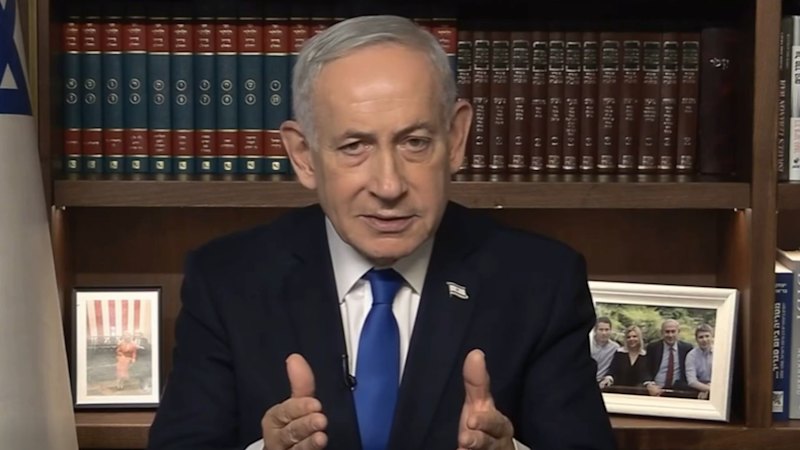
Benjamin Netanyahu spoke to his nation with the weary, iron-jawed resolve of a man who knows that a paper signature rarely stops a bullet. The Israeli military will remain in southern Lebanon. They are not retreating; they are recalibrating. For the families in northern Israel who have spent the last year flinching at every slamming door, this news is a cold comfort. They want to go home, but home is a place where the horizon is no longer familiar.
Imagine a farmer named Elias near the Litani River. He doesn't care about the high-level negotiations or the maps being redrawn in air-conditioned rooms. He cares about the olive trees that have likely been scorched or crushed by the tracks of a Merkava tank. For Elias, the ceasefire means he might finally walk his land, but he does so with his eyes glued to the soil, terrified of the unexploded submunitions hidden like lethal seeds in the dirt. The "human element" of war isn't found in the grand strategy; it’s found in the trembling hands of a man trying to decide if his livelihood is worth his life.
The presence of the Israeli Defense Forces on Lebanese soil remains the jagged pill that the Lebanese government is forced to swallow. It is a violation of sovereignty on one hand and a self-declared necessity for security on the other. This tension ensures the "peace" is nothing more than a temporary suspension of physics. The objects are still in motion; we have simply hit the pause button on the video.
The View from the Strait
While the Mediterranean coast settles into an uneasy stillness, the ripples of this conflict have traveled thousands of miles to the south and east. The Strait of Hormuz is a narrow throat of water through which the world’s energy flows. It is a choke point that turns local grievances into global crises.
Donald Trump, watching from across the Pacific, has turned his gaze toward Australia. His criticism is blunt, a rhetorical hammer swung at a traditional ally. He questions why Canberra isn't doing more to police these waters. To the average citizen in Sydney or Melbourne, the Strait of Hormuz feels like another world. But when the tankers stop moving, the price of fuel at a suburban gas station climbs. The connection is invisible until it hurts the wallet.
Trump’s stance highlights a shifting tectonic plate in global mirrors. The old "rules-based order" is fraying. It is no longer enough to be a friend; you must be a contributor to the security apparatus, or you risk being left in the cold. This isn't just about naval patrols. It is about the cost of maintaining a global economy in an era of fractured alliances.
The Invisible Stakes
Why does a ten-day ceasefire feel so fragile? Because the underlying architecture of the conflict hasn't changed. Iran remains the silent conductor, watching from the wings. Israel remains hyper-vigilant, convinced that any shadow in the north is a precursor to a massacre.
Consider the "10-day" window. Why ten? It is just enough time to move supplies, to bury the dead, and to reposition batteries. It is not enough time to rebuild a house or trust a neighbor. In the world of high-stakes brinkmanship, time is a currency. Israel is spending its time ensuring that Hezbollah cannot simply slide back into its old bunkers the moment the ink dries.
The stakes are highest for those who have no say in the matter. The displaced children in Beirut schools and the elderly in Haifa shelters are the collateral of a geopolitical chess game where the kings never leave their palaces. When we talk about "strategic depth" or "buffer zones," we are talking about people's backyards. We are talking about the distance between a playground and a launch site.
The Weight of a Word
Ceasefire is a beautiful word that masks an ugly reality. In this specific context, it is a management tool, not a solution. It is the application of a tourniquet when the patient needs surgery.
The Israeli military's refusal to leave southern Lebanon is the friction point. Lebanon views it as an occupation; Israel views it as a firewall. Both are right within their own frameworks of survival. The tragedy is that these frameworks are mutually exclusive. One cannot have absolute security if the other feels an absolute loss of autonomy.
We often look at these conflicts as a series of "updates"—scrolling through headlines, checking the death tolls, and moving on to the next notification. But for the people on the ground, there is no "live update." There is only the long, agonizing wait between the sound of an explosion and the silence that follows.
The silence right now is the loudest thing in the Middle East. It is a silence filled with the grinding of gears as the world prepares for what happens on day eleven.
The sun sets over the Mediterranean, casting long, orange shadows over the ruins of border villages. Soldiers on both sides of the Blue Line grip their rifles a little tighter as the light fades. They are waiting for a signal that hasn't come yet. They are waiting to see if the world has truly changed, or if they are just being given a brief moment to catch their breath before the next plunge into the dark.
Ten days is a long time to hold your breath. By the end of it, the lungs begin to burn. The instinct to scream becomes almost uncontrollable. In the quiet of the southern hills, everyone is listening for the first sound that will break the spell—the sound that tells them whether the war is over, or if it has only just begun to find its second wind.