Xiao Chen does not work in a laboratory filled with bubbling vats or flashing supercomputers. He works in a textile factory in Shaoxing, where the air smells of scorched polyester and the hum of three hundred looms creates a vibration you can feel in your teeth. For twenty years, Chen’s job was to watch the threads. If one snapped, he caught it. If a machine jammed, he fixed it.
Now, he watches a screen.
The screen tells him which machine will break before it actually does. It tells him how to adjust the tension to save three grams of silk per bolt. Chen is a living data point in a massive, nationwide experiment. He is the human face of "New Quality Productive Forces," a term that sounds like dry academic sludge until you see it moving the hands of a man who once feared he was obsolete.
While the rest of the world fixates on the political theater of Beijing’s Great Hall of the People during the "Two Sessions," the real story isn't in the speeches. It is in the pivot. China is currently attempting the most ambitious economic pivot in modern history. They are moving away from the old reliable engines of property and cheap manufacturing, steersmen turning a massive tanker toward a horizon dominated by Artificial Intelligence.
They aren't just trying to build a better chatbot. They are trying to rewire the physical world.
The Silicon Wall
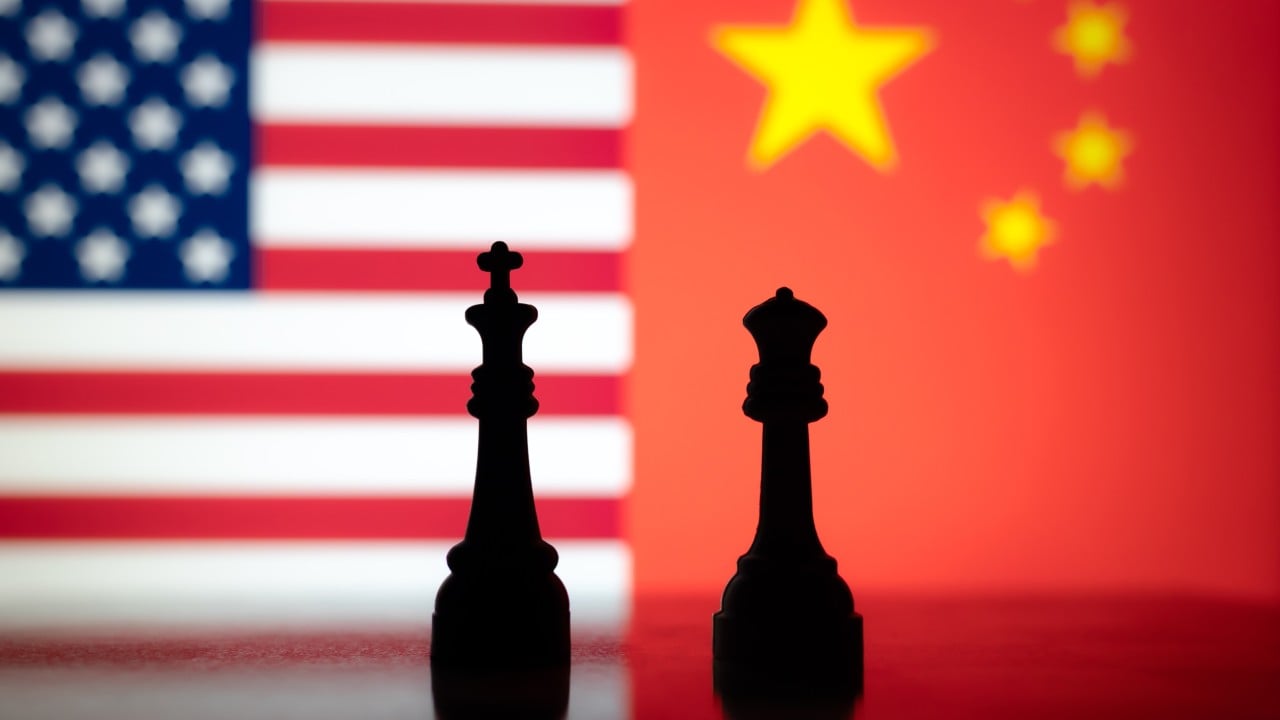
Consider the geography of a shadow. For the last few years, the United States has been building a wall made of high-end semiconductors. By restricting access to the most powerful chips—the Nvidia H100s and A100s that serve as the high-octane fuel for AI—Washington hoped to slow Beijing’s ascent.
But walls have a funny way of forcing people to find new doors.
In the hallways of the Two Sessions, the atmosphere wasn't one of defeat, but of frantic, focused adaptation. If you cannot buy the fastest engine, you must learn to build a more efficient car. This is why the "AI Plus" initiative was born. It is a recognition that while the U.S. currently leads in the "brain" of AI (the massive Large Language Models like GPT-4), China intends to dominate the "limbs"—the application of that intelligence to factories, power grids, and hospitals.
The stakes are invisible until they aren't. If China successfully integrates AI into its industrial base, the cost of everything from electric vehicle batteries to life-saving pharmaceuticals could drop by orders of magnitude. It isn't about winning a debate; it’s about winning the ability to produce the future at a price the rest of the world can’t match.
A Tale of Two Sovereignties
Imagine two scientists, Sarah in San Francisco and Wei in Shenzhen.
Sarah has access to the most powerful compute power on the planet. She spends her days pushing the boundaries of what an AI can say, teaching it to write poetry and code with eerie human-like fluidity. Her world is one of "General Intelligence."
Wei, meanwhile, is working under a different mandate: "Vertical Intelligence." He doesn't care if the AI can write a sonnet. He needs it to coordinate a fleet of five thousand autonomous delivery drones across a city of twenty million people without a single collision. He needs it to manage a "dark factory" where the lights stay off because the robots don't need eyes to see.
This is the divergence. The U.S. is winning the battle for the mind. China is digging in for the battle of the body.
The "Two Sessions" signals a shift in how capital flows. The government isn't just throwing money at tech giants; they are demanding "Self-Reliance." It’s a word that carries the weight of history in China. It means that the next time a trade restriction hits, the factories in Shaoxing shouldn't even feel the breeze.
The Friction of Reality
It sounds clean on paper. It is messy in practice.
The transition is painful. For every Xiao Chen who learns to use a digital dashboard, there are thousands of workers wondering if the "Plus" in "AI Plus" actually means "Minus" for their jobs. The tension is palpable. The Chinese leadership is walking a tightrope: they must automate to stay competitive as their population ages, but they must do so without tearing the social fabric.
There is also the "Compute Gap." You cannot simply wish away a lack of high-end chips. While Chinese firms like Huawei and Biren are racing to close the gap, the physics of semiconductor manufacturing is a brutal teacher. It takes years, not months, to master the lithography required for the smallest, fastest transistors.
But don't mistake a gap for a stop sign.
China is currently pooling its resources into "National Integrated Computing Power." Think of it like a national highway system, but for data. They are building massive hubs in the resource-rich west of the country to process data for the tech-heavy east. They are treating AI compute like a public utility, just like water or electricity.
The Soul of the Machine
We often talk about tech rivalry as if it’s a game of Risk, with colored pieces moving across a board. We forget the emotional core of the race. For many in China, this isn't just about GDP. It is about dignity. It is about the refusal to be a "middle-man" in the global economy forever.
The "Two Sessions" laid out a roadmap where AI isn't a luxury or a toy. It is the new foundation. When the delegates spoke about "Sovereign AI," they were talking about a world where their cultural values, their language, and their industrial secrets aren't processed through a server in Northern Virginia.
They want a digital house they own entirely.
Is it working?
Go back to the factory floor. Xiao Chen’s loom didn't break today. The AI predicted a bearing would fail at 2:00 PM. The part was replaced at noon. The efficiency gain seems small—maybe 2%. But multiply that 2% by every factory in the Yangtze River Delta. Multiply it by every cargo ship, every wind turbine, and every high-speed rail line.
The math becomes staggering.
The Western world tends to view AI as a threat to white-collar creativity. In the halls of Beijing, they view it as the last, best hope for blue-collar survival. They are betting everything on the idea that the "Second Path"—the path of deep, industrial integration—will eventually outrun the path of pure, generative flash.
The race isn't a sprint. It’s a subterranean shift of tectonic plates. We look for the explosion, but we should be listening for the quiet, rhythmic humming of a billion sensors waking up in the dark.
Xiao Chen turns off his screen and walks out into the cool evening air of Shaoxing. He isn't thinking about geopolitics or trade wars. He is thinking about the fact that for the first time in years, his hands don't ache from fixing broken threads. He is a man who has been upgraded, and in the silence of the evening, the machines behind him keep working, thinking, and learning in a language we are only just beginning to translate.
The tanker has turned. The only question left is what happens when it picks up speed.