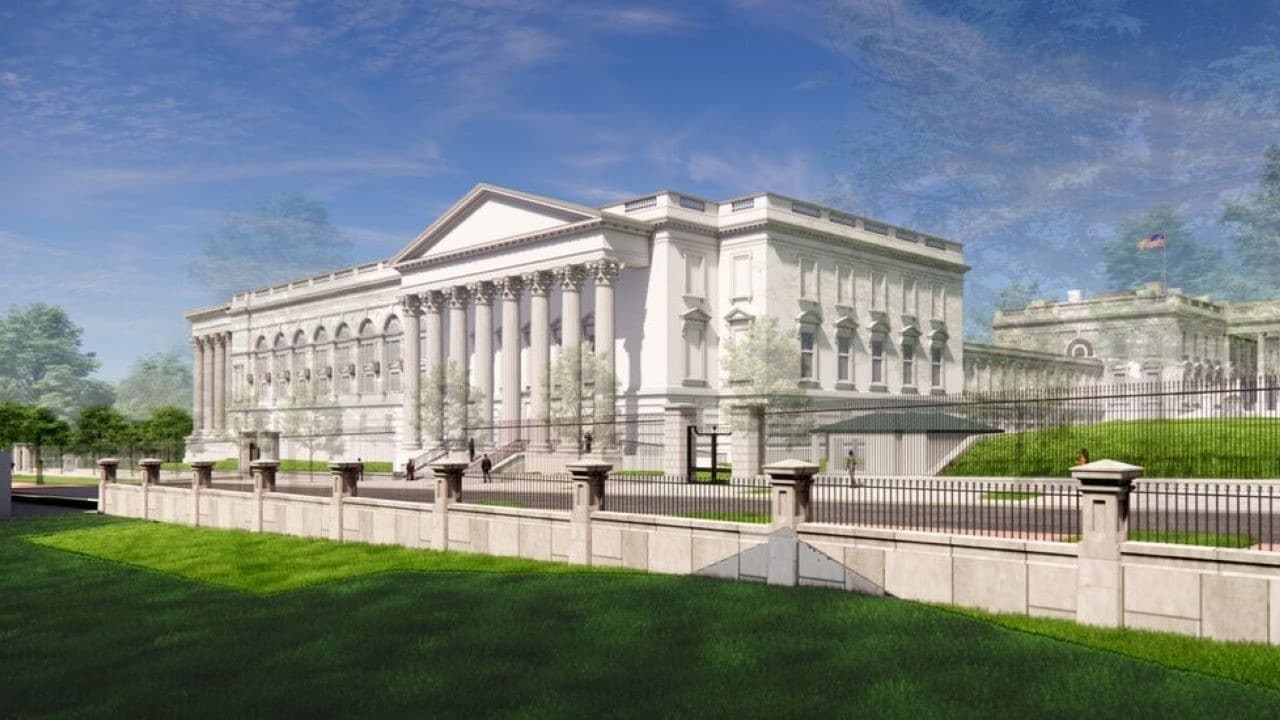
The silence inside the White House on a Tuesday afternoon is usually heavy, a thick, pressurized quiet born of high-stakes policy and the muffled footsteps of Secret Service details. But this week, that silence turned jagged. It wasn't the quiet of productivity; it was the silence of a sudden, screeching halt. High above the polished floors, the rhythmic thud of hammers and the high-pitched whine of saws simply evaporated.
A federal judge’s gavel struck a mahogany bench miles away, and in that instant, the dust-covered plastic sheeting in the executive residence became a shroud.
Donald Trump has always viewed real estate not as a collection of buildings, but as a physical manifestation of power. To him, a ballroom isn't just a place for a dinner; it is a stage where the geography of influence is mapped out over crystal and gold leaf. When Judge Beryl Howell issued an injunction to freeze the construction of a new, massive ballroom at the White House, she didn't just stop a renovation. She punctured a vision of grandeur that the President had spent months meticulously obsessing over.
The news filtered through the West Wing like a cold draft. Sources close to the residence describe a man not just frustrated, but incandescent. For Trump, the ballroom was a legacy project, a way to imprint his signature aesthetic—that specific, unapologetic brand of luxury—onto the most famous house in the world. Now, he is left staring at skeletal frames and exposed wiring.
Construction sites are inherently hopeful things. They represent the "not yet," the promise of something better than what came before. When a site is forced into a legal deep-freeze, it becomes a tomb.
Consider the hypothetical life of a master carpenter brought in for a project of this magnitude. We’ll call him Elias. For Elias, a job at the White House is the summit. You don’t just "hang drywall" in the East Wing; you curate the walls of history. You wake up at 4:30 AM, pass through three layers of security, and handle materials that cost more than your first home. You feel the weight of the presidency in every measurement. Then, a piece of paper arrives from a court. You are told to pack your tools. You walk out past the half-finished moldings, leaving behind a skeleton of wood and steel that was supposed to be a masterpiece.
That sense of interrupted destiny is exactly what is radiating from the Oval Office.
The legal battle hinges on the fine print of federal procurement and the preservation of historic structures. The government, the ruling suggests, cannot simply treat the White House like a private club in Palm Beach. There are rules. There are oversight committees. There are checks and balances that exist specifically to ensure that the "People’s House" doesn't become a monument to a single ego. But to a man who built an empire on the ability to bend skylines to his will, these rules feel like a personal insult.
Trump’s seething reaction isn't merely about the delay. It’s about the loss of control. In the world of high-end development, momentum is everything. You push, you build, you finish. To be told "no" by a judge on your own doorstep—in the very building where you are the commander-in-chief—is a unique kind of humiliation. It creates a friction between the power of the office and the power of the law that is rarely so visible.
The ballroom was intended to be a gargantuan space, capable of hosting the kind of spectacle the President feels the current White House lacks. He has often complained to aides that the existing rooms are too small, too cramped, and lacking the "wow factor" necessary to impress foreign heads of state. He wanted a space that screamed American dominance. Instead, he has a room full of toolboxes and silence.
Legal experts argue that the halt was inevitable. The Trump administration has a history of trying to bypass the bureaucratic sludge that usually defines Washington D.C. projects. In the private sector, if you want to tear down a wall, you tear it down. In the federal government, you file a report, wait six months for a comment period, conduct an environmental impact study, and then, maybe, you get to pick up a hammer.
This collision of "New York developer" energy and "Washington institutionalism" was always going to result in a wreck.
The President’s lawyers are already drafting appeals, working with a frantic energy to overturn the stay. They argue that the construction is a matter of national interest, a necessary upgrade for the modern era. But the judge’s ruling was clear: the process matters as much as the product. You cannot build a temple to the future by ignoring the laws of the present.
Walking past the barricaded area now, one can almost feel the phantom limb of the project. The air smells of sawdust and old stone. It is a reminder that even the most powerful person on the planet can be stopped by a few hundred words typed on a legal brief.
For the staff who live and work in the residence, the halt is a logistical nightmare. Half-finished construction creates a permanent state of "in-between." It is messy. It is loud even when it’s quiet. It serves as a daily, physical reminder of a stalled ambition.
Politics is often a game of metaphors. A wall at the border is a metaphor for sovereignty. A tax cut is a metaphor for freedom. A half-built ballroom, frozen by a court order, is perhaps the most potent metaphor of all. It represents the limit of personal will when it meets the immovable object of the American legal system.
The President sits at his desk, and just a few hundred feet away, the ghosts of the ballroom wait. The gold leaf stays in the crate. The marble remains on the truck. The hammers stay in the belt.
Power, it turns out, isn't always about what you can build. Sometimes, it’s about who has the final word on when the building has to stop.
The blueprints are still rolled up on a desk somewhere, gathering dust, a silent testament to a vision that found itself trapped in the gears of a machine it thought it could outrun.