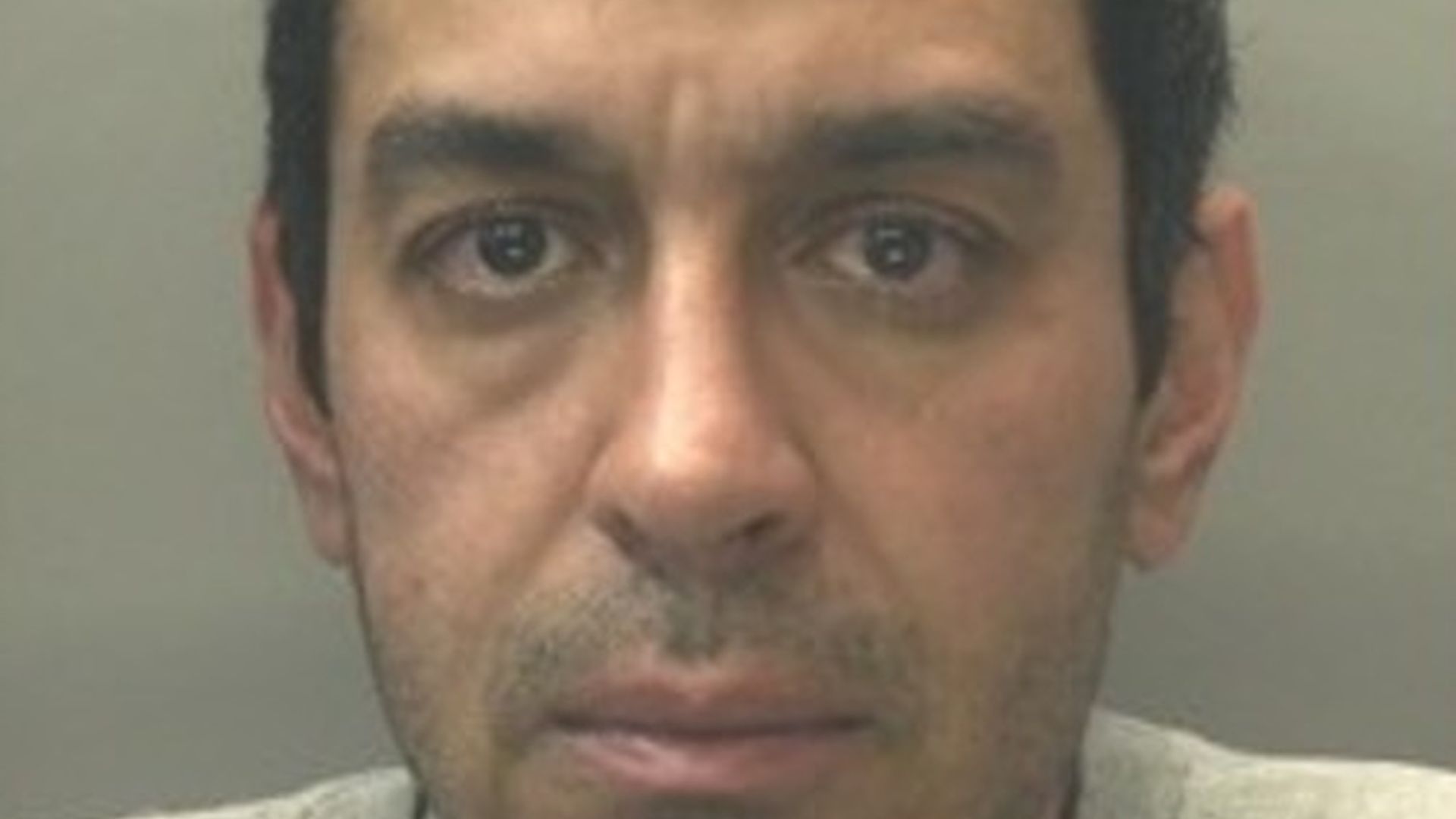
The sentencing of a man for the cold-blooded murder and backyard burial of his ex-wife marks the end of a criminal trial, but it exposes a catastrophic void in how the justice system monitors high-risk offenders. While the headlines focus on the gruesome discovery in a suburban garden, the real story lies in the months of ignored red flags and the systemic inability to bridge the gap between a restraining order and actual physical protection. When a domestic abuser transitions from harassment to homicide, it is rarely a sudden pivot. It is almost always a failure of institutional oversight.
The case in question involves a calculated effort to erase a human being. After the victim went missing, the perpetrator maintained a facade of normalcy, even as he was actively concealing her body beneath the soil of a property they once shared. The court handed down a life sentence, but that sentence provides no solace to a family that watched the legal system's "protections" fail in real-time. We are seeing a repeating pattern across the country where the paperwork of the law is treated as a shield, while the predator treats it as a roadmap.
The Illusion of the Paper Shield
Restraining orders are the primary tool used by the courts to signal that a victim is under the protection of the state. In reality, these documents are often little more than a dare to a determined abuser. For a person willing to commit murder, a piece of paper signed by a judge represents no physical barrier. This case highlights the lethal lag time between a reported violation of a court order and a law enforcement response.
Data suggests that the period immediately following a separation or the filing of legal charges is the most dangerous window for a victim. During this time, the abuser feels a loss of control. In this specific murder case, that loss of control manifested in a pre-meditated strike. The killer didn't just snap. He planned. He dug. He lied. This level of deliberation suggests that the offender never feared the consequences of the legal system until the handcuffs were already on his wrists.
To address this, the conversation needs to move away from "victim empowerment" and toward "offender containment." We place the burden of safety on the person being hunted. They are told to change their locks, change their phone numbers, and move to undisclosed locations. Meanwhile, the harasser often remains in the community, free to track their target using digital tools or physical stalking. The power imbalance is baked into the process.
Digital Stalking and the Death of Privacy
Modern domestic homicides are increasingly facilitated by technology that the legal system is too slow to regulate. In the lead-up to many garden-burial cases, we find a history of digital intrusion. GPS trackers on cars, shared passwords for cloud accounts, and even "find my phone" features are repurposed as hunting tools.
When a victim attempts to break free, the abuser uses these digital tethers to maintain a psychological grip. If the perpetrator knows where the victim is at every hour of the day, the victim lives in a state of perpetual "hyper-vigilance." This psychological torture often precedes the physical violence. In many jurisdictions, "digital stalking" is still treated as a secondary offense, a nuisance rather than a lethal precursor. This mindset must change. A man who uses technology to track his ex-wife is demonstrating the same intent as a man standing outside her window with a weapon.
The Psychology of the Backyard Burial
There is a specific, chilling significance to an abuser burying a victim on their own property. It is the ultimate act of "ownership." By keeping the body close, the killer maintains a sick form of proximity and control even after death. It is a concealment strategy, yes, but it is also a psychological statement.
Criminal profilers often point to this behavior as evidence of an offender who views the victim as an object or a piece of property rather than a human being. In the case of the suburban garden murder, the perpetrator's ability to live, eat, and sleep just feet away from the person he killed indicates a profound lack of empathy or a total detachment from reality. This isn't "passion." This is "pathology."
Investigative journalists and forensic teams are finding that these "hidden in plain sight" murders are often solved only because of the killer's arrogance. They believe they are smarter than the local detectives. They believe their community standing or their "nice guy" persona will shield them from suspicion. They use the time gained from the initial disappearance to craft a narrative of a "runaway" or a "distraught woman," leaning on tired tropes to lead investigators astray.
Why Law Enforcement Misses the Turn
The transition from a missing persons case to a homicide investigation is often hampered by "procedural optimism." Police often want to believe the best-case scenario to avoid the massive resource drain of a murder probe. This delay is exactly what a killer needs to dispose of evidence and solidify an alibi.
In the case of the garden burial, the time between the victim’s disappearance and the discovery of her remains allowed the crime scene to degrade. It allowed the perpetrator to weave a web of lies that took months to unpick. We need a fundamental shift in how "high-risk" domestic disappearances are handled. If there is a history of violence and a restraining order in place, the disappearance should be treated as a homicide from hour one.
The current standard of "waiting 24 to 48 hours" or looking for evidence of a struggle is outdated when dealing with calculated domestic predators. Many of these men don't leave a messy crime scene. They use their knowledge of the victim's routines to abduct them quietly. They use their access to the home to clean up effectively. By the time the police decide to bring in the cadaver dogs, the trail is often cold.
The Resource Gap in Rural and Suburban Policing
While major metropolitan areas might have dedicated domestic violence task forces, suburban and rural departments are often ill-equipped to handle the nuances of these cases. A patrol officer might respond to a "domestic disturbance" five times at the same house in a year. They become desensitized. They see it as a "he-said, she-said" drama rather than a ticking time bomb.
Training for these officers is frequently focused on the immediate de-escalation of a fight rather than the long-term assessment of lethality. Lethality assessment tools exist—specific checklists that help identify if a situation is likely to end in murder—but they are not universally mandated. If an officer had used a high-quality assessment tool during any of the prior interactions in this case, would the outcome have been different? It is a haunting question that the court proceedings rarely answer.
Rebuilding the Prosecution Strategy
When these cases finally reach a courtroom, the defense often attempts to paint the victim as unstable or the relationship as "toxic" on both sides. This "mutual combat" defense is a tactic used to lower the charge from first-degree murder to manslaughter. It suggests that the killer was driven to his actions by the stress of the relationship.
A hard-hitting prosecution must dismantle this narrative by focusing on the timeline of premeditation. You don't accidentally dig a grave. You don't accidentally hide a body for months. The presence of a backyard burial is the most powerful evidence of intent that a prosecutor can have. It turns the "crime of passion" argument into a joke. The industry of criminal justice needs to get better at highlighting these "post-offense behaviors" as the true window into the killer's mind.
The sentencing of one man in one town is a victory for that specific family, but it does nothing to fix the broken machinery that allowed the crime to happen. We are currently operating a "reactive" system in a world that requires "proactive" intervention. We wait for the body to be found before we admit that the restraining order wasn't enough.
The Cost of Institutional Apathy
Every time a garden is excavated to reveal a victim of domestic violence, the cost to the community is more than just the loss of life. It is a total erosion of trust in the protective power of the state. If a woman does everything "right"—if she reports the abuse, gets the legal orders, and tries to start a new life—and she still ends up buried in a garden, the system has forfeited its right to claim it provides security.
We see a massive expenditure on counter-terrorism and "street crime," yet the most dangerous place for many people remains their own home. The resources allocated to monitoring high-risk domestic offenders are a fraction of what is spent on other forms of public safety. This is a choice. It is a budgetary and political choice to prioritize certain types of victims over others.
Fixing this requires more than just longer prison sentences after the fact. It requires:
- Electronic monitoring of any individual who violates a domestic violence restraining order, regardless of the severity of the violation.
- Mandatory lethality assessments for every domestic call, with the results shared across a centralized database accessible by judges and prosecutors.
- Dedicated domestic homicide units in every county, focused on "cold-start" missing persons cases where a history of abuse exists.
- Aggressive prosecution of digital stalking, treating it as a felony-level precursor to physical violence.
The man who buried his ex-wife in the garden is behind bars. He will likely die there. But the conditions that allowed him to believe he could get away with it remain perfectly intact for the next predator. We continue to treat these murders as isolated tragedies rather than the predictable outcomes of a negligent system. Until the "why" and "how" are addressed with the same fervor as the "who," the soil in suburban gardens will continue to hide the failures of the law.
The reality is that we have become comfortable with a certain level of domestic "noise." We hear the shouting through the walls or see the bruises and we wait for someone else to call the authorities. Then, when the police tape goes up, we express shock. The shock is a lie. We knew the risk was there; we just didn't want to pay the price—socially, legally, or financially—to stop it. Ending this cycle isn't about more paperwork. It's about a relentless, intrusive focus on the abuser, stripping away their privacy and their freedom the moment they prove they are a threat to another human being’s existence.