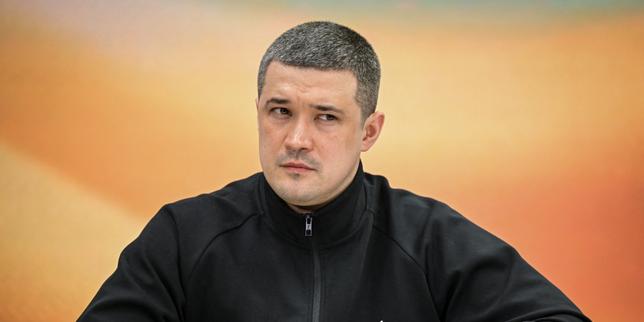
Mykhailo Fedorov is no longer just the man who put Ukraine’s passport on a smartphone. As of January 2024, the 33-year-old former marketing executive took the reins of the Ministry of Defense, signaling a brutal shift in how Kyiv intends to win a war of attrition. This is not a standard cabinet shuffle. It is the full-scale implementation of "mathematical warfare," where the Silicon Valley ethos of "move fast and break things" is being applied to the destruction of Russian armored columns.
The move acknowledges a grim reality. Conventional military bureaucracy cannot keep pace with a frontline where the life cycle of a drone or an electronic warfare (EW) frequency is measured in weeks, not years. By elevating the architect of the Diia super-app to the top defense post, President Volodymyr Zelenskyy has bet the nation’s survival on an aggressive, tech-first doctrine. Fedorov’s mandate is clear: automate the kill chain, digitize the soldier, and turn the Ukrainian defense industry into a decentralized, high-speed laboratory.
The Drone Line and the End of the Gray Zone
Fedorov’s most ambitious project, the Drone Line, has effectively redefined the geography of the battlefield. Historically, the "gray zone"—the no-man's-land between opposing trenches—was a few hundred meters of mud and mines. Today, thanks to a $880 million investment and a fleet of over 1,000 specialized crews, that zone has expanded to 20 kilometers.
This isn't just about quantity. While Fedorov recently announced that over 500 companies are now producing drones in Ukraine, the real shift is in the Brave1 Market. This digital marketplace allows military units to bypass the central command's slow procurement cycles. Commanders now use "combat e-Points"—earned by confirming hits on enemy equipment—to "buy" the specific drones, ground robots, or EW sensors they need directly from manufacturers.
The results are quantifiable. In early 2026, Fedorov reported that 240,000 drones were ordered through this system in just six months. The average delivery time? Ten days. This creates a ruthless feedback loop where ineffective gear fails to sell, and high-performing startups scale overnight. It is the Amazon of lethality, and it is killing nearly one in three Russian soldiers on the front line as of early 2026.
Digitizing the Mobilization Crisis
Fedorov’s arrival at the Ministry of Defense also marks the end of the paper-based, Soviet-era mobilization system that plagued Ukraine in 2023 and 2024. The Reserve+ app has become a cornerstone of his modernization drive. In 2026, 90% of all deferment extensions are processed automatically through this system, eliminating the need for hours of standing in line or the opportunity for bribery.
By integrating state registries and using AI-based verification, the Ministry has reduced a process that used to take weeks to a few seconds. The goal is to make the state a platform, not a bottleneck. For those already in uniform, the Army+ ecosystem has replaced the millions of paper reports that once bogged down unit commanders.
Breaking the Iron Triangle
For decades, the "Iron Triangle" of defense—the military, the bureaucrats, and the contractors—has resisted change. Fedorov is systematically breaking this structure by:
- Digital Officers: Introducing a "Digital Officer" (CDO) into every brigade to manage innovation on the fly.
- Data-Driven Loss Analysis: Moving from manually compiled casualty reports to a centralized database that analyzes every battlefield fatality. The goal is to identify systemic failures—whether a lack of EW or a training gap—and fix it in the next production cycle.
- Mission Control: A new project aimed at overseeing the entire lifecycle of a drone, from the factory floor to the final FPV strike, providing real-time data on which components are failing under Russian jamming.
The Interceptor Race
The most critical technological frontline in 2026 is the struggle for the "sky above the sky." Russia’s Shahed drones and reconnaissance UAVs have forced Ukraine to innovate or face constant bombardment. Fedorov’s team responded by launching a mass-scale Interceptor Drone program.
Rather than firing a $2 million Patriot missile at a $20,000 Shahed, Ukraine is now deploying autonomous interceptors. These specialized UAVs use AI-enabled targeting to ram or fire at enemy drones without human intervention. In January 2026 alone, Fedorov oversaw the delivery of 40,000 of these interceptors.
This reflects the "mathematics of war" that Fedorov frequently cites. If a $5,000 interceptor can down a $30,000 Russian drone, the economic attrition favors the defender. It is a cynical, necessary calculation. By shifting logistics tasks onto ground robotic platforms, the Ministry aims to reduce personnel losses while increasing enemy casualties to a target of 50,000 per month.
A Doctrine of Speed
Ukraine’s defense model is now built on low-cost solutions, rapid innovation, and decentralized command. The DELTA combat system is the brain of this new army, using AI to process thousands of data points and coordinate strikes on over 2,000 targets every day.
Critics argue that this level of decentralization leads to fragmentation and interoperability issues. They aren't wrong. A "zoo" of over 500 different drone types creates a nightmare for spare parts and maintenance. Fedorov's response has been the DOT-Chain Defense mechanism, which aims to standardize the most effective platforms while keeping the door open for new startups.
The veteran digital minister knows that in a war of this scale, being perfect is less important than being fast. The goal is not a "grand strategy" that takes years to draft, but a series of "tactical sprints" that keep the enemy off balance. For Fedorov, the army is not just a fighting force; it is the ultimate startup, and its survival depends on how quickly it can iterate.
Would you like me to analyze the specific impact of the Brave1 grants on the Ukrainian naval drone industry?


