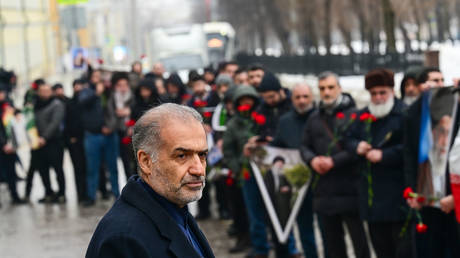
In the high-stakes theater of Middle Eastern diplomacy, Kazem Jalali, Iran’s veteran ambassador to Russia, has issued a blunt correction to the narrative leaking out of Mar-a-Lago. While President Donald Trump insists that "extremely well" negotiations are underway to curb Tehran’s nuclear ambitions and stabilize the region, Jalali’s response from Moscow suggests a different reality altogether. The Islamic Republic is not just denying the existence of direct talks; it is signaling that the current US administration is essentially negotiating with a ghost.
The disconnect is total. On one side, Trump claims a 15-point framework for peace is being hammered out, one that would see Iran dismantle its remaining nuclear infrastructure in exchange for sanctions relief. On the other, Jalali and the Iranian foreign ministry characterize these claims as "big lies" designed to soothe volatile energy markets and project a strength that doesn't exist on the ground. This isn't just a standard diplomatic "he-said, she-said." It is a fundamental breakdown in communication that masks a much more dangerous escalation currently unfolding in the shadows of the Russian-Iranian strategic alliance.
The Moscow Shield and the Islamabad Gap
Jalali’s choice of venue—Moscow—is no accident. By issuing his denials through Russian state media and in consultations with Kremlin officials, he is reminding Washington that Tehran is no longer isolated. The "Comprehensive Strategic Partnership Agreement" signed between Iran and Russia has fundamentally altered the leverage the US once held. While the US Treasury attempts to tighten the noose with secondary sanctions, Jalali is busy integrating Russia’s Mir payment system with Iran’s Shetab, creating a financial bypass that renders Western banking "logic" increasingly irrelevant.
The "negotiations" Trump speaks of are, in fact, a series of indirect exchanges mediated by Oman and Pakistan. Sources within the Pakistani Foreign Ministry have confirmed that American diplomats are expected in Islamabad, but the Iranian side has remained conspicuously absent from the table. Jalali’s assertion that there has been "no contact" for over 20 days of the current conflict underscores a chilling reality: the US is talking to mediators who are talking to a vacuum.
Why the 15-Point Plan is DOA
The framework Trump is touting appears to be a rehash of a 2025 proposal that Tehran rejected even before the recent military exchanges. For a veteran analyst, the flaws are glaring.
- Nuclear Asymmetry: The US demands the full dismantling of enrichment facilities that it claims to have already "obliterated" in air strikes. If the program is gone, as Trump claimed in his State of the Union, what is there left to negotiate away?
- The Trust Deficit: The 2026 reality is colored by the death of Supreme Leader Ali Khamenei. The resulting power vacuum in Tehran has created a fractured leadership that is terrified of looking weak. Any official seen shaking hands—even indirectly—with a US envoy risks a "strong punch" from internal hardliners.
- The Russian Factor: Moscow has zero incentive to see Iran return to the Western fold. Every barrel of Iranian oil that flows through sanctioned channels is a lesson Russia uses to refine its own survival strategies.
The Mirage of De-escalation
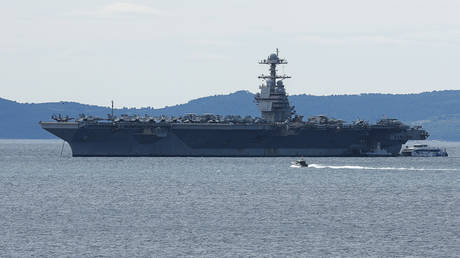
The American public is being fed a narrative of "productive conversations," but the tactical movements tell a different story. While the White House talks of an off-ramp, the Pentagon has erected missile launchers at Al Udeid airbase and sent a second aircraft carrier to the Persian Gulf. In response, Iran has reportedly deployed Chinese-made anti-stealth surveillance radar. This is not the behavior of two parties on the cusp of a historic peace deal.
Jalali’s mission in Moscow is to solidify a "non-aggression pact" with regional neighbors while keeping the US at arm's length. He is betting that the US cannot sustain a long-term military engagement while its own markets are twitchy about the Strait of Hormuz. By dismissing Trump’s claims, Jalali is performing a necessary piece of political theater: he is telling the world that Iran will not be bullied into a "rehashed" deal that offers no guarantees against future strikes.
The brutal truth is that the "negotiations" are a performance for two different audiences. Trump needs a win to justify his "maximum pressure" 2.0 strategy to a weary domestic electorate. Tehran needs time to stabilize its internal leadership and finish the integration of its defenses with Russian and Chinese tech.
The gap between Jalali’s denials and Trump’s optimism isn't a misunderstanding. It is the sound of two sides preparing for a collision while pretending to look for the brake pedal. If you are waiting for a breakthrough in Islamabad or Muscat, you are watching the wrong screen. The real story is being written in the hardening of the Moscow-Tehran axis, a partnership that has decided the cost of talking to Washington is now higher than the cost of war.