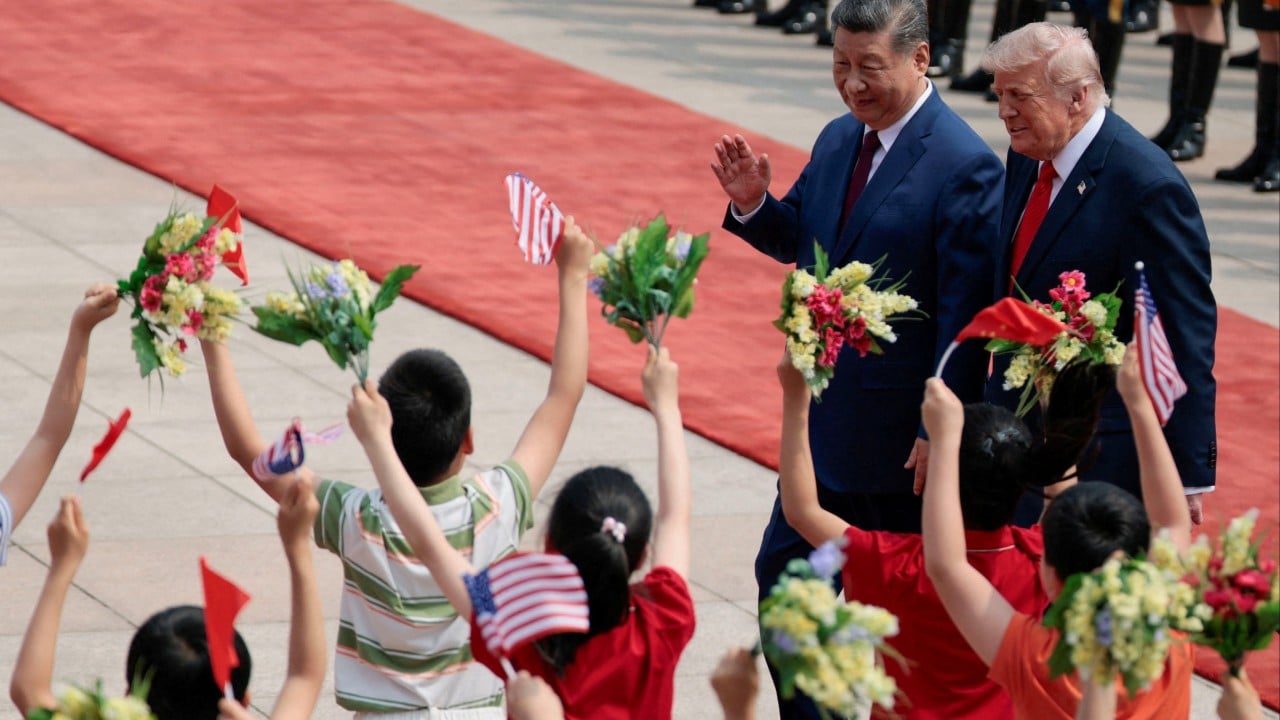
Donald Trump and Xi Jinping are back in the same room in Beijing, and it isn't just about handshake photos or the standard diplomatic song and dance. If you’ve been watching the headlines, you know the vibe is different this time. We’re past the point of simple trade wars. Now, we’re looking at a high-stakes attempt to keep two superpowers from crashing into each other.
The "Thucydides Trap" is the phrase of the week. Xi brought it up almost immediately, asking if the U.S. and China can actually break history’s habit of turning rivalry into war. It’s a heavy question for a meeting that also involves Elon Musk, Jensen Huang, and a massive order of Boeing jets.
The Reality of the Thucydides Trap
Xi Jinping didn't pick this term by accident. It comes from the ancient Greek historian Thucydides, who observed that when a rising power (Athens) scares an established power (Sparta), war usually follows. According to Harvard’s Graham Allison, this has happened 16 times in the last 500 years, and 12 of those ended in blood.
Xi’s play here is clear. By name-dropping the trap, he’s putting the burden of "stability" on Trump’s shoulders. He’s basically saying, "We don't have to fight, but you need to accept that China has arrived." Trump, in his typical fashion, seems more interested in the "negotiation of the century" than in ancient history, but he isn't ignoring the gravity of the moment.
Personal Touches and the Musk Factor
You can’t talk about this summit without looking at who’s in the room. This isn't just a meeting of bureaucrats. Trump brought the heavy hitters. Having Elon Musk and Nvidia’s Jensen Huang on the guest list sends a loud message about where the real power lies: technology and supply chains.
Musk is a fascinating bridge here. He has massive interests in both countries and seems to be acting as a sort of unofficial envoy for "common sense" business ties. Trump even posted on social media that he’d ask Xi to let these "brilliant people" work their magic in China. It’s a very "Trump" way of doing diplomacy—treating international relations like a corporate merger.
The personal rapport matters too. Trump’s been talking about his "solid footing" with Xi, even mentioning how he’s bummed the White House ballroom construction won't be finished in time for a reciprocal visit. It’s that mix of grand geopolitics and weirdly specific personal gripes that makes these two leaders such a unique pairing.
What’s Actually on the Table
Don’t let the talk of "fat hugs" distract you from the hard math. There’s a lot of friction under the surface.
- The Iran War: This is the elephant in the room. The conflict in the Middle East has messed with oil prices and global stability. Trump wants China to help cool things down; China wants to make sure its energy supply isn't choked off.
- The Taiwan "Red Line": Beijing is still fuming over the $11 billion weapons package for Taiwan. It’s the "first red line" they won’t cross. Trump has shown some ambivalence here, which has folks in Taipei and Washington nervous. Is he willing to trade Taiwan's security for a better trade deal?
- Critical Minerals: This is where China has the upper hand. They control the rare earths and magnets needed for everything from EVs to the missiles the U.S. is burning through in other conflicts. If Xi decides to "break glass" and cut off these minerals again, it’s a problem for the U.S. military-industrial base.
- The Board of Trade: This is a potentially massive shift. Instead of just slapping tariffs on everything, there’s talk of a "Board of Trade"—a standing body to manage what gets bought and sold. It’s managed trade, not free trade, and it might be the only way to keep the peace.
Why This Summit Feels Different
In previous years, these meetings felt like they were about "fixing" the relationship. This time, it feels like they’re just trying to "manage" it. There’s no talk of China becoming a democracy or the U.S. backing off its "America First" stance. Both sides have accepted who the other is.
The goal now is a "decent peace." It’s transactional, cynical, and probably more realistic than anything we’ve seen in the last decade. They’re looking for "compliance checkpoints"—did you buy the soybeans? Did you stop the fentanyl precursors? If yes, we keep talking. If no, the tariffs snap back.
What Happens Next
Watch the soybean and Boeing orders. If those numbers are big, it means Trump got his "win." Then, watch the language around Taiwan. If Trump starts sounding even more "ambivalent," it means the tectonic plates of the Pacific are shifting in a way we haven't seen since Nixon.
Keep an eye on the "Board of Trade" developments. If that body actually gets formed, it marks the end of the old global trade order and the start of something much more controlled and segmented.
Check the news for any joint statements on AI safety. With Jensen Huang in the room, the tech competition isn't just about chips—it's about who sets the rules for the next century of intelligence. If they can agree on even a few basic guardrails for AI, it might be the biggest success of the trip.