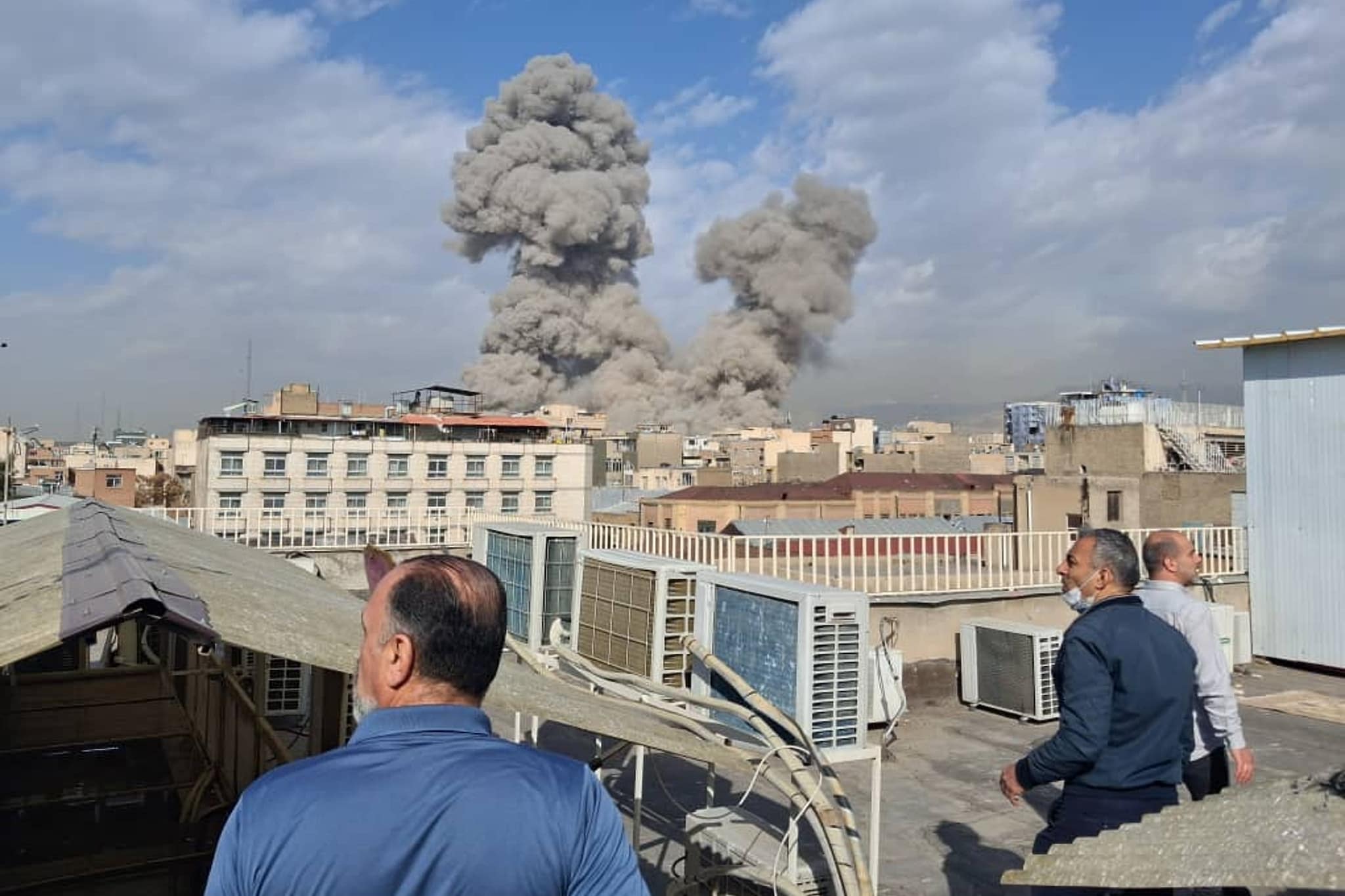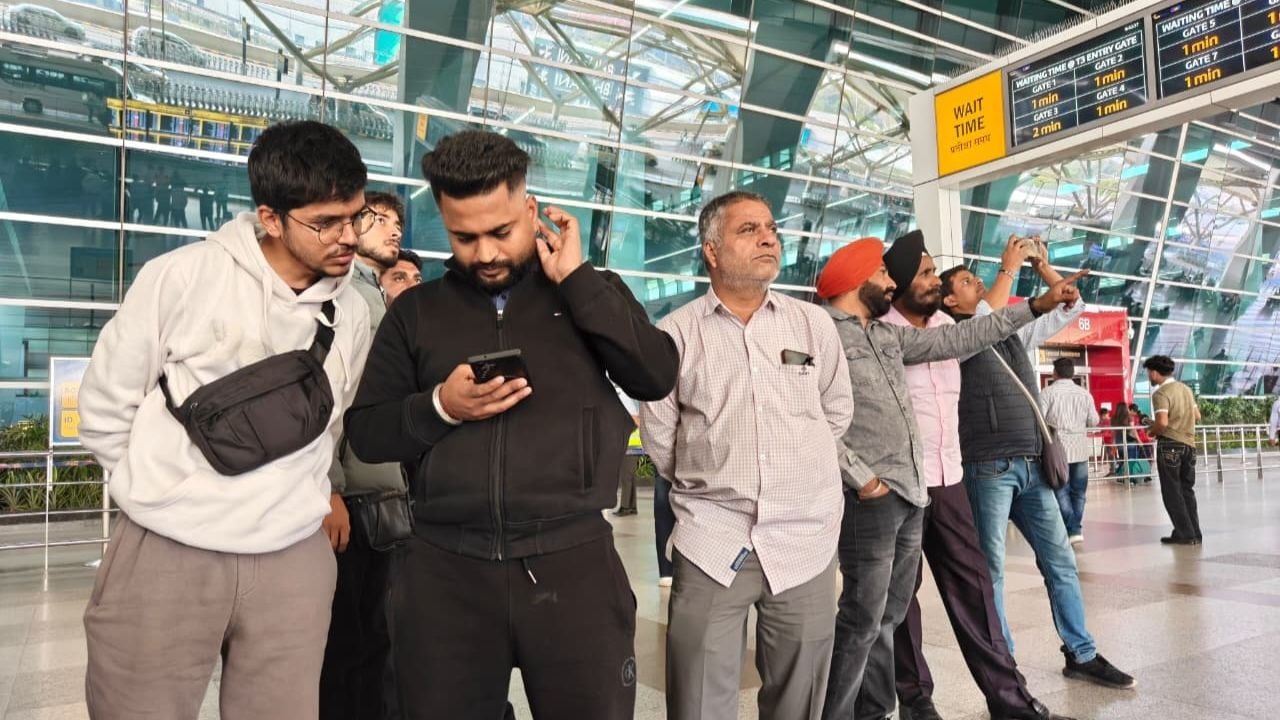
The sirens over Tel Aviv and the drone swarms launched from Isfahan have done more than just rattle global oil markets. They have exposed the precarious nature of India’s most significant demographic and economic dependency. While the Ministry of External Affairs rushes to set up 24-hour helplines and the Cabinet Committee on Security convenes in high-pressure rooms in New Delhi, the sheer scale of the math involved is staggering. Nearly 9.6 million Indian nationals live and work in West Asia. This is not just a migration statistic. It is a massive, living extension of the Indian economy currently sitting in the direct line of fire between two of the region's most volatile powers.
The immediate concern is the safety of the 18,000 Indians in Israel and the 3,000 students in Iran. However, the real crisis lies in the spillover effect. If the shadow war between Israel and Iran transitions into a sustained, full-scale regional conflict, India faces a repatriation nightmare that would make the 1990 Kuwait airlift look like a weekend drill. New Delhi’s diplomatic tightrope walk is no longer about balancing energy interests; it is a desperate race to prevent a human and fiscal catastrophe.
The Geography of Risk
Most observers focus on the Strait of Hormuz as a chokepoint for oil. They are right, but they miss the human element. The majority of the 9.6 million Indians are concentrated in the Gulf Cooperation Council (GCC) countries—Saudi Arabia, the UAE, Qatar, Kuwait, Oman, and Bahrain. These nations are geographically sandwiched between the primary belligerents.
A missile exchange or a naval blockade does not just stop tankers. It stops the flow of people and the flow of money. These workers send back over $40 billion in remittances annually. This capital is the lifeblood of states like Kerala, Tamil Nadu, and Uttar Pradesh. If the regional sky closes, the economic heartbeat of rural India skips a beat. The government’s activation of helplines is a necessary tactical step, but it is a band-aid on a potential arterial wound.
Beyond the Helplines
The MEA’s standard operating procedure involves issuing travel advisories and coordinating with local embassies. But the "why" behind the current urgency is different from previous decades. In the past, India could rely on its "non-aligned" legacy to navigate Middle Eastern friction. Today, India is deeply integrated with the Israeli defense architecture and simultaneously remains a key partner in Iran’s Chabahar port project.
This dual-alignment means India has no "safe" side to lean on. Every move to protect students in Tehran is watched by Tel Aviv, and every flight sent to evacuate caregivers from Israel is scrutinized by the Islamic Revolutionary Guard Corps. The institutional memory of the Indian foreign service is being tested. They aren't just managing a rescue; they are managing a multi-polar entanglement where the citizens are the ultimate collateral.
The Student Factor in Iran
The 3,000 students in Iran represent a specific, often overlooked vulnerability. Unlike the blue-collar workforce in the UAE, these are individuals embedded in the Iranian academic and social fabric. They are scattered across cities that are potential targets for retaliatory strikes. Their presence gives Tehran a subtle but powerful piece of leverage in its bilateral talks with New Delhi. India cannot afford to be seen as purely pro-Israel while its youth are essentially guests in a country that feels increasingly backed into a corner.
The Infrastructure of Escape
If a mass evacuation becomes necessary, the logistics are terrifying. India’s commercial fleet and the Indian Air Force’s heavy-lift capabilities (C-17 Globemasters) have limits. You cannot move nine million people with a few dozen aircraft. The strategy would have to involve sea-based corridors, which brings us back to the naval vulnerability in the Persian Gulf.
The Indian Navy has increased its presence in the Arabian Sea, ostensibly for anti-piracy operations. In reality, these warships are there to ensure that if the "big one" happens, there is a secured path for Indian flagged vessels to reach the ports of Fujairah or Salalah. It is a silent mobilization that the government rarely speaks about in public briefings.
The Remittance Rupture
We must look at the cold numbers of the Indian economy. Remittances from West Asia account for a significant portion of India's foreign exchange reserves. A war doesn't have to destroy a city to be effective; it only has to make it unlivable for the expatriate class.
If the construction projects in Riyadh stall or the retail sector in Dubai collapses due to regional instability, the sudden influx of millions of returning workers would create an internal displacement crisis within India. These workers would return to a domestic labor market that is already struggling to absorb its youth. The "West Asia Trap" is the reality that India has become so successful at exporting its labor that it has no contingency plan for when that labor is forced to come home all at once.
The Defense Diplomacy Contradiction
India's relationship with Israel has moved from a buyer-seller dynamic to a deep strategic partnership. From Heron drones to Barak-8 missile systems, the Indian military is heavily reliant on Israeli tech. Simultaneously, India’s "Link West" policy has sought to cultivate Iran as a gateway to Central Asia.
When the CCS meets, they aren't just discussing the safety of the 3,000 students. They are calculating the survival of the International North-South Transport Corridor (INSTC). A war destroys the very infrastructure India has spent billions to build. The Chahbahar port, intended to bypass Pakistan, becomes a ghost dock in a war zone.
The Logistics of a Modern Airlift
Air India, once a state carrier, is now under the Tata Group. This complicates the government’s ability to simply commandeer a fleet for evacuation. Negotiations for "rescue charters" are now a commercial discussion as much as a national security one. The cost of insurance for flying into a combat zone like the Levant or the Persian Gulf is astronomical. The MEA helplines are the first point of contact, but the real work is happening in the insurance and risk assessment offices of Mumbai and London.
The Intelligence Gap
One must ask if the Indian intelligence apparatus saw the scale of the escalation coming. The MEA’s reaction time suggests they were caught in the same "status quo" trap as many Western agencies—believing that the Iran-Israel "shadow war" would never step into the light.
The activation of helplines is a reactive posture. A proactive posture would have involved a phased reduction of the workforce in high-risk zones months ago. Instead, India continued to send laborers to Israel to fill the gap left by Palestinian workers. This decision now looks like a gamble that ignored the basic military reality of the region. New Delhi chose economic opportunity over the clear warning signs of a regional conflagration.
Security in the Cyber Age
The conflict is not just happening with missiles. Cyber warfare targeting regional infrastructure can disable the very communication lines the MEA is relying on. If the digital networks in the Gulf are compromised, those helplines become useless. India’s digital diplomacy needs to be as hardened as its physical infrastructure. There is a quiet panic regarding the data security of Indian nationals abroad, whose records are stored in databases that are now prime targets for regional actors looking to create chaos.
The Invisible Workforce
Beyond the registered students and the high-profile tech workers, there is a massive population of undocumented or "loose-contract" Indian workers. These are the people who will not show up on a government list. They are the domestic workers, the small-scale farmers, and the local traders. For them, there is no embassy call. They rely on community networks and "community leaders" who often have more ground-level power than a junior diplomat. The MEA’s greatest challenge isn't the 3,000 students in Iran; it’s the hundreds of thousands of "invisibles" who have no paperwork and no clear way out.
Strategic Silence and its Costs
The Indian government has been uncharacteristically cautious in its rhetoric. It calls for "restraint" and "dialogue"—the standard vocabulary of a nation that cannot afford to offend anyone. However, this silence has a shelf life. As the situation evolves from a skirmish to a possible war of attrition, India will be forced to choose.
Will it prioritize its defense ties with Israel, or its energy and diaspora ties with the wider Islamic world? Every hour the conflict continues, the cost of being "everyone's friend" goes up. The helplines are ringing because the people on the ground know what the diplomats won't admit: the era of "strategic autonomy" in West Asia is facing its terminal test.
The sheer volume of human lives at stake makes this the most significant foreign policy crisis of the decade. The 9.6 million Indians in the region are not just workers; they are a human shield between India and an economic depression. If the fire spreads, no amount of helplines will be enough to manage the heat. The focus must shift from "monitoring the situation" to the cold, hard logistics of a mass movement of people that the world has never seen before.
Would you like me to analyze the specific economic impact of a Strait of Hormuz closure on India's energy security?