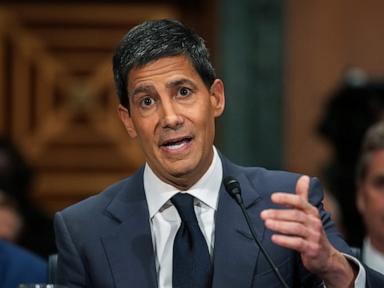
The Senate Banking Committee just handed Kevin Warsh the keys to the world’s most powerful economic engine, clearing his nomination for a final floor vote in a narrow 13-11 party-line split. This is not a simple personnel change. It is a fundamental pivot in how the United States manages its money, its inflation, and its relationship with the global markets. For years, Jerome Powell’s Federal Reserve operated on a philosophy of "forward guidance"—telegraphing every move months in advance to soothe nervous investors. Warsh is signaling a swift, arguably violent, end to that era.
By advancing his nomination on April 29, 2026, the committee has set the stage for a full Senate confirmation by mid-May, precisely as Powell’s term expires. If confirmed, Warsh will inherit a central bank that has missed its 2% inflation target for five years and a balance sheet bloated to $6.6 trillion. His promise? A "regime change" that looks to shrink the Fed’s footprint, silence its constant chatter, and return to a cold, hard focus on price stability.
The Death of Forward Guidance
Wall Street has grown addicted to the Fed’s voice. Under Powell, the central bank became a narrator of its own story, providing quarterly interest rate projections and frequent press conferences to ensure no one was ever surprised. Warsh views this transparency as a trap. In his testimony, he argued that the Fed has become "anchored to outdated forecasts," losing its ability to react to real-time data because it is too busy trying to keep its own promises to the market.
Warsh plans to scale back the frequency of press conferences and could eliminate the "dot plot" entirely. This is a deliberate move to reclaim the element of surprise. While volatility might spike in the short term, the goal is to prevent the Fed from being bullied by market expectations. If the market doesn't know exactly what is coming, it can't price in a "Fed put" that encourages reckless risk-taking.
The AI Productivity Hedge
One of the more sophisticated—and controversial—planks of the Warsh platform is his view on artificial intelligence. While he is historically labeled a "hawk" for his skepticism of easy money, he has introduced a nuance that complicates that branding. Warsh posits that if AI-driven productivity gains are real, the economy can handle faster growth without triggering inflation.
This creates a convenient intellectual bridge between his hawkish past and President Trump’s demands for lower interest rates. If productivity is rising, the "neutral" rate of interest can be lower. It is a gamble on a technology that is still in its messy adolescence. If Warsh miscalculates and cuts rates based on productivity gains that don't materialize, he risks reigniting the very inflation he claims to despise.
Dismantling the $6.6 Trillion Fortress
The Fed’s balance sheet is the elephant in every room. Since the 2008 crisis and the 2020 pandemic, the central bank has used asset purchases to flood the system with liquidity. Warsh has called this portfolio "bloated and distortionary." He wants it gone.
However, even a veteran like Warsh knows he cannot simply dump trillions in Treasury bonds and mortgage-backed securities without breaking the plumbing of the global financial system. He has pledged a "well-choreographed" reduction. The friction will come from how he defines "well-choreographed." For the Banking Committee Democrats who voted against him, the fear is that a rapid runoff will spike mortgage rates and crush the housing market just as the economy is stabilizing.
The Independence Paradox
The most heated exchanges in the confirmation hearing centered on a single question. Is Kevin Warsh the President’s "sock puppet," as Senator Elizabeth Warren suggested, or a principled guardian of the dollar?
Trump has been vocal about his desire for a Fed Chair who will slash rates. Warsh, meanwhile, has a history at Morgan Stanley and the Hoover Institution that suggests a deep-seated belief in institutional autonomy. His strategy appears to be one of "minimizing the surface area of political confrontation." By narrowing the Fed’s focus to just two things—employment and prices—he hopes to strip away the "mission creep" that has made the Fed a target for political attacks on climate change and social equity.
But independence is not a gift; it is a shield. If Warsh yields to White House pressure to cut rates before inflation is truly dead, he will destroy the credibility of the office. If he defies the President, he will find himself in the same crosshairs that eventually took down Powell’s standing in the Oval Office.
Reforming the Inflation Framework
The current 2% target is a blunt instrument. Warsh has suggested broadening the metrics the Fed uses to measure the cost of living, looking toward "trimmed mean" and median inflation models. These measures strip out the noise of volatile categories like energy or temporary tariff shocks.
Critics argue this is "moving the goalposts" to justify whatever policy the Chair wants to pursue. Proponents say it is the only way to avoid overreacting to supply-chain hiccups that the Fed cannot control anyway. By changing the math, Warsh is essentially changing the definition of success.
The full Senate vote, expected the week of May 11, will likely confirm him. Republicans hold the majority, and with Senator Thom Tillis recently dropping his opposition, the path is clear. Kevin Warsh is about to lead a central bank that is smaller, quieter, and arguably more unpredictable than it has been in forty years. The era of the "Fed-as-narrator" is over. The era of the "Fed-as-enforcer" has begun.