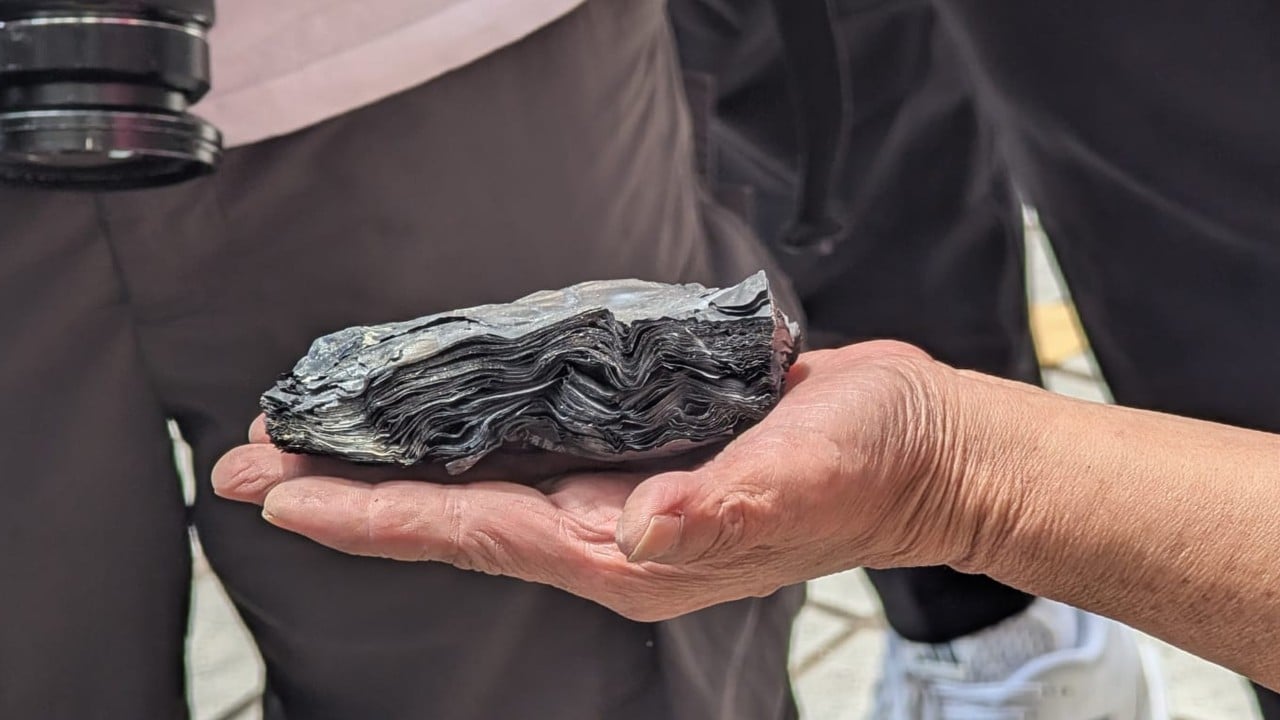
You spend decades scrimping and saving every cent. You tuck away $100,000 in hard-earned cash, thinking it’s safest right under your nose. Then, in a single afternoon of smoke and heat, that life savings turns into a pile of charred, black scraps. This isn't a nightmare. It’s exactly what happened to a resident at Wang Fuk Court in Tai Po. After a fire ripped through their flat, the owner opened their safe only to find their inheritance had literally gone up in smoke. It's a gut-wrenching story that highlights a massive mistake many people still make. They trust a "fireproof" safe more than a bank.
Why your safe probably isn't actually fireproof
Most people see a heavy metal box and assume it’s an invincible fortress. That's a dangerous lie. The Wang Fuk Court incident shows that even when a safe stays shut, the contents inside can still bake. Think about how an oven works. You don’t need the flame to touch the cake for the cake to cook.
When a high-rise fire breaks out, temperatures can easily soar past 600 degrees Celsius. Standard "fire-resistant" safes are usually rated to keep the internal temperature below the ignition point of paper for maybe 30 or 60 minutes. But if the fire department takes longer to extinguish the blaze, or if the safe sits in a pile of smoldering embers for hours, the inside becomes a furnace. Paper starts to char and carbonize at around 232 degrees Celsius. You don't even need a spark. The heat alone ruins the bills.
In the Tai Po case, the resident was hit with the double whammy of fire and the aftermath. Even if the notes aren't ash, they’re often so brittle they crumble the moment you touch them. If you’re holding onto a large stack of cash in a residential flat, you’re basically gambling against physics.
The struggle to recover burnt Hong Kong banknotes
The question everyone asks after a disaster like this is simple. Can I get my money back? The short answer is maybe, but it's a bureaucratic headache that’ll make your blood boil.
The Hong Kong Monetary Authority (HKMA) and the three note-issuing banks—HSBC, Standard Chartered, and Bank of China—have specific rules for damaged currency. They don't just take your word for it. If you walk in with a bag of black soot, they’ll likely turn you away. To even stand a chance at a refund, you usually need to meet these criteria:
- You must possess more than 50% of the individual banknote.
- The security features, like the metallic thread or watermarks, need to be identifiable.
- The serial numbers should ideally be legible.
When cash is charred in a safe, it often fuses together into a "brick." Do not try to peel them apart yourself. You’ll just destroy the evidence. In cases like the Wang Fuk Court fire, the owner has to take the remains to the bank, where they might be sent for forensic examination. If the damage is too severe, that $100,000 is gone forever. It’s a total loss.
Why the mattress method is a financial disaster
We see this a lot with the older generation in Hong Kong. There's a deep-seated distrust of big institutions or just a desire to keep "emergency" money within arm's reach. But keeping $100,000 in a flat isn't just a fire risk. It’s an inflation trap.
While that money sits in a safe, it loses purchasing power every single year. Beyond that, you're a target for theft. A safe that can be carried away is just a convenient luggage piece for a burglar. The resident at Wang Fuk Court likely thought they were being responsible by locking the inheritance away. Instead, they created a single point of failure. One accident destroyed a legacy.
Better ways to protect your physical wealth
If you absolutely insist on keeping physical assets or cash, you have to do it smarter than a basic home safe. Stop treats your closet like a vault.
First, look at bank safety deposit boxes. Yes, there's a waiting list in some districts. Yes, it costs a yearly fee. But banks have professional-grade fire suppression systems and high-level security that your Tai Po flat simply doesn't have. If the bank burns down, they have insurance and protocols that protect the contents in ways a home safe never will.
Second, if you must keep things at home, buy a safe with a "Data" or "Media" rating. These are designed to keep internal temperatures much lower than standard document safes because things like USB drives and photos melt even faster than paper. They're more expensive and heavier, but if you're protecting $100,000, the extra couple thousand dollars for a real safe is a rounding error.
What to do if your cash is currently burning
If you’re reading this and you actually have a stack of cash hidden away, go move it. Today. If you've already suffered a fire and found damaged notes, follow these steps immediately.
Pack the remains in a rigid container. Don't use a plastic bag where they’ll get crushed. Take them directly to the head office of the issuing bank, not just a small neighborhood branch. Be prepared to fill out a mountain of paperwork and wait weeks, if not months, for an answer.
The tragedy at Wang Fuk Court wasn't just the fire. It was the preventable loss of a family's future. Don't let your inheritance become the next headline about charred paper. Put the money in a regulated account where it’s insured and protected from a stray electrical spark or a kitchen fire. It's not just about convenience. It's about making sure your hard work doesn't turn into ash.
Go check your safe right now. If it’s full of cash, you're not being safe. You’re being reckless.