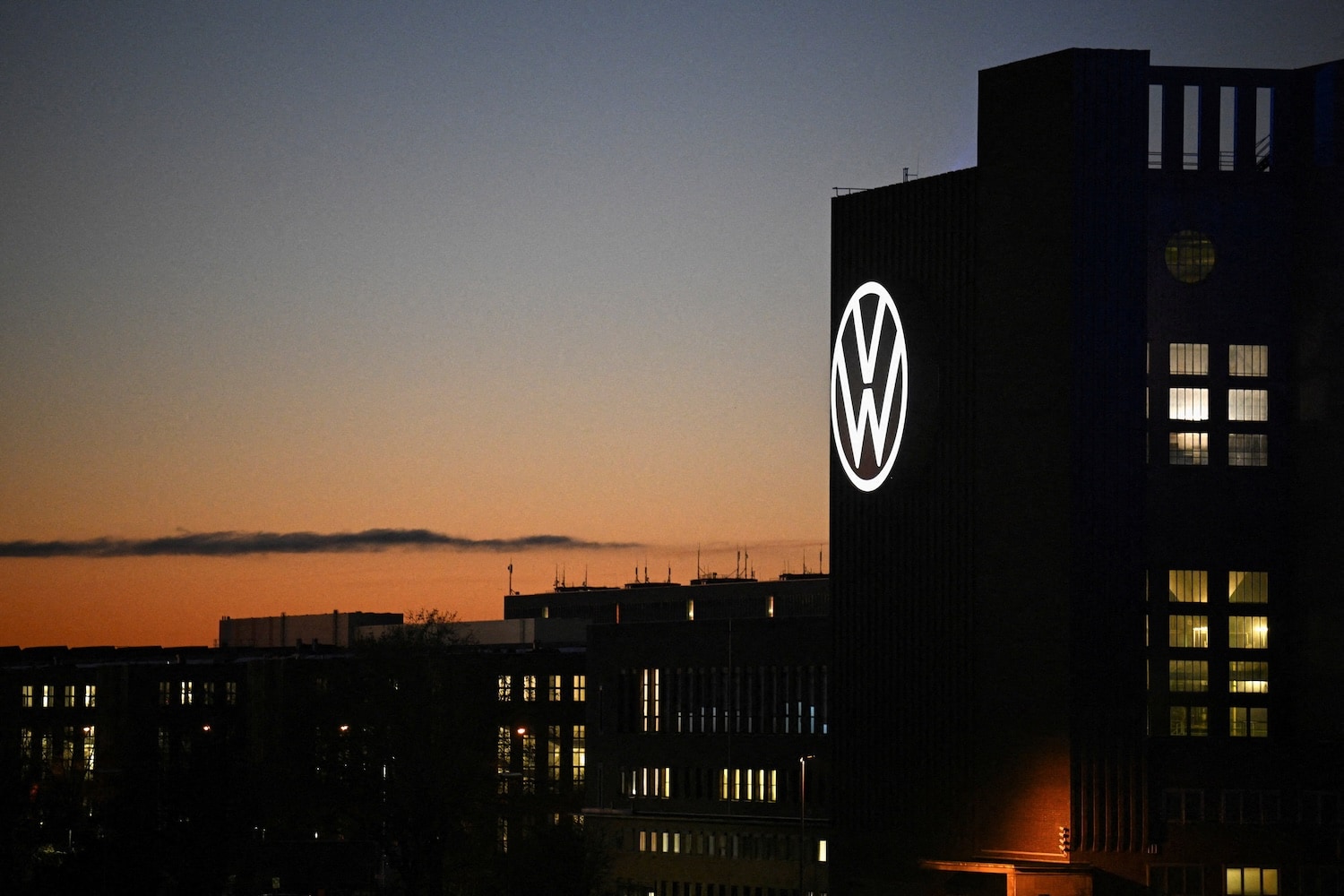
Volkswagen just dropped a financial bomb that's been ticking for years. Its operating profit for 2025 basically fell off a cliff, plummeting over 50% to roughly €8.9 billion. If you're a shareholder, those numbers are painful. If you're a car enthusiast or a German factory worker, they're terrifying.
For decades, VW was the untouchable titan of the road. Now, it's getting squeezed by a brutal combination of aggressive Chinese rivals, massive U.S. tariffs, and its own internal software nightmares. It's not just a bad quarter; it's a fundamental identity crisis for Europe's largest automaker.
The China Problem is Worse Than You Think
China used to be Volkswagen's gold mine. It was the place where they could sell millions of cars and pad their margins. Those days are over. Local Chinese brands like BYD and Xiaomi aren't just making "cheaper" cars anymore—they're making better ones, especially in the electric vehicle (EV) space.
Volkswagen's EV deliveries in China tanked by over 40% recently. Think about that. In the world’s most important market for the future of transportation, the "People’s Car" is becoming an afterthought. Chinese consumers now want software-driven, tech-heavy cabins that feel like a smartphone on wheels. VW’s ID series, while mechanically solid, feels like a flip phone in a 5G world.
It isn't just about consumer taste, either. The price wars in China are predatory. Domestic brands are willing to bleed cash to gain market share, and VW—with its massive German overhead—simply can't keep up with the discounting.
Tariffs and the Geopolitical Trap
As if the competition weren't enough, the politics of 2025 and 2026 have been a disaster for Wolfsburg. The U.S. hit VW hard with import tariffs that cost the company billions in 2025 alone. These aren't just small line items; they are direct hits to the bottom line that forced VW to stop producing certain models, like the ID.4 in Chattanooga, because the math just didn't work anymore.
The irony? Even as Europe tries to protect its own industry with tariffs against Chinese EVs, those same trade wars make it harder for global giants like VW to operate. When trade barriers go up, the biggest players with the most complex supply chains get hurt the most.
Breaking Down the 2025 Damage
- Operating Margin: Slipped to a measly 2.8%, down from nearly 6% just a year prior.
- Porsche’s Pain: Even the crown jewel wasn't safe. Porsche took a massive hit, with its operating profit nearly vanishing due to a messy strategic shift and weak luxury demand.
- Job Cuts: The company is now eyeing 50,000 job cuts by 2030. That’s a small city’s worth of people.
The Software Sabotage
You can't talk about VW's decline without talking about CARIAD, their internal software unit. It’s been a black hole for cash. Every time a new Audi or Porsche was supposed to launch, it got delayed. Why? Software glitches.
VW even tried to buy its way out of the mess by investing billions in Rivian to "borrow" their tech stack. But as we've seen, you can't just bolt a startup's soul onto a legacy giant's body. The internal bureaucracy at VW is built for hardware—for cold-pressed steel and engine tolerances. It doesn't know how to handle the "fail fast" nature of software.
Stop Overthinking the German Factory Closures
For the first time in its 88-year history, VW actually closed a factory in Germany. The Dresden plant is gone. For years, the powerful German unions made factory closures a "never-gonna-happen" scenario. But the money has run so dry that even the unions had to face reality.
Honestly, the closures are a symptom, not the disease. The disease is an inflated cost structure. Volkswagen produces cars in some of the most expensive labor markets in the world while trying to compete with Chinese factories that pay a fraction of the cost and operate with significantly less red tape.
What Actually Happens Next
Volkswagen is forecasting a "recovery" in 2026, aiming for a margin between 4% and 5.5%. That sounds optimistic given the current climate. If they want to hit those numbers, they have to do more than just fire people.
- Simplify the lineup: They sell too many versions of too many cars. The "Core" brand group needs to stop trying to be everything to everyone and focus on high-margin, high-volume EVs that actually work.
- Fix the software or die: The Rivian partnership needs to be more than a press release. They need to let the software people run the show, even if it upsets the old-school engineers in Wolfsburg.
- Accept the new China reality: VW isn't going to be the #1 player in China again. They need to pivot to a "In China, for China" strategy where they partner more deeply with local tech firms instead of trying to export German sensibilities to Shanghai.
Don't expect a quick turnaround. The era of easy growth for German autos is dead. If you're looking at VW as an investment or a career path, realize that the next three years will be about survival, not expansion. The company has the cash to weather the storm for now, but the window to reinvent itself is closing fast.
Watch the 2026 Q1 and Q2 reports closely. If the margin doesn't start creeping back toward 4%, the 50,000 job cuts currently on the table might just be the beginning.
Check your local dealership's inventory and see how long those ID. models are sitting on the lot. That's your real-world indicator of whether the recovery is actually happening. It's time for VW to stop flagging "pressure" and start building cars that people actually want to buy over a BYD or a Tesla.