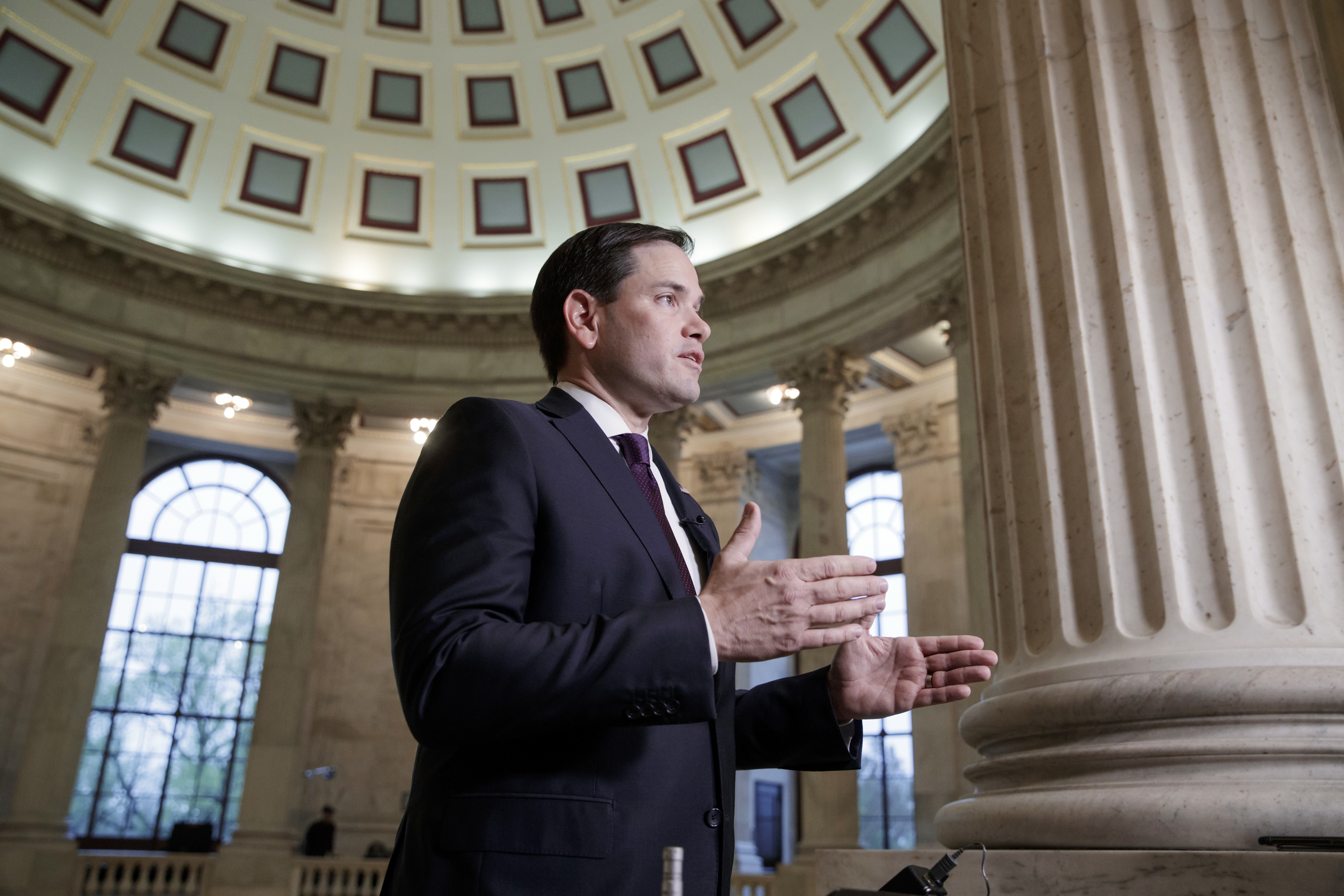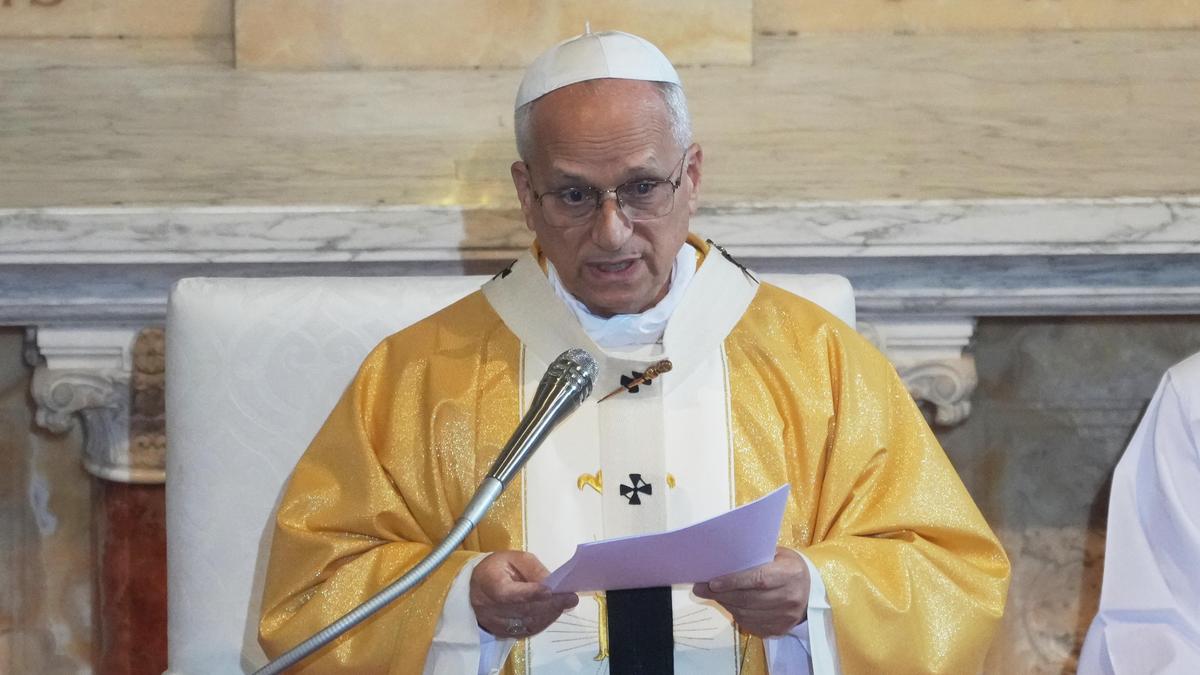
Don't let the robes and the ritual fool you. When the Pope starts talking about "sick hearts" and "Pied Pipers," he's not just delivering a Sunday school lesson. He's throwing a punch at the current state of global politics.
In a recent, high-stakes address in Trieste, Italy, the Pope didn't hold back. He painted a picture of a world where democracy isn't just stumbling—it's in the ICU. He called it "not in good health." And while he’s careful not to get bogged down in the daily mud-slinging of specific national elections, the timing of his warnings, especially following sharp criticisms from figures like Donald Trump, makes one thing clear: the Vatican is deeply worried about the rise of the strongman.
The Seduction of the Easy Fix
You've heard the rhetoric before. "I alone can fix it." "The system is rigged." "Trust only me."
The Pope has a specific name for this: the Pied Piper of Hamelin effect. He warned that modern ideologies are seductive, promising easy solutions to incredibly complex problems. But like the children in the fairytale, those who follow these voices often find themselves led away from their own interests and toward a "denial of self."
It's a direct shot at populism. When a leader claims to be the sole voice of "the people" while attacking the very institutions—the courts, the press, the electoral process—that protect those people, democracy starts to rot from the inside. The Pope’s concern is that we're trading long-term stability for short-term emotional satisfaction.
Why Voter Apathy is a Slow-Motion Train Wreck
One of the most telling moments of the Trieste speech wasn't about a specific politician. It was about you—or rather, the people who didn't show up.
- The Voting Gap: Low turnout isn't just a scheduling conflict; it's a "cancer."
- The Exclusion Factor: When the poor and the marginalized feel the system doesn't see them, they stop participating.
- The Corruption Cycle: Indifference creates a vacuum that corruption and illegality are more than happy to fill.
Honestly, it’s a feedback loop. People feel ignored, so they don't vote. Because they don't vote, the "self-referential power" the Pope hates so much gets stronger. This makes people feel even more ignored. Rinse and repeat until the democratic "heart" simply stops beating.
Dealing with the Trump Factor
It’s no secret that the relationship between the Vatican and the MAGA movement is, let's say, complicated. Recently, Trump hasn't been shy about his feelings, calling the current papal leadership "weak on crime" and "terrible for foreign policy." He even went as far as suggesting the Pope’s election was a political move to counter his own influence.
The Pope’s response? He’s "not afraid."
This isn't just a playground spat. It’s a fundamental clash of worldviews. On one side, you have a nationalist "America First" (or "My Country First") philosophy. On the other, the Vatican is pushing a "Together is Better" agenda. The Pope is leaning heavily into the idea of subsidiarity—the fancy theological term for making sure power is distributed and that everyone, especially the "waste culture" victims, has a seat at the table.
The Danger of the Technocratic Paradigm
It’s not just about flashy politicians, though. The Pope is also sounding the alarm on something more subtle: the "technocratic paradigm."
Basically, this is the idea that we can solve every human problem with a better algorithm or a more efficient market. It treats people like data points instead of humans. When we let technology or "the market" dictate how we live without any ethical guardrails, we lose the "art of the common good."
Democracy requires human friction. It requires the "risk of confrontation" and the messiness of actual dialogue. You can't automate a healthy society.
How to Fix a Wounded Heart
So, what are we supposed to do? Sit around and wait for the "demographic winter" to freeze us all out?
The Vatican's roadmap for a "healed heart" in democracy isn't about passing one specific law. It’s about a radical shift in how we show up in the world.
- Stop "Balconying": This is a classic Pope-ism. Stop watching life from the balcony. You can't be a spectator in your own government.
- Reject the "Mors Tua Vita Mea" Mindset: That's Latin for "your death is my life." We've got to stop thinking that for me to win, you have to lose. In a community, you don't save yourself alone.
- Teach the Values Early: If kids grow up thinking democracy is just a boring thing adults do once every four years, it’s over. It has to be taught as a "passion for the common good."
Practical Next Steps for the Rest of Us
If you’re feeling the "democratic skepticism" the Pope talked about, the worst thing you can do is check out.
Start by looking at your local community. Where are people being "excluded"? Is there a migrant center that needs support? Is there a local council meeting where only the loudest, angriest voices are heard?
Go there. Speak up. Not with an ideology, but with a focus on what actually helps the person next to you. Democracy doesn't die in darkness; it dies in the silence of people who have given up.
Don't give up. The Pied Pipers are playing a catchy tune, but the music of a functioning, participatory society is much more rewarding in the long run. Get off the balcony and get to work.