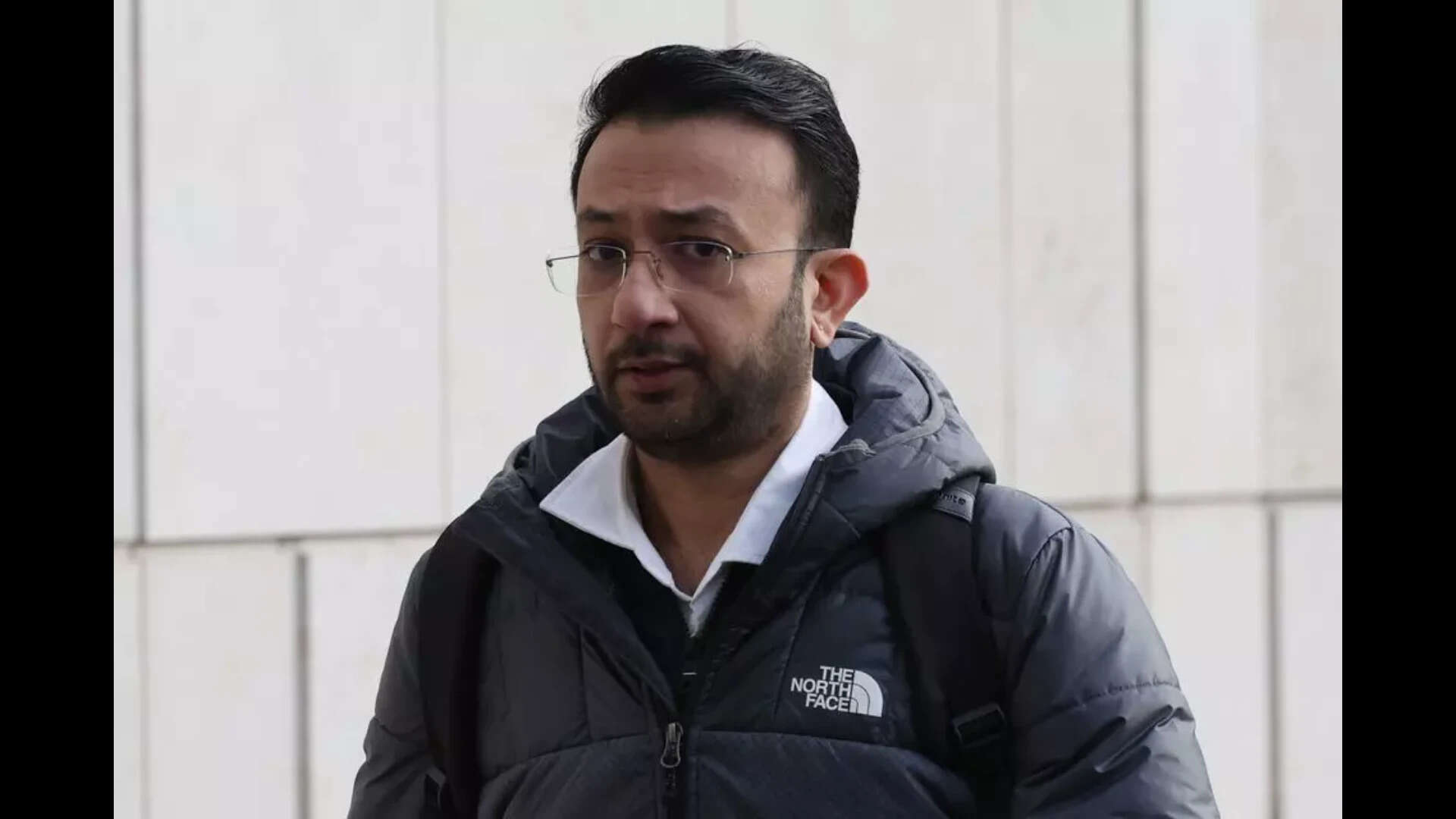
Ireland’s labor market is currently a brick wall for those with a criminal record, regardless of how much they protest their innocence after a verdict has been reached. When an Indian national in Dublin recently went public with his inability to find work following a conviction for sexual assault on a bus, he wasn't just complaining about a bad run of luck. He was highlighting a systemic shutdown. The reality is that for non-citizens, a conviction for a sexual offense doesn't just result in a sentence; it triggers a permanent digital "scarlet letter" that renders them unemployable and, eventually, deportable. Employers are no longer willing to take even a marginal risk on "spent" convictions when the crime involves physical integrity.
The case in question involves a man convicted of groping a woman on a Dublin Bus. Despite his public claims that he is "not a creep" and that the incident was a misunderstanding or a mistake, the Irish judicial system and the subsequent vetting process do not trade in nuance. Once the Garda Vetting Bureau processes a background check, the door to the formal economy slams shut.
The Mechanism of the Permanent Rejection
Garda vetting is the gatekeeper of the Irish workforce. While it was once reserved for those working with children or vulnerable adults, the "vulnerability" net has expanded. Most corporate entities, even those in logistics or retail, now utilize comprehensive background checks as a standard insurance requirement. For a foreign national, this is a double-sided blade.
When a conviction is registered, it enters the National Vetting Bureau’s database. For an Irish citizen, there are complex laws regarding "spent" convictions—the idea that after a certain number of years, a minor offense can be ignored. However, sexual offenses are almost never categorized as spent. They remain visible forever. For a migrant on a work permit, this conviction usually invalidates the conditions of their residency. Even if the Department of Justice does not immediately issue a deportation order, the inability to secure a job means the individual cannot fulfill the financial requirements of their visa.
It is a slow-motion expulsion. Without a clean vetting disclosure, no HR department in Dublin will touch an applicant. The legal liability of hiring someone with a history of sexual assault, should a second incident occur, is a financial risk no CEO is willing to take.
The Myth of the Misunderstood Conviction
The "investigative" plea of the convicted often centers on the idea of a cultural gap or a momentary lapse in judgment. In the Dublin Bus case, the individual’s defense attempted to frame the situation as something other than predatory behavior. But the court of public opinion and the court of law converged on a single point: consent and physical boundaries.
Ireland has seen a significant shift in its legislative handling of sexual harassment and assault. The commencement of the Criminal Law (Sexual Offences) Act expanded the definitions and tightened the grip on offenders. What might have been dismissed as "nuisance" behavior twenty years ago is now prosecuted with a focus on victim impact.
When a defendant tells a journalist they "can't find a job," they are often seeking sympathy for the consequence while sidestepping the cause. From a purely analytical standpoint, the labor market is behaving exactly as it was designed to. It is filtering out high-risk variables. In a globalized economy, a worker is a unit of productivity; if that unit carries a high liability cost, the market discards it.
The Invisible Economy and the Safety Risk
What happens when a person is legally barred from the formal workforce but remains in the country? This is the darker side of the Dublin story. When the tech hubs and the retail chains stop hiring, the "unemployable" move into the shadow economy.
- Unregulated Delivery Work: Utilizing "rented" accounts on delivery apps to bypass background checks.
- Cash-in-hand Labor: Working in construction or cleaning where no paperwork exists.
- The Rise of Vulnerability: The convicted person becomes vulnerable to exploitation by predatory employers who know they cannot report abuses to the authorities.
This creates a paradox for public safety. The vetting system is designed to keep the public safe by excluding offenders. Yet, by making legal survival impossible, the system pushes these individuals into unregulated spaces where they are no longer monitored by any corporate or state oversight.
Why Reputation Recovery is Impossible
In the digital age, a name is a permanent record. Even if a man moves from Dublin to Cork or Galway, a simple search of the Irish court reports brings up the conviction. For the Indian national in this case, his public appeal for work likely backfired. By putting his face and name back into the news cycle to argue his character, he effectively SEO-optimized his own conviction.
Public relations experts in the legal sphere often advise "quietude"—the act of disappearing and hoping the digital trail grows cold. But the trail never grows cold for sexual offenses. The data is mirrored across news sites, legal archives, and social media threads.
The Corporate Stance on Foreign Convictions
Insurance companies dictate hiring policies more than HR managers do. If a company hires a known offender and a client or coworker is harmed, the "negligent hiring" lawsuit would be indefensible. This is why the man in Dublin finds himself in a "limbo" state.
- The Legal Barrier: Garda vetting reveals the assault conviction.
- The Insurance Barrier: The company's liability policy forbids the hire.
- The Social Barrier: Coworkers who Google a new hire will refuse to work alongside them.
This isn't just about a "background check" in the clinical sense. It is about the total social and economic excommunication of the offender.
The Intersection of Immigration and Crime
For an Indian national in Ireland, the stakes are exponentially higher than for a local. The Irish Department of Justice has the power to revoke "leave to remain" based on character grounds. A conviction for a sexual offense is the fastest way to trigger a review of one's immigration status.
While the individual may argue that he has "paid his debt" through the court's sentencing, the administrative state views the debt as ongoing. The man’s complaint that he "cannot find a job" is actually a complaint that the system is working. Ireland, like many EU nations, is increasingly using economic exclusion as a tool of migration control. If you cannot work, you cannot stay.
The Hard Truth of the Dublin Bus Incident
Public transport is the lifeline of the city. It is also a site of extreme vulnerability. The surge in reported incidents on Dublin Bus and the Luas has led to calls for a dedicated transport police force. In this climate, the judiciary is under pressure to hand down sentences that act as deterrents.
When a person is convicted of groping a stranger on a bus, they are not just being punished for the act. They are being punished for violating the collective trust required for a city to function. The man’s claim that he is "not a creep" is an attempt to negotiate with a system that has stopped listening. The system doesn't care about his self-perception; it cares about the victim's testimony and the forensic reality of the conviction.
The struggle to find employment is the final stage of the legal process. It is the realization that a 30-second decision on a crowded bus has the power to dismantle a decade of professional ambition and migration effort. There is no "reset" button for this type of record. The labor market has developed a long memory, and it is a memory that favors the protection of the collective over the redemption of the individual.
Check your own status with the Irish Naturalisation and Immigration Service if you are facing any legal challenges to understand the immediate impact on your right to work.