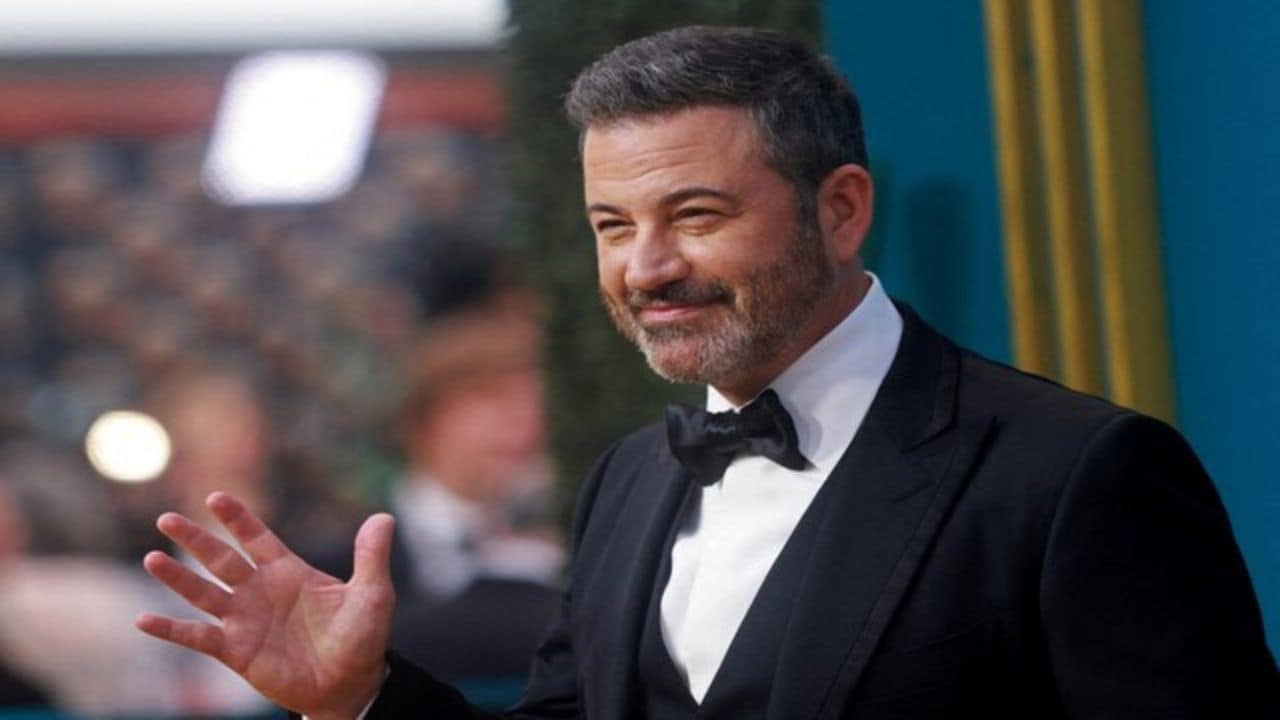
Donald Trump is no longer just venting on Truth Social; he is testing the structural integrity of the corporate firewall at Disney. By demanding that ABC fire late-night host Jimmy Kimmel over a series of pointed monologue jokes, the former president has moved beyond a simple celebrity feud. He is now applying direct pressure on Bob Iger’s empire, forcing a public confrontation between traditional broadcast standards and the shifting boundaries of political satire. This isn't about thin skin. It is a calculated move to see if a massive media conglomerate will blink when its bottom line meets its creative license.
The friction reached a boiling point after Kimmel’s recent stabs at Trump’s legal troubles and public appearances. While late-night hosts have mocked presidents for decades, the intensity of this specific demand for termination signals a new phase in the relationship between the Republican frontrunner and the mainstream media. Trump isn't asking for equal time or a retraction. He is demanding a scalp.
The Economics of Late Night Friction
Disney finds itself in an unenviable position. On one hand, ABC’s late-night programming serves as a reliable vehicle for ad revenue and a cultural footprint that keeps the network relevant in the streaming age. On the other hand, the company is still shaking off the dust from its protracted legal and political battle with Florida Governor Ron DeSantis. The last thing the board of directors wants is another multi-year war with a political heavyweight who has a non-zero chance of returning to the White House.
Kimmel represents a specific type of asset. He is the bridge between old-school variety television and the viral clip economy. When he mocks Trump, those segments rack up millions of views on YouTube and social media, often outperforming the linear broadcast itself. For Disney, this is a business of eyeballs. However, those eyeballs come at a cost. The more Kimmel leans into political vitriol, the more he alienates a significant portion of the country that views ABC as a neutral news provider. Trump knows this. He is targeting the "ABC" brand, not just the man behind the desk.
Why the Roast Joke Stung
The specific joke that triggered the latest outcry involved a critique of Trump’s performance and his legacy. To the casual observer, it was standard fare. To Trump, it was an invitation to relitigate his standing with the Hollywood elite. There is a long-standing psychological component here. Trump has always craved the validation of the New York and Los Angeles creative classes, even as he builds a political identity around trashing them.
When Kimmel uses the platform of a major network like ABC—a subsidiary of the "family-friendly" Disney—to deliver these blows, it carries more weight than a random tweet. It carries the implicit stamp of approval from one of the world's most powerful corporations. By demanding Kimmel’s firing, Trump is effectively asking Bob Iger: "Does this man speak for the Mouse?"
The Precedent for Network Surrender
History shows that networks do occasionally cave to external pressure, but usually only when the controversy impacts the advertisers directly. We saw this with the rapid exit of Roseanne Barr after her social media outbursts, and we've seen it on the other side of the aisle with various cable news personalities. The difference here is that Kimmel’s "offense" is satire, not a violation of corporate HR policy.
If Disney were to discipline Kimmel, it would set a precedent that any sufficiently loud political figure can dictate the casting of a private network's entertainment division. It would be a surrender of editorial independence. Yet, the pressure is mounting. Trump’s base is remarkably disciplined at boycotting brands they perceive as "woke" or antagonistic. If that movement starts to bleed into Disney’s theme park attendance or streaming subscriptions, the math changes.
The Legal and Ethical Gray Zone
There is no legal requirement for ABC to be "fair" in an entertainment context. The Fairness Doctrine is a ghost of the past, and even when it existed, it rarely applied to comedy monologues. This is entirely a matter of brand management. Disney has spent decades cultivating an image of broad, universal appeal. Kimmel’s shift from the "Man Show" era of beer and bikinis to a sharp-tongued political commentator has narrowed that appeal.
Some industry analysts argue that the late-night format is dying anyway, making Kimmel an easy sacrifice if the heat becomes too intense. But that ignores the internal culture of Disney. The creative community is watching this closely. If Iger sacrifices a talent of Kimmel’s stature to appease a political candidate, the talent exodus from Disney-owned studios could be catastrophic. Creators want to know their employer has their back when they take risks.
A Strategy of Attrition
Trump’s strategy is one of attrition. He doesn't need Kimmel to be fired tomorrow to win this round. By keeping the story in the headlines, he continues to paint ABC as a partisan actor. This serves his broader narrative that the "legacy media" is an extension of the political opposition. Every time Kimmel responds with another joke, he provides more ammunition for that narrative. It is a feedback loop that benefits the politician while potentially damaging the network's long-term credibility with moderate audiences.
The reality is that Disney is currently fighting on too many fronts. They are trying to make Disney+ profitable, integrated Hulu, and manage the succession plan for a post-Iger era. A high-profile fight over a late-night talk show host is a distraction they cannot afford, yet it is a fight they cannot easily walk away from without looking weak.
The Future of the Late Night Hostage
We are entering a period where the "neutral" entertainer is an endangered species. Kimmel has chosen his side, and he has done so with the full knowledge that half the country will never tune in again. Trump has also chosen his target, knowing that his supporters find catharsis in his attacks on the "cultural elite."
The standoff leaves ABC in a precarious spot. If they keep Kimmel, they are labeled as "the opposition." If they fire him, they lose their creative soul and alienate their core coastal audience. The most likely outcome is a quiet cooling-off period, but Trump’s ability to command a news cycle suggests he won't let the issue die. He has found a nerve, and he intends to keep pressing it until something breaks.
The corporate boardroom is now a battlefield where jokes are treated like policy statements. When a former president demands a comedian’s job, the comedy ends and the power struggle begins. Disney isn't just managing a television show; they are managing a political liability that refuses to go off the air.
Demand for "fairness" in comedy is a contradiction in terms, but in an era of total political mobilization, even the court jester is expected to pick a jersey. The question for Disney is no longer whether Kimmel is funny, but whether his presence on the payroll is worth the cost of a permanent enemy in the highest levels of government.