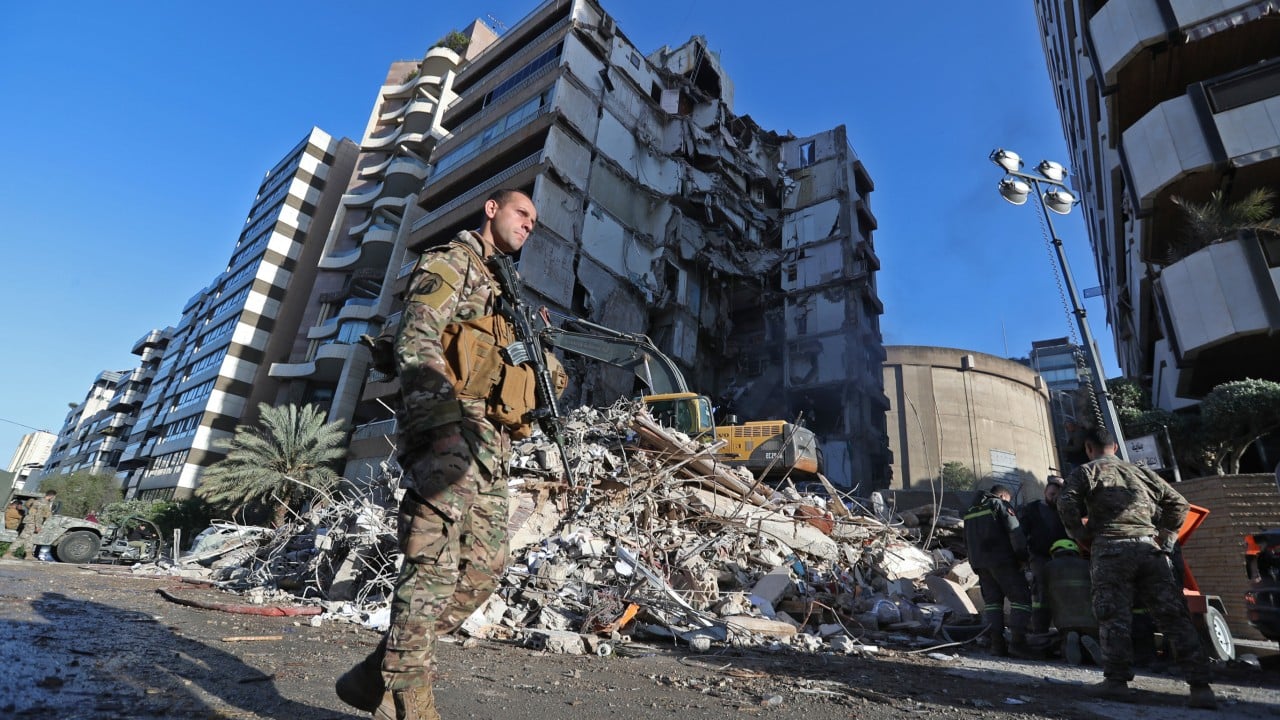
The cycle of violence along the Blue Line has reached a point where even the rituals of death offer no sanctuary. On a day meant for the somber finality of a burial, a fresh grave had to be readied for an infant. This is the reality of the escalating conflict between Israel and Hezbollah, where the precision of modern warfare frequently collapses under the weight of proximity and the blurred lines of a crowded battlefield. While military communiqués speak of infrastructure and strategic deterrence, the ground level truth is defined by shattered families and the loss of those who have no part in the geopolitical struggle.
The incident occurred during a funeral procession in a southern Lebanese village, a region that has become a high-stakes chessboard for regional powers. As mourners gathered to pay their respects to a father killed in previous strikes, the area was hit again. The resulting blast claimed the life of his child. This is not merely a statistical anomaly of war. It is a symptom of a conflict that has moved beyond targeted strikes into a phase of total saturation, where the distinction between a combatant zone and a civilian residence has evaporated. Meanwhile, you can explore similar stories here: The Red Line at Hormuz and the Death of Maritime Diplomacy.
The Mechanics of Proximity and the Failure of Precision
Modern military doctrines lean heavily on the concept of surgical strikes. High-definition drones and GPS-guided munitions are marketed as the tools of a cleaner war. However, the density of southern Lebanon renders these technical advantages nearly moot. Hezbollah operates within the fabric of civilian life, utilizing homes and local infrastructure for its logistical needs. When Israel retaliates or preemptively strikes, the margin for error is razor-thin.
A single missile, even one hitting its intended target, creates a kinetic footprint that ignores property lines and family bonds. Shrapnel does not discriminate between a rocket launcher and a cradle. The "why" behind these tragedies often boils down to a brutal logic of escalation. Each side believes that by increasing the cost of the other's actions, they can force a retreat. Instead, the threshold for what is considered an acceptable loss continues to climb. To see the bigger picture, check out the detailed report by The New York Times.
The Psychological Toll of Perpetual Mourning
Living under the constant hum of surveillance drones changes the psyche of a population. In southern Lebanon, the sound of an engine overhead is a constant reminder of vulnerability. When a funeral becomes a target, the basic human right to grieve is stripped away. This creates a vacuum of hope that is quickly filled by radicalization and a desire for vengeance.
The international community often views these events through a lens of "proportionality," a legalistic term that feels hollow when applied to a dead child. In the war rooms of Tel Aviv and the bunkers of Beirut, the calculations are cold. They involve calorie counts of deterrence and the calibration of fear. But for the villagers in the south, the calculation is simpler and more devastating. They are caught in a vise where staying means risking death and leaving means losing everything they own.
The Breakdown of Rules of Engagement
The rules of engagement are supposed to provide a framework for minimizing non-combatant casualties. Yet, we are seeing a systematic breakdown of these norms. Warning shots, once a standard practice to allow civilians to flee, are becoming less frequent as the pace of the conflict accelerates. The logic of "total war" is creeping back into the lexicon, suggesting that any area where an enemy operates is a legitimate target, regardless of who else lives there.
This shift in strategy has turned every public gathering into a potential hazard. Weddings, markets, and funerals are now sites of extreme risk. The targeting of a funeral, whether intentional or the result of a misidentified target nearby, signals a dangerous new chapter in the border war. It suggests that there are no longer any "off-limits" spaces, a development that guarantees the casualty lists will only grow longer.
Regional Implications of Unchecked Escalation
This isn't just a local tragedy. It is a spark that threatens to ignite a broader regional conflagration. Each civilian death, particularly that of an infant, puts immense pressure on Hezbollah to respond with greater force. This, in turn, triggers a harsher Israeli response. The cycle is self-sustaining and lacks an obvious exit ramp.
Diplomatic efforts from Washington and Paris have largely focused on pushing Hezbollah back from the border, but these negotiations rarely account for the human cost that fuels the resistance on the ground. You cannot negotiate a lasting peace while the ground is still warm from the last explosion. The anger generated by these strikes acts as a recruitment tool that no amount of political maneuvering can easily counter.
The Role of Intelligence and Misidentification
Intelligence is only as good as the human or electronic eye providing it. In a high-stress environment, the pressure to act quickly often leads to catastrophic errors. A group of men gathering for a funeral can, through the grainy lens of a high-altitude drone, look like a tactical assembly. The decision to strike is often made in seconds, based on probabilities rather than certainties.
When those probabilities fail, the result is the death of an infant. The official explanations usually involve "unintended consequences" or "collateral damage," terms that serve to sanitize the horror. But as an observer of these conflicts for decades, I’ve seen that these errors are rarely addressed with the transparency required to prevent them from happening again. Instead, they are buried under layers of military secrecy and national security justifications.
The Economic and Social Erasure of the South
Beyond the immediate loss of life, there is a slower, more insidious form of destruction taking place. The constant bombardment is erasing the economic viability of southern Lebanon. Tobacco fields are left unharvested, schools are shuttered, and the young are fleeing to Beirut or abroad. This is the "how" of modern displacement. It isn't always a sudden exodus; often, it is a steady erosion of the ability to live a normal life.
The social fabric is being rewoven around the architecture of war. Every village now has its "martyrs' gallery," a grim collection of posters honoring the dead. Adding an infant to that gallery is a testament to the failure of every diplomatic and military strategy currently on the table. It highlights a fundamental truth that many prefer to ignore: there is no such thing as a "limited" war when it is fought in someone's backyard.
The international headlines will move on to the next political crisis or economic shift, but the impact of this single strike remains. It lingers in the silence of a house that should be filled with a child's noise. It stays with the mother who had to bury a husband and a child in the same week. The conflict along the Lebanon-Israel border is often described in terms of maps and munitions, but its true cost is written in the soil of village cemeteries. As long as the logic of escalation remains the primary driver of policy, the graves will continue to be dug, and the innocent will continue to pay the highest price for a war they did not choose.