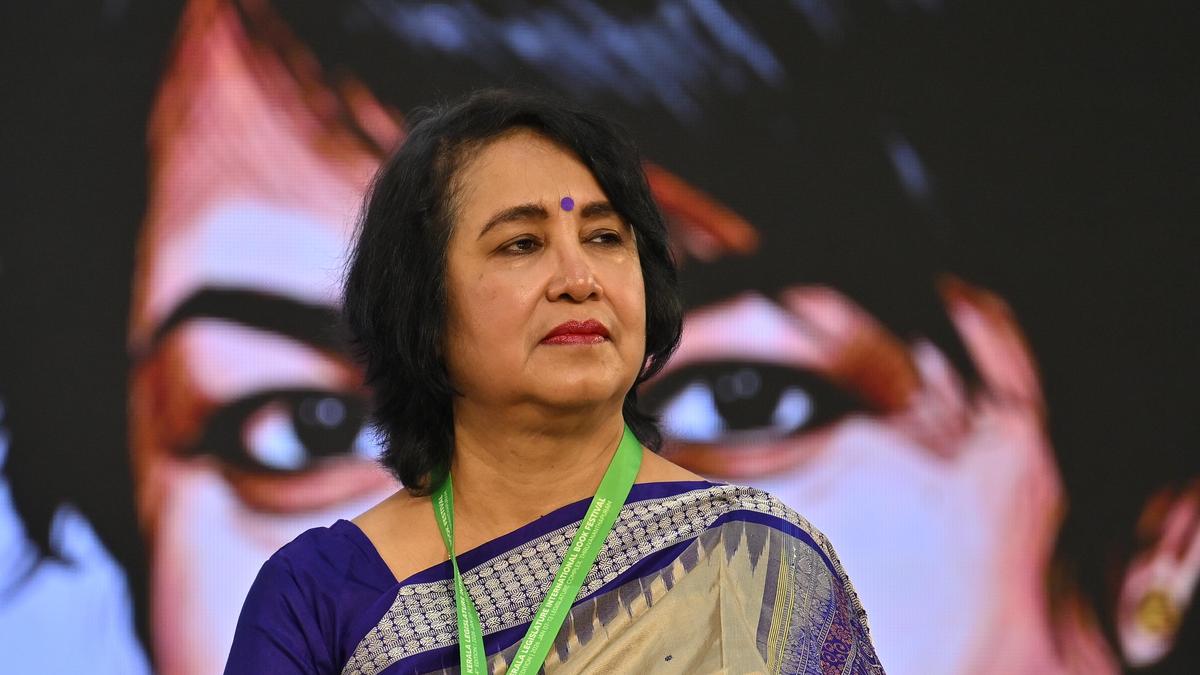
The political landscape in Dhaka isn't just shifting. It's undergoing a seismic recalibration that most Western observers are completely misreading. While headlines often fixate on the chaos of street protests or the immediate vacuum left by a fleeing Prime Minister, the real story lies in the ideological tug-of-war happening within the Bangladeshi soul. Author Taslima Nasrin, who has lived the consequences of religious extremism more than almost anyone alive, recently dropped a bombshell perspective that challenges the standard "secular vs. Islamist" binary. She argues that the Bangladeshi people haven't just ousted a leader; they've actively voted against the encroachment of radical Islamism. Even more surprising to some is her pragmatic, if cautious, nod toward Tarique Rahman as a figure who might actually stabilize the ship.
The myth of the Islamist surge
Don't believe the narrative that Bangladesh is a hair's breadth away from becoming a full-blown theocracy. That’s a lazy take. Yes, the visuals of mobs and the presence of groups like Jamaat-e-Islami are real and terrifying. But Nasrin points out a fundamental truth about the Bangladeshi voter. They're savvy. They've seen what happens when religion is weaponized to dismantle civil liberties. Also making news in this space: Nepal Pursues the Paper Trail to End Political Impunity.
In the recent upheaval, the energy wasn't about bringing in a Caliphate. It was about ending a suffocating autocracy. Nasrin’s take is that the populace effectively signaled a desire for a return to a more pluralistic identity. They want a country where "Bengali-ness" and faith coexist without one being used as a boot to the throat of the other. The rejection of the previous regime wasn't an invitation for radicals to take over. It was a demand for air.
Why Tarique Rahman is the unlikely focal point of hope
Tarique Rahman has been a lightning rod for controversy for decades. Between the corruption allegations and his long exile in London, he’s easy to dismiss. But in the current vacuum, he represents something the fragmented opposition desperately needs: a recognizable brand and a direct link to the BNP’s nationalist roots. Additional information regarding the matter are explored by Al Jazeera.
Nasrin’s "hope" regarding Rahman isn't necessarily a blind endorsement of his past. It’s a cold, hard look at political reality. You can't run a country on vibes and protest slogans forever. You need a machine. Rahman controls the most effective political machine currently standing in Bangladesh. If he can pivot away from the darker alliances of the past—specifically the "plus two" formula with radical elements—he might actually be the bridge to a functional democracy.
The gamble here is whether Rahman has learned anything from his years in London. Nasrin seems to think there's a possibility he has. If he prioritizes the rule of law over partisan retribution, he could defy the expectations of his loudest critics.
The secular struggle is personal
You have to understand where Taslima Nasrin is coming from. She’s been in exile since the 90s because she dared to critique religious dogma. When she speaks about the threat of radicalism, she isn't theorizing. She's talking about the forces that took her home away.
She sees a Bangladesh that is currently at a crossroads. One path leads to a repeat of the cycle: one authoritarian replaces another, using different slogans but the same methods. The other path—the one she hopes for—is a genuine democratic opening. Her support for the idea of Rahman’s leadership is based on the belief that the BNP, under proper pressure from a woke populace, is the only entity capable of holding the line against the truly fringe elements who want to drag the country back centuries.
Breaking the alliance with extremists
The biggest hurdle for the BNP and Tarique Rahman has always been their proximity to Jamaat-e-Islami. For years, this was a marriage of convenience that poisoned the party’s reputation with secularists and the international community.
Nasrin’s insight suggests that the tide has turned. The youth-led movement that sparked the recent changes doesn't have an appetite for the old-school Islamist agenda. They want jobs, digital freedom, and a seat at the global table. If Rahman tries to bring the radicals back into the fold as primary partners, he’ll likely face the same fury that ousted Sheikh Hasina. Nasrin is essentially betting that Rahman is smart enough to see that the old playbook is dead.
What happens to the "Spirit of 1971"
There's a lot of talk about the "Spirit of 1971"—the secular, linguistic nationalism that birthed the nation. Critics of the BNP often claim they want to erase this. Nasrin, however, suggests that the "Spirit" is evolving. It’s no longer just about the history of the liberation war; it’s about the daily reality of 2026.
People want a government that respects their heritage but doesn't use it as a shield for corruption. The hope for Rahman is that he can redefine the BNP not as an anti-Liberation force, but as a modern, center-right party that respects the country's founding while embracing a more open future. It's a tightrope walk. If he slips, the radicals are waiting in the wings to catch the pieces.
Navigating the international pressure cooker
Bangladesh doesn't exist in a vacuum. India, China, and the US are all watching Dhaka with nervous eyes. India, in particular, has long been wary of the BNP due to its past ties with groups hostile to New Delhi.
If Tarique Rahman wants to lead, he has to convince the neighbors that he’s a partner for stability, not a patron of chaos. Nasrin’s commentary highlights that the domestic shift against radicalism is his best selling point. By demonstrating that he can govern a moderate, Muslim-majority democracy without leaning on extremists, he solves a major geopolitical headache for the region.
Moving beyond the cult of personality
For decades, Bangladeshi politics was a blood feud between two families. It was exhausting. Nasrin’s hope for Rahman isn't about starting a new cult of personality. It's about transition. The goal is to move toward a system where institutions matter more than names.
Rahman’s challenge is to become a reformer. He needs to oversee the strengthening of the judiciary, the election commission, and the press. If he does that, he goes from being a "heir" to being a statesman. It sounds like a tall order, but Nasrin’s point is that the people have already done the hard work of clearing the field. Now, someone just needs to be brave enough to build something decent on it.
To keep track of this situation, watch the BNP’s upcoming policy announcements regarding minority protections and their stance on the interim government’s reforms. The rhetoric coming out of London in the next few months will tell you everything you need to know about whether Nasrin’s hope is well-founded or just a dream. Stop looking at the surface-level protests and start looking at the internal party memos. That’s where the future of Bangladesh is being written right now.