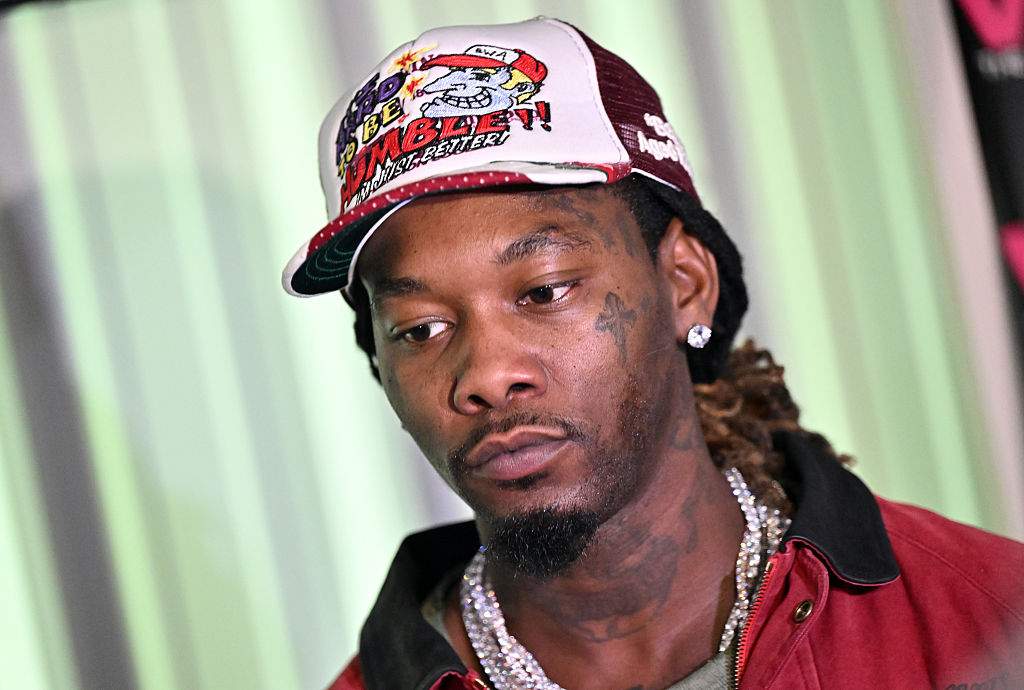
The FBI’s recent disclosure regarding the shooting of Kiari Cephus, known globally as Offset, changes the narrative from a random act of violence to a calculated tactical strike. Law enforcement filings now confirm that the incident outside a Florida casino was not a chance encounter or a case of being in the wrong place at the wrong time. It was a botched robbery attempt executed by suspects who had been tracking the Migos rapper's movements with predatory precision. When the smoke cleared, Offset had sustained a gunshot wound to the leg, and the music industry was forced to confront a recurring, ugly reality: for high-profile artists, the line between celebrity and target has entirely vanished.
Federal investigators have pieced together a timeline that suggests the assailants were not amateurs looking for a quick score. They were monitoring the environment, waiting for a specific window of vulnerability that occurs when a high-net-worth individual transitions from a secure venue to a private vehicle. This "transitional space" is the graveyard of many security details. It is the moment when the guard is lowered, the engines are starting, and the physical perimeter is at its weakest.
The Geography of a Casino Hit
Florida’s gaming floors are among the most heavily surveilled environments on earth. Every inch of felt and every slot machine is covered by high-definition optics. However, the security logic changes the moment a patron steps toward the valet or the parking garage. The suspects in the Offset case leveraged this blind spot.
They didn't want a shootout. They wanted the jewelry. The "ice" worn by modern rappers serves as a walking billboard for their success, but to a professional thief, it represents hundreds of thousands of dollars in portable, liquid assets. In the federal view, this wasn't just a mugging; it was a high-stakes heist directed at a man whose public persona is inextricably linked to visible wealth.
The shooting occurred because the "compliance" phase of the robbery failed. In many street-level interactions, the display of a firearm is intended to freeze the victim. But when you target an individual with his own security apparatus, the math changes instantly. Violence becomes the immediate byproduct of a botched confrontation. The FBI’s involvement suggests a broader pattern, likely linked to a multi-state ring that specializes in "celebrity hunting"—a growing sub-industry of organized crime that uses social media geolocations to time their attacks.
The Social Media Tracking Loophole
We live in an era where an artist’s marketing strategy is a burglar’s best intelligence report. When Offset or his peers post a "story" to Instagram showing a specific table at a casino or a distinctive lobby, the clock starts ticking. Professional crews use these posts to determine exactly where a target is and, more importantly, where they are likely to exit.
The investigative files indicate that the suspects were likely tuned into the digital breadcrumbs left by the entourage. It is a fatal irony of the modern entertainment business: to stay relevant, you must remain visible, but that visibility provides a tactical map for anyone with a grudge or a debt. This isn't just about Offset. It’s about a systemic failure in how celebrity logistics are handled in the age of real-time data.
The Mechanics of the Ambush
The suspects didn't just walk up. They utilized a "set-up" vehicle to block a potential exit path, a move straight out of a kidnapping manual.
- Surveillance: Determining the artist's specific arrival and departure windows.
- Isolation: Waiting for the moment the artist is separated from the main body of the crowd.
- The Squeeze: Using physical barriers (vehicles or gates) to prevent a quick getaway.
When the shooting started, it was a chaotic scramble for cover. The fact that Offset was struck in the leg suggests the shooters were firing low or while retreating, a common trait in robberies that turn into active firefights. This wasn't an assassination attempt; it was a panicked reaction to a robbery that went sideways.
The Cost of Professional Protection
There is a growing chasm between "security" and "off-duty police." Many rappers hire friends or "muscle" from their neighborhoods. This provides a sense of loyalty and comfort, but it lacks the tactical training required to manage an armed ambush in a public space.
True executive protection (EP) is about avoidance, not winning a gunfight. A professional EP team would have scanned the parking area long before the artist stepped out of the casino doors. They would have identified the "scout" vehicles. They would have used a "hot" exit strategy. The Florida incident highlights the reality that many stars are still operating with a security mindset that is ten years behind the sophistication of the crews hunting them.
The FBI has been quietly tracking "jewelry crews" across the Sun Belt for years. These groups aren't interested in the music or the beefs that populate the blogs. They are cold-blooded technicians who view a diamond-encrusted chain as a payday worth a prison sentence. By involving the feds, the prosecution is signaling that this isn't just a local battery charge; it’s likely part of a Racketeer Influenced and Corrupt Organizations (RICO) investigation into organized theft rings.
Why Florida Became the Front Line
Florida has become a flashpoint for these incidents due to its unique combination of high-wealth tourism, lenient gun laws, and a sprawling geographic layout that favors a quick getaway. From the 2018 murder of XXXTentacion to the more recent shooting of Kodak Black outside a restaurant, the state has become a hunting ground.
The legal fallout from the Offset shooting will likely focus on the "priors" of the suspects. Federal agents are looking for links to other high-profile robberies in Los Angeles and Atlanta. There is a specific signature to these crimes: the use of rental cars with cloned plates, the focus on specific high-value watches (like Richard Milles or Patek Philippes), and the timing of the attack to coincide with the artist leaving a venue.
The Breakdown of Safety Protocols
- Venue Security: Casinos prioritize the safety of their chips and their general floor, not the private lives of their VIPs once they leave the property line.
- Entourage Bloat: Having twenty people in a circle creates a false sense of security. It actually makes the target harder to move quickly and creates more noise for the actual security detail to filter through.
- Predictability: If a star goes to the same high-end spots every time they are in town, they are doing half the work for the scouts.
Offset’s injury was minor in the physical sense, but the psychological and industry-wide impact is massive. It serves as a reminder that the "rap game" isn't played in a vacuum. It is played in a world where the wealth gap is widening and the tools to track and harm those at the top are available to anyone with a smartphone and a stolen handgun.
The Federal Pivot
The shift from local police to the FBI in this case is significant. It suggests that the communication intercepted between the suspects involved interstate commerce or the use of encrypted apps to coordinate the hit. The feds don't show up for a simple scuffle outside a casino unless there is a larger web to untangle. They are looking for the "fences"—the people who take the stolen jewelry, melt it down, or sell it to overseas buyers.
For the artist, the path forward is a grim choice between total isolation or an even more militarized existence. The era of the "accessible superstar" is dying, killed by the very technology that made them famous. When you can see where a millionaire is in real-time, and you know he’s carrying $500,000 in gold on his neck, the temptation for a certain class of criminal becomes an inevitability.
The suspects in the Florida case made a mistake by firing. They turned a robbery into a federal manhunt. But for every crew that gets caught, three more are watching the Instagram stories of the next big star, waiting for them to step into the parking lot.
Artists must now treat their public appearances with the same logistical rigor as a diplomatic mission in a hostile zone. Any less is an invitation to the next ambush.