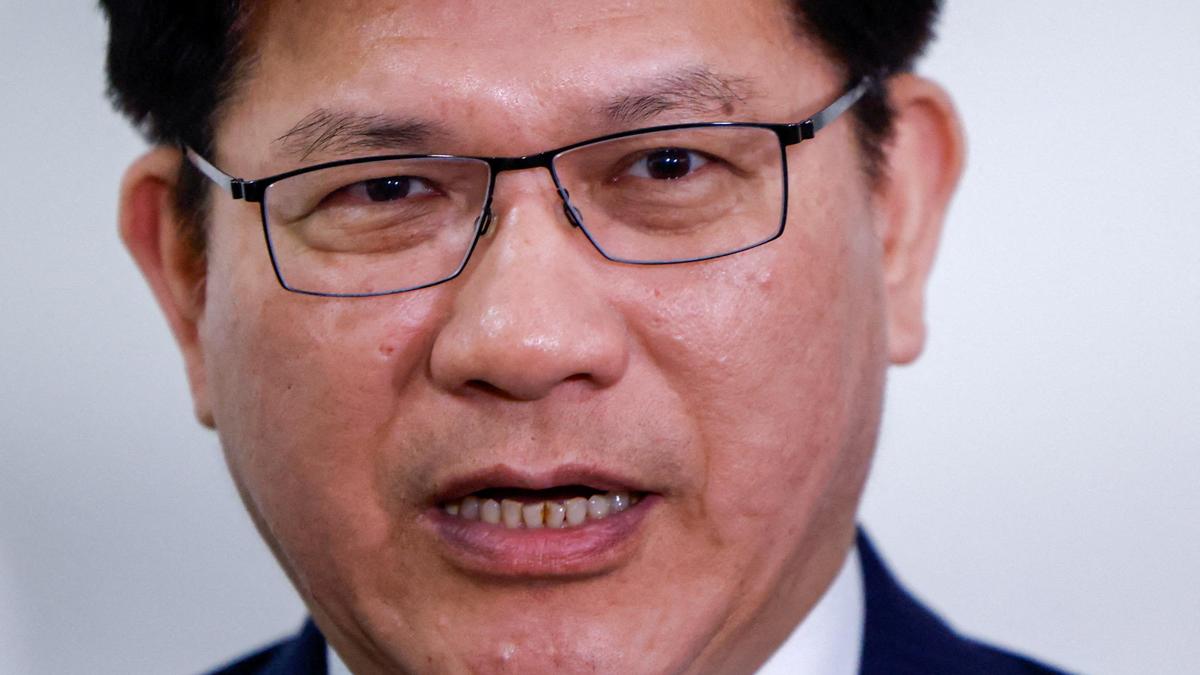
Democracy doesn't just happen in the halls of Washington or Brussels. Sometimes, it happens on a tarmac in Mbabane. Taiwan's Foreign Minister Lin Chia-lung recently touched down in Eswatini with a message that was less about diplomatic niceties and more about survival. He told the world that Taiwan will not bow its head to authoritarian forces. This wasn't just a scripted line for the cameras. It was a direct response to a week of high-stakes sabotage that saw President Lai Ching-te’s own flight plans shredded at the last minute.
If you haven’t been following the play-by-play, here’s the reality. China basically orchestrated a regional blockade. By pressuring Seychelles, Mauritius, and Madagascar to revoke overflight permits, Beijing forced President Lai to cancel his trip to Africa's last absolute monarchy. It’s a move that feels more like 19th-century privateering than 21st-century diplomacy. But instead of retreating, Taipei sent its top diplomat to show that a revoked flight path isn't a revoked partnership. For a closer look into this area, we recommend: this related article.
The Airspace War and Why It Failed to Stop the Visit
For the first time in history, a Taiwanese president had to cancel an entire foreign tour because of "airspace weaponization." It’s a chilling precedent. Beijing reportedly used economic sticks—threatening to pull debt relief and financing—to get those three island nations to close their skies. It’s a desperate look for a superpower, honestly.
Taiwan isn't playing that game. Lin Chia-lung’s arrival in Eswatini serves as a loud signal that Taipei has more ways than one to reach its friends. The minister didn't just show up to shake hands; he brought a portfolio of projects that actually matter to the people on the ground. For additional background on the matter, extensive coverage is available at The Washington Post.
- Energy Independence: Taiwan is helping build a strategic oil reserve facility in Eswatini.
- Tech Hubs: The Taiwan Industrial Innovation Park (TIIP) is designed to be a gateway for Taiwanese firms into the wider African market.
- Health Access: New smart medicine and telemedicine systems are being deployed to bridge the rural healthcare gap.
Eswatini is the Gateway Taipei Wont Give Up
People often wonder why Taiwan cares so much about a small, landlocked nation in Southern Africa. It’s about more than just a vote at the UN. Eswatini is Taiwan’s last formal diplomatic ally on the continent, and it’s a relationship built on decades of mutual "skin in the game."
Beijing’s tactic is simple: isolate Taiwan until it has nowhere left to go. But Eswatini hasn't blinked. King Mswati III has been vocal about his support, even after China explicitly warned that "without diplomatic relations, there are no commercial interests". Taiwan's strategy is the opposite. They aren't just writing checks; they're building infrastructure that makes Eswatini more self-reliant, which is exactly what an absolute monarchy needs to survive in a shifting global landscape.
When Economic Coercion Meets Digital Diplomacy
The fallout from the overflight ban has actually backfired on Beijing in a few key ways. First, it unified Taiwan's often-fractious political parties. The KMT and TPP—usually at odds with the ruling DPP—joined together to pass a rare resolution condemning China’s coercion. Nothing brings a country together like a shared external bully.
Second, it highlighted the sheer pettiness of current cross-strait tensions. When you start messing with international aviation safety and sovereign overflight rights to stop a birthday visit—President Lai was invited for the 40th anniversary of the King’s accession—you lose the moral high ground.
The Real Stakes for the International Community
Don't think this is just a local spat. The US, UK, France, and Germany have all voiced "concern" over this airspace blockade. Why? Because if China can successfully pressure countries to shut down international corridors for political reasons, nobody's flight path is truly safe. It turns the sky into a chessboard where your "right to fly" is determined by who you're friends with.
Taiwan’s response is to double down on what they call "values-based diplomacy." It’s the idea that shared democratic values (or at least shared interests in sovereignty) are stronger than a temporary debt relief package from Beijing.
What This Means for Your Next Move
If you're watching the geopolitical landscape, don't look past these "small" interactions. Taiwan is effectively testing a new survival manual. They're shifting from being a "checkbook" ally to a "tech and security" partner.
- Watch the TIIP: If Taiwanese tech firms successfully use Eswatini as a hub, it provides a blueprint for how Taiwan can engage with Africa without needing a formal embassy in every capital.
- Monitor the Airspace: This won't be the last time overflight rights are used as a weapon. Watch for how international aviation bodies like ICAO respond—or if they remain silent.
- Support Local Industry: For those in the business sector, Taiwan’s push into the Southern African Customs Union (SACU) via Eswatini is a legitimate opening for trade that bypasses traditional Beijing-controlled routes.
Taiwan isn't going to "bow its head." By showing up in Mbabane when the world thought they were blocked, they’ve proven that while you can close a sky, you can't close a relationship.