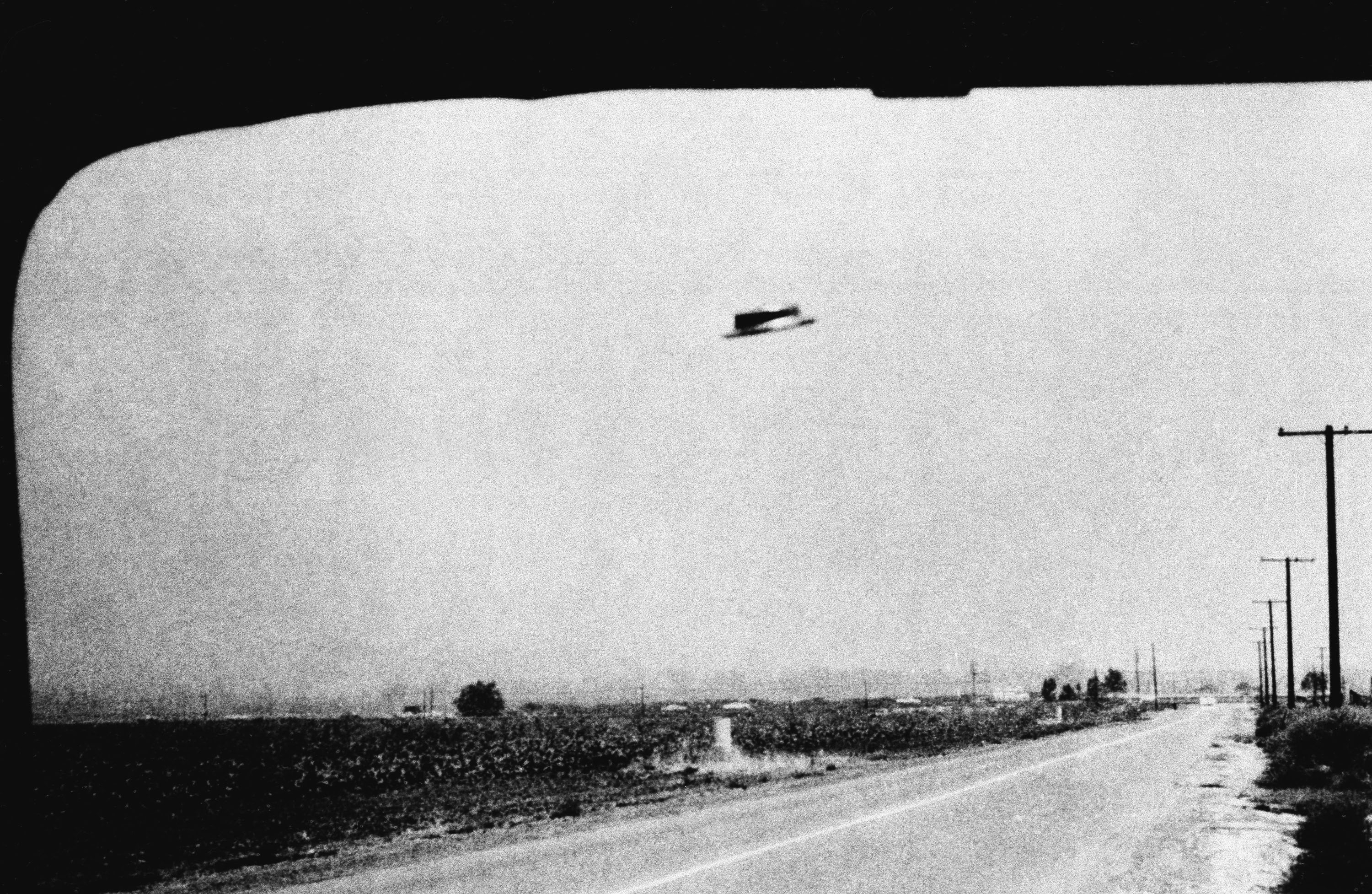
The systematic release of Unidentified Aerial Phenomena (UAP) data by the Department of Defense (DoD) is not a gesture of transparency, but a mandatory response to legislative triggers embedded within the Intelligence Authorization Act. When the executive branch issued the directive to declassify specific naval encounters, it initiated a structural shift in how the Pentagon manages anomalous sensor data. This process is governed by a strict hierarchy of classification protocols, where the primary constraint is not the subject matter itself, but the preservation of "sources and methods." To understand the current wave of disclosures, one must analyze the tension between the legal requirement to inform the public and the operational necessity of protecting the United States' most advanced signals intelligence (SIGINT) and electronic warfare (EW) capabilities.
The Triad of Declassification Constraints
The release of "UFO files" involves a friction-heavy filtering process. The Pentagon operates under a three-tiered logic when determining what can be moved from a Special Access Program (SAP) environment to the public domain.
- Sensor Fidelity and Platform Sensitivity: Most high-quality UAP data is captured by the AN/APG-79 AESA radar or the AN/ASQ-228 ATFLIR pods. Releasing raw video or data streams risks revealing the precise resolution, frequency-hopping capabilities, and track-handling limits of these systems. If a foreign adversary knows the exact distance at which a U.S. sensor can achieve a "lock" on an anomalous object, they can reverse-engineer the detection threshold of American carrier strike groups.
- Geospatial Intelligence (GEOINT) Masking: Files are rarely released in their original context. The DoD must scrub telemetry data that reveals the location of "dark" collection sites or the orbits of classified reconnaissance satellites. This creates the "grainy" or low-resolution quality often criticized by the public; the degradation is a deliberate security feature, not a technical failure.
- The Chain of Custody Audit: Before a file reaches the public, it undergoes a Multi-Agency Oversight Review. This ensures that the data does not inadvertently expose gaps in North American Aerospace Defense Command (NORAD) coverage. If an object is shown maneuvering in a specific corridor without immediate intercept, it signals a vulnerability in the domestic air defense architecture.
Operational Definitions and the Signal-to-Noise Ratio
The shift from "UFO" to "UAP" in official nomenclature was a strategic move to sanitize the field of inquiry and apply a more rigorous analytical framework. The Pentagon’s Unidentified Aerial Phenomena Task Force (UAPTF) and its successor, the All-domain Anomaly Resolution Office (AARO), utilize a classification matrix to sort sightings into five distinct bins:
- Airborne Clutter: Weather balloons, plastic bags, and birds.
- Natural Atmospheric Phenomena: Ice crystals, moisture, and thermal fluctuations that create false positives on infrared sensors.
- Government or Industry Developmental Programs: Classified U.S. technology that the reporting pilot is simply not cleared to know about.
- Foreign Adversary Systems: Technologies deployed by peer or near-peer competitors (e.g., China or Russia) designed to spoof U.S. sensors or conduct electronic intelligence (ELINT).
- The "Other" Category: Observations that demonstrate "trans-medium" travel or high-velocity flight without visible control surfaces or thermal signatures.
The current declassification efforts are focused almost exclusively on the first four categories to isolate the fifth. By flooding the public record with explained or partially explained cases, the DoD creates a baseline of "known" anomalies, making the truly "unknown" outliers easier to study within a closed, classified loop.
The Cost Function of Transparency
Maintaining a permanent UAP reporting office creates a significant bureaucratic and financial load. The Pentagon’s willingness to comply with these orders is driven by a risk-mitigation strategy. The "cost" of secrecy has begun to outweigh the "cost" of disclosure for three specific reasons.
First, the proliferation of civilian-grade sensor technology (high-resolution cameras, private satellite arrays, and crowdsourced flight tracking) has made it impossible for the military to maintain a total monopoly on anomalous sightings. When a civilian pilot captures a high-definition video of a UAP, the DoD’s silence is interpreted as a lack of control over sovereign airspace. Declassification allows the Pentagon to seize the narrative and frame these incidents as a matter of "domain awareness" rather than "unexplained mysteries."
Second, there is the issue of "Safety of Flight." The primary driver for the 2021 and 2022 reports was the increasing frequency of near-midair collisions between Navy pilots and unidentified objects in restricted training ranges. Secrecy prevented pilots from sharing data, which led to a fragmented understanding of the threat. By declassifying the reporting process, the DoD encouraged a higher volume of data ingestion, which is necessary for any statistical analysis of flight safety risks.
Third, the declassification serves as a signaling mechanism to adversaries. By showing that the U.S. is tracking "unidentified" objects with extreme precision, the Pentagon subtly demonstrates the sensitivity of its sensor grid without revealing how that grid actually works.
The Logical Gap in Public Expectation
The public often expects "disclosure" to mean a confirmation of extraterrestrial life. However, from a defense intelligence perspective, the most "dangerous" UAP files are those that point toward breakthroughs in terrestrial physics. If a file suggests that a foreign power has mastered propellant-less propulsion or signature management that renders them invisible to Aegis combat systems, that file remains the highest level of national secret.
The documents being released are those that have been "exhausted" of their intelligence value. If a video is ten years old and the technology depicted has not been replicated in a hostile engagement, the risk of releasing it is low. Therefore, the "Pentagon files" will always lag behind the current state of classified observation. The public is seeing the history of the problem, not its current frontier.
Analyzing the 180-Day Reporting Loop
The legislative mandate requires the Director of National Intelligence (DNI) to provide regular updates. This creates a recurring pressure on the Pentagon to produce "new" content. To satisfy this without compromising security, the DoD has adopted a "Staggered Release Model":
- Incident Normalization: Acknowledging that sightings are frequent and varied.
- Data Categorization: Grouping sightings by sensor type (Radar, FLIR, Visual).
- Anonymization: Stripping out the specific tail numbers and squadron names to prevent "pattern of life" analysis by foreign intelligence services.
This model ensures that the public feels "informed" while the core technological data remains siloed within the intelligence community. The bottleneck is not the information itself, but the labor-intensive process of redaction. Every frame of video must be checked against a library of classified signatures to ensure that no "leakage" of U.S. capability occurs.
Strategic Direction for Data Consumption
For those attempting to analyze these releases, the focus must shift from "what is the object?" to "what was the sensor's reaction?" The value of the Pentagon files lies in the metadata.
- Analyze the range-to-target data when visible in FLIR footage to calculate the object's estimated size and velocity.
- Correlate release dates with defense budget cycles; transparency often spikes when the DoD is seeking funding for upgraded sensor suites or "Next-Generation Air Dominance" programs.
- Monitor the vocabulary shifts in the reports. The transition from "objects" to "entities" or "phenomena" signals a change in the underlying hypothesis being tested by AARO.
The move toward declassification is a permanent shift in the intelligence posture of the United States. It recognizes that in an era of ubiquitous sensing, the only way to protect a secret is to hide it in plain sight, surrounded by a vast volume of declassified but non-sensitive data. The objective is not to solve the mystery for the public, but to manage the public's perception of the military's competence in an increasingly crowded and transparent sky.
Investors and technology analysts should view these releases as a roadmap for the next generation of aerospace sensors and SIGINT processing. The Pentagon is effectively crowdsourcing the "low-level" analysis of anomalies so its internal specialists can focus on the small percentage of cases that represent a genuine shift in the global balance of power.