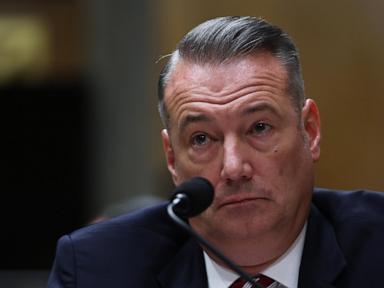
The announced resignation of Todd Lyons, the acting director of U.S. Immigration and Customs Enforcement (ICE), effective at the end of May 2026, is not merely a personnel change; it is a critical failure point in the organizational continuity of the Department of Homeland Security (DHS). Since 2017, ICE has lacked a Senate-confirmed director, creating a cycle of "acting" leadership that undermines long-term strategic planning and institutional memory. This leadership churn happens at a moment when the agency faces unprecedented operational pressures, ranging from historic migration surges to the complex logistics of interior enforcement.
The Friction of Perpetual Acting Leadership
The reliance on acting officials creates a specific set of structural handicaps that prevent ICE from functioning as a high-performance government entity. In a federal bureaucracy, the distinction between a confirmed appointee and an acting director is the difference between a mandate and a placeholder.
- The Authority Deficit: Acting directors often lack the political capital to initiate major policy overhauls or negotiate long-term budget increases with Congress. They are viewed as temporary stewards, which diminishes their leverage in inter-agency disputes within DHS.
- Strategic Myopia: Because an acting director's tenure is inherently uncertain, the incentive structure shifts toward short-term crisis management rather than the implementation of multi-year modernization efforts.
- Morale and Retention: Constant leadership turnover trickles down. When the executive suite is a revolving door, mid-level management experiences "wait-and-see" paralysis, where significant decisions are delayed in anticipation of the next leader's preferences.
Todd Lyons, who previously served as the Field Office Director in Boston, stepped into the acting role with a background in Enforcement and Removal Operations (ERO). While his tenure provided a degree of operational familiarity, his departure re-exposes the agency to a void that cannot be filled by technical expertise alone.
The Operational Mechanics of ICE Functional Divisions
To understand the impact of this resignation, one must map the internal dependencies within the agency. ICE is split into two primary operational silos that often compete for resources and legal priority.
Enforcement and Removal Operations (ERO)
ERO is the mechanism for the identification, arrest, and removal of noncitizens who lack legal status or have committed crimes. This division operates on a logistics-heavy model, involving detention bed management, transport aircraft (ICE Air Operations), and coordination with foreign governments for repatriation. A leadership change at the top disrupts the delicate negotiation of "recalcitrant country" status—nations that refuse to accept their own citizens—which requires high-level diplomatic and administrative pressure.
Homeland Security Investigations (HSI)
HSI focuses on transnational crime, including human trafficking, narcotics smuggling, and intellectual property theft. While HSI often seeks to distance itself from the political volatility of immigration enforcement, the director of ICE still oversees its budget and legal authorities. The departure of an acting director who understands the nuance between these two missions is a risk to HSI’s ability to maintain its investigative autonomy while remaining integrated into the DHS broader mission.
The Three Pillars of Institutional Risk
The resignation of Lyons introduces three specific vectors of risk that the Department of Homeland Security must mitigate during the transition period throughout June and the summer of 2026.
1. The Policy Implementation Lag
When leadership changes, there is a predictable dip in policy execution. New directives regarding enforcement priorities—such as the focus on "national security threats" versus "public safety threats"—require consistent interpretation from the top. Without a confirmed director, these definitions remain fluid and subject to legal challenges from both the left and the right, leading to inconsistent enforcement across different field offices.
2. The Budgetary Inflection Point
ICE operates with a multibillion-dollar budget that is under constant scrutiny. The agency's cost function is driven largely by "detention-day" costs and the price of fuel and logistics for removals. An acting director has less influence during the appropriations process. If the agency cannot clearly articulate its resource needs to the House and Senate Appropriations Committees, it faces the risk of "continuing resolutions" that freeze funding at outdated levels, failing to account for inflation or shifting migration patterns.
3. The Accountability Loophole
The lack of a Senate-confirmed head means that there is a degree of insulated accountability. A confirmed director can be called to testify with the weight of the administration’s formal backing. An acting director, while still subject to oversight, exists in a liminal space where their decisions can be characterized as temporary measures, making it harder for the public or Congress to hold the agency to a specific, long-term performance standard.
The Mechanics of the Successor Selection
The DHS has not yet named a successor to Lyons. Historically, the administration chooses from the senior executive service (SES) pool within ICE or DHS. The selection of the next acting head will signal the administration's priority for the remainder of the year.
- Internal ERO Promotion: Signals a focus on maintaining the status quo of removals and border processing.
- Internal HSI Promotion: Suggests a pivot toward transnational crime and an attempt to de-politicize the agency's public image.
- External DHS Appointment: Indicates a lack of trust in current ICE leadership and a desire for more direct control from the Secretary of Homeland Security.
This selection process is hampered by the Vacancies Act, which limits who can serve in an acting capacity and for how long. The legal constraints often force the administration to move leaders in a "musical chairs" fashion, where an official from the Transportation Security Administration (TSA) or Customs and Border Protection (CBP) might be brought in to oversee ICE, despite having limited experience with its specific legal statutes (Title 8 vs. Title 19).
Data-Driven Constraints on the Next Director
The incoming leader will inherit a set of non-negotiable data points that define the agency’s current ceiling of efficacy.
- Detention Capacity: The number of available beds is capped by congressional mandate. When this capacity is reached, the "release and track" mechanism (Alternatives to Detention, or ATD) becomes the only operational choice, regardless of the director’s personal enforcement philosophy.
- Backlog Volume: The immigration court backlog now exceeds three million cases. ICE attorneys, who represent the government in these cases, are overwhelmed. This creates a bottleneck where the speed of arrest (ERO function) far outpaces the speed of adjudication.
- Labor Scarcity: Border-related agencies are facing a recruitment crisis. The "burnout rate" for field agents is at a historic high, exacerbated by the political polarization of the agency’s mission.
The Strategic Path Forward
The resignation of Todd Lyons is the latest symptom of a systemic refusal to treat ICE as a permanent, professional law enforcement agency requiring stable leadership. To stabilize the organization, the DHS must move beyond the "acting" model.
The immediate tactical move for the administration is not just the appointment of another interim director, but the submission of a nominee who can withstand the confirmation process—or, failing that, the empowerment of a "Principal Deputy Director" with a defined two-year mandate to insulate the agency from the upcoming election cycle's volatility.
The agency’s current trajectory suggests that without a confirmed leader, ICE will continue to function as a reactive organization rather than a proactive one. This results in "management by crisis," where resources are diverted to the most recent headline-grabbing issue rather than being allocated based on a comprehensive risk assessment of national security and public safety.
The DHS must immediately establish a transition team that bridges the gap between Lyons’ departure and the installation of the next acting head. This team’s primary objective should be the standardization of enforcement protocols across all 24 Field Office Directorates to ensure that the change in leadership does not result in a fragmented application of federal law. If the administration fails to provide this continuity, the resulting "operational drift" will lead to increased litigation, higher costs per removal, and a further erosion of the agency’s internal discipline.