The global energy market operates on a razor-thin margin of error defined by the geographic concentration of production and the physical limitations of transit infrastructure. Any escalation of kinetic conflict involving Iran does not merely threaten a temporary spike in crude prices; it risks the permanent removal of millions of barrels of daily production capacity through the destruction of non-redundant extraction and processing architecture. Conventional market analysis often focuses on the Strait of Hormuz as a transient bottleneck. A more rigorous assessment reveals that the real threat lies in the Symmetry of Vulnerability—the fact that both Iranian and Gulf Cooperation Council (GCC) energy assets are fixed, high-value targets located within range of short-range ballistic missiles and unmanned aerial vehicles.
The Triad of Kinetic Risk to Oil Supply
To quantify the potential loss of crude oil, one must move beyond "disruption" as a monolith and categorize the risk into three distinct physical mechanisms.
1. Primary Extraction Paralysis
The initial phase of a regional conflict involves the immediate cessation of drilling and extraction activities. While the crude remains in the ground, the ability to lift it is lost when power grids and water injection systems—necessary for maintaining reservoir pressure—are targeted. In aging fields, particularly those in Iran’s Khuzestan province, a prolonged shutdown without proper preservation can lead to reservoir damage. If pressure drops below a critical threshold or if water encroachment occurs, a portion of the "lost" barrels becomes technically unrecoverable or economically unfeasible to extract in the future.
2. Processing and Separation Bottlenecks
Crude oil is not a finished product when it leaves the wellhead; it must pass through Gas-Oil Separation Plants (GOSPs) and stabilization centers. These facilities are the "central nervous system" of the oil field.
- Complexity as a Weakness: Modern GOSPs utilize specialized, long-lead-time components such as high-pressure pumps and custom-engineered control systems.
- The Lead-Time Factor: In a high-intensity conflict, the destruction of a single stabilization plant can sideline 500,000 to 1,000,000 barrels per day (bpd) for 12 to 24 months, as replacements must be custom-manufactured and shipped globally.
3. Terminal and Export Atrophy
The final pillar is the physical loading infrastructure. The Kharg Island terminal handles over 90% of Iran’s exports. Conversely, the Ras Tanura and Al-Ju'aymah terminals in Saudi Arabia represent the world’s most significant export nodes. The structural fragility here is absolute. A sustained campaign against loading jetties and subsea pipelines creates a hard ceiling on global supply that no amount of strategic reserve releasing can offset.
The Cost Function of Regional Interdependence
The narrative of "Iranian oil vs. Global supply" ignores the mathematical reality of regional interdependence. Iran’s military doctrine, often termed "Active Deterrence," relies on the premise that if its ability to export oil is zeroed out by sanctions or strikes, it will ensure the export capacity of its neighbors is equally compromised.
This creates a Correlated Risk Model. The probability of a total cessation of Iranian exports (approximately 1.5 to 2 million bpd) is almost perfectly correlated with a 20% to 50% reduction in the flow of the 20 million bpd typically transiting the Strait of Hormuz.
The Elasticity of Permanent Loss
Permanent loss is defined by the intersection of physical destruction and capital flight. When an oil province becomes a kinetic war zone, the "Risk Premium" transitions from a trading desk abstraction to a capital expenditure reality.
- Insurance Redlining: War-risk insurance premiums for tankers can rise to the point of being prohibitive, effectively "losing" those barrels to the market because they cannot be legally or safely moved.
- Technical Abandonment: International oil companies (IOCs) and service providers withdraw personnel. Without specialized maintenance, high-sulfur and high-saline environments accelerate the corrosion of idle infrastructure, turning a temporary halt into a multi-year decommissioning event.
Logistics of the Strait of Hormuz and Redundancy Failures
Markets frequently overestimate the efficacy of bypass pipelines. While the East-West Pipeline in Saudi Arabia and the Abu Dhabi Crude Oil Pipeline (ADCOP) exist, their combined spare capacity is less than 40% of the total volume that moves through the Strait of Hormuz.
Capacity Constraints of Alternative Routes
- The East-West Pipeline (Petroline): Designed to move crude from the Eastern Province to the Red Sea. Its effective surge capacity is roughly 2 million bpd beyond its current utilization, far short of the 12 million bpd typically produced by the Kingdom.
- ADCOP (UAE): Capable of moving 1.5 million bpd to Fujairah. While functional, it remains a secondary artery.
- The Iraq-Turkey Pipeline: Frequently offline due to geopolitical disputes between Baghdad and Erbil, making it an unreliable hedge against Persian Gulf instability.
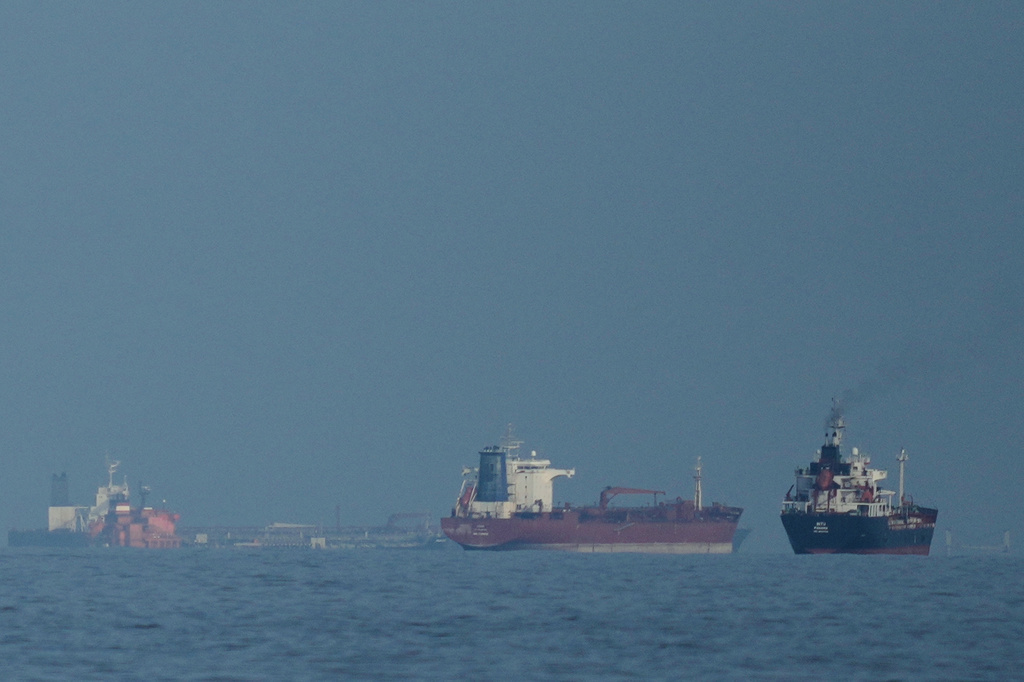
The mathematical conclusion is that approximately 12 to 15 million bpd has no viable alternative route. If the Strait is rendered impassable through mining or anti-ship missile deployment, these barrels are removed from the global balance sheet until the waterway is cleared—a process naval experts suggest could take weeks or months of sustained minesweeping operations under fire.
Calculating the Global Macroeconomic Shockwave
The removal of 5 million to 10 million bpd—a conservative estimate for a medium-scale conflict—would trigger an immediate shift from "Inventory Drawdown" to "Physical Scarcity."
The Inventory Buffer Illusion
Global commercial inventories and Strategic Petroleum Reserves (SPR) are designed to mitigate short-term disruptions, not structural deficits. At a deficit of 5 million bpd, the United States' SPR would be exhausted in less than 80 days if used as the primary offset. Furthermore, the SPR’s maximum drawdown rate is limited by physical pump capacity; it cannot be "emptied" instantly to meet a massive supply gap.
Refined Product Desynchronization
Not all crude is created equal. The loss of Iranian and regional heavy-sour grades would create a specific crisis for complex refineries in Asia and the Mediterranean designed for that specific feedstock. Substituting with light-sweet crude from the U.S. or West Africa is not a 1:1 transition. This leads to Refinery Inefficiency, where the total yield of diesel and jet fuel drops even if the total volume of "input" crude remains stable.
Strategic Realignment and Institutional Response
In the event of a sustained kinetic conflict, the transition from a market-based pricing system to a state-controlled allocation system becomes a high-probability outcome.
The Shift to "Energy Sovereignty"
Governments would likely move to secure physical supplies through bilateral state-to-state agreements, bypassing the spot market. This fragments the global price, creating a "two-tier" economy:
- Tier 1: Nations with domestic production or secure pipelines (e.g., USA, Canada, Russia-China axis).
- Tier 2: Import-dependent nations (e.g., Japan, South Korea, much of the EU) that must compete for a shrinking pool of sea-borne crude.
Decoupling from Just-in-Time Logistics
The permanent loss of barrels forces a re-evaluation of the "Just-in-Time" delivery model that has dominated the last three decades. The strategic recommendation for industrial consumers is a shift toward "Just-in-Case" infrastructure: significant investment in domestic storage, localized refining, and a forced acceleration of the transition to non-hydrocarbon energy baseloads to reduce the geopolitical beta of their national economies.
The permanent loss of crude oil in an Iran-centric conflict is not merely a question of "if the pumps stop," but "if the pumps can ever be restarted." The degradation of the Persian Gulf's energy architecture through modern precision warfare would represent the single largest destruction of productive capital in the history of the industrial age. Strategic planning must now account for a world where the 20 million bpd flowing through Hormuz is no longer a guaranteed constant, but a conditional variable subject to the total destruction of its underlying physical assets.
Investors and policymakers must prioritize the hardening of domestic midstream infrastructure and the diversification of supply chains away from single-point-of-failure geographies. The "Risk Premium" is currently undervalued because it assumes a return to the status quo; true strategy assumes the status quo is a relic.