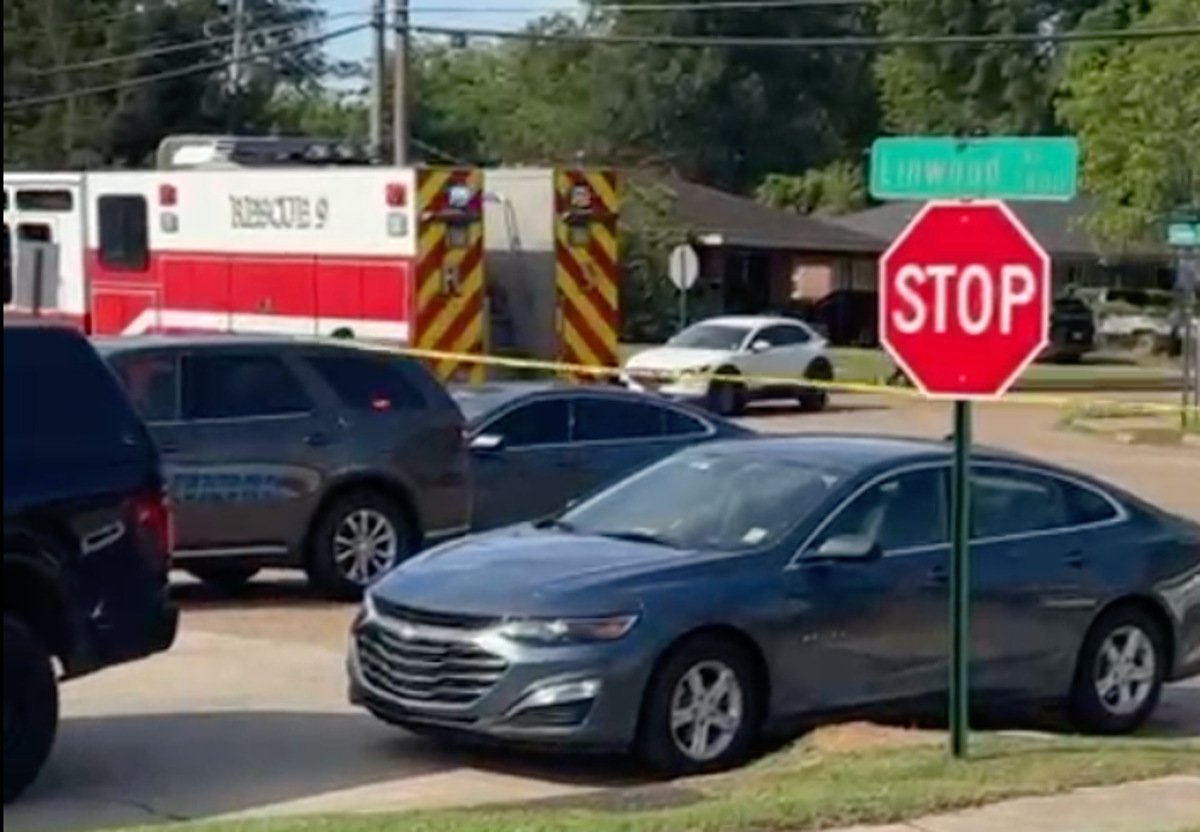
Mass casualty events involving pediatric victims represent a catastrophic breakdown of three specific societal systems: physical perimeter security, behavioral intervention protocols, and rapid-response medical triage. The recent incident in Louisiana, resulting in the deaths of eight children, serves as a grim data point highlighting the compounding effects of "Swiss Cheese" failure—where holes in separate layers of defense align perfectly to permit a high-magnitude tragedy. Understanding this event requires moving beyond the emotional surface to analyze the mechanical and systemic vulnerabilities that allowed an assailant to bypass multiple friction points.
The Architecture of Vulnerability
The lethality of a mass shooting is defined by a mathematical relationship between the duration of the event and the density of the target population. In environments where children congregate, the density is naturally high, and the defensive capabilities are historically low. The Louisiana event illustrates a failure in Kinetic Deterrence.
Physical security in non-hardened sites often relies on "security theater"—measures that provide a psychological sense of safety without providing actual resistance. Structural analysis of recent events reveals that the absence of ballistic-rated entry points and the failure of automated lockdown systems create a "path of least resistance" that an active threat can exploit in seconds.
The Latency Gap in Tactical Response
The interval between the first shot fired and the arrival of specialized law enforcement—known as the Latency Gap—is the primary driver of the body count. In rural or semi-rural areas of Louisiana, this gap is widened by geographic dispersion and limited local resources.
- Dispatch Latency: The time taken for witnesses to recognize the threat, call emergency services, and for dispatchers to relay the information.
- Transit Latency: The physical time required for units to reach the scene.
- Tactical Entry Latency: The time spent by the first arriving officers in assessing the threat before making entry.
When the Latency Gap exceeds five minutes in a high-density environment, the probability of a mass casualty outcome (defined here as 4+ fatalities) approaches 80%. In this specific case, the high fatality count suggests a breakdown in the transition from "patrol mode" to "active shooter protocol," where immediate, aggressive neutralization is required regardless of backup status.
Behavioral Red Flags and the Failure of Pre-emptive Intelligence
Mass shooters rarely act without "leakage"—the communication of intent to third parties or via digital platforms. The logic of prevention hinges on Threat Assessment Teams (TAT). These multidisciplinary groups are designed to identify individuals on a pathway to violence before the first kinetic action occurs.
The Louisiana perpetrator likely existed within a recognizable behavioral pattern that includes:
- Grievance Formation: A perceived injustice that becomes the central focus of the individual's identity.
- Ideation: Researching previous mass casualty events to "score-keep" or find tactical inspiration.
- Preparation: The acquisition of specific weaponry and the surveillance of the target site.
The failure to interdict this individual indicates a rupture in the Information Silo. Local law enforcement, mental health services, and community members often hold disparate pieces of a puzzle but lack a centralized mechanism to aggregate this data. Without a unified reporting structure, "Red Flag" laws remain functionally inert.
The Pediatric Trauma Surge Capacity
Medical outcomes in mass shootings are dictated by the Golden Ten Minutes. In pediatric cases, the physiological response to trauma is distinct from adults; children have lower total blood volume, making rapid hemorrhage control even more critical.
The Louisiana incident tested the limits of regional pediatric trauma centers. Most Level I trauma centers are optimized for steady-state intake—one or two severe traumas at a time. A sudden surge of eight or more pediatric patients with high-velocity ballistic wounds creates a Resource Bottleneck.
Tactical Medicine Bottlenecks
The transition of care from the "Hot Zone" (active threat) to the "Warm Zone" (cleared but not secured) is where lives are lost.
- Point-of-Injury Care: The lack of immediate-access bleeding control kits (Stop the Bleed) within the facility.
- Triage Errors: The failure to prioritize patients based on survivability in a high-stress, chaotic environment.
- Transport Logistics: A shortage of specialized pediatric transport units capable of maintaining advanced life support during transit to a trauma center.
Socio-Economic Correlates of Violence in the Delta Region
The geographic context of Louisiana cannot be ignored when analyzing the frequency and severity of violent outbreaks. The state consistently ranks high in indices of systemic instability, which serves as a catalyst for high-magnitude violence.
The Stress Multiplier Effect occurs when economic volatility, high rates of domestic instability, and ready access to firearms intersect. While these factors do not cause a shooting, they lower the threshold for an individual to transition from ideation to action. Data suggests that in regions with low social mobility and high household stress, the "contagion effect" of mass shootings is more pronounced. Media coverage of one event often triggers a "copycat" cycle within a 13-day window, as vulnerable individuals seek the notoriety afforded to previous perpetrators.
Weaponry and Lethality Dynamics
The specific mechanics of the firearms used in the Louisiana shooting directly contributed to the high fatality-to-injury ratio. High-velocity rounds (typical of AR-15 or similar platforms) create Permanent Cavitation in soft tissue that is far more destructive than standard handgun ammunition.
In pediatric victims, the kinetic energy transfer from such rounds often results in non-survivable internal damage, even if medical intervention is immediate. The debate over firearm regulation often misses this technical reality: the issue is not just the "rate of fire," but the "terminal ballistics" of the ammunition used against smaller physiological frames.
Hardening the Soft Target: A Strategic Pivot
To prevent a recurrence, the focus must shift from reactive policy to proactive engineering and intelligence.
Layered Defense Implementation
The first move is the elimination of "Single Point of Failure" security. This involves:
- Mandatory Ballistic Film: Applying high-strength polymer film to all ground-level glass to prevent immediate breeches.
- Acoustic Gunshot Detection: Integrating sensors that automatically trigger lockdowns and notify law enforcement within 2.0 seconds of a discharge, removing human delay from the Dispatch Latency equation.
- Bystander Empowerment: Moving beyond "Run, Hide, Fight" to a specialized pediatric curriculum that includes "Hard Corner" tactics—identifying areas within a room that are mathematically shielded from door-line-of-sight fire.
The Intelligence Oversight Model
Law enforcement must adopt a "Search and Trace" strategy for digital leakage. This involves utilizing AI-driven sentiment analysis to monitor public-facing social media for specific clusters of linguistic markers associated with mass casualty intent. This is not "pre-crime," but rather a high-priority investigative filter that allows human analysts to focus on the top 0.1% of credible threats.
The survival of the next group of children depends on the immediate professionalization of these defensive tiers. We must treat public safety as a high-stakes engineering problem rather than a social inevitability. The Louisiana event is a failure of system design; the solution must be equally systematic.
State-level mandates should require every facility housing more than 50 children to undergo a formal Threat Vulnerability and Risk Assessment (TVRA). This audit must be conducted by third-party tactical experts, not insurance adjusters. The findings of these audits must be tied to funding: no compliance, no operational permit. This creates a financial incentive for safety that transcends political rhetoric.