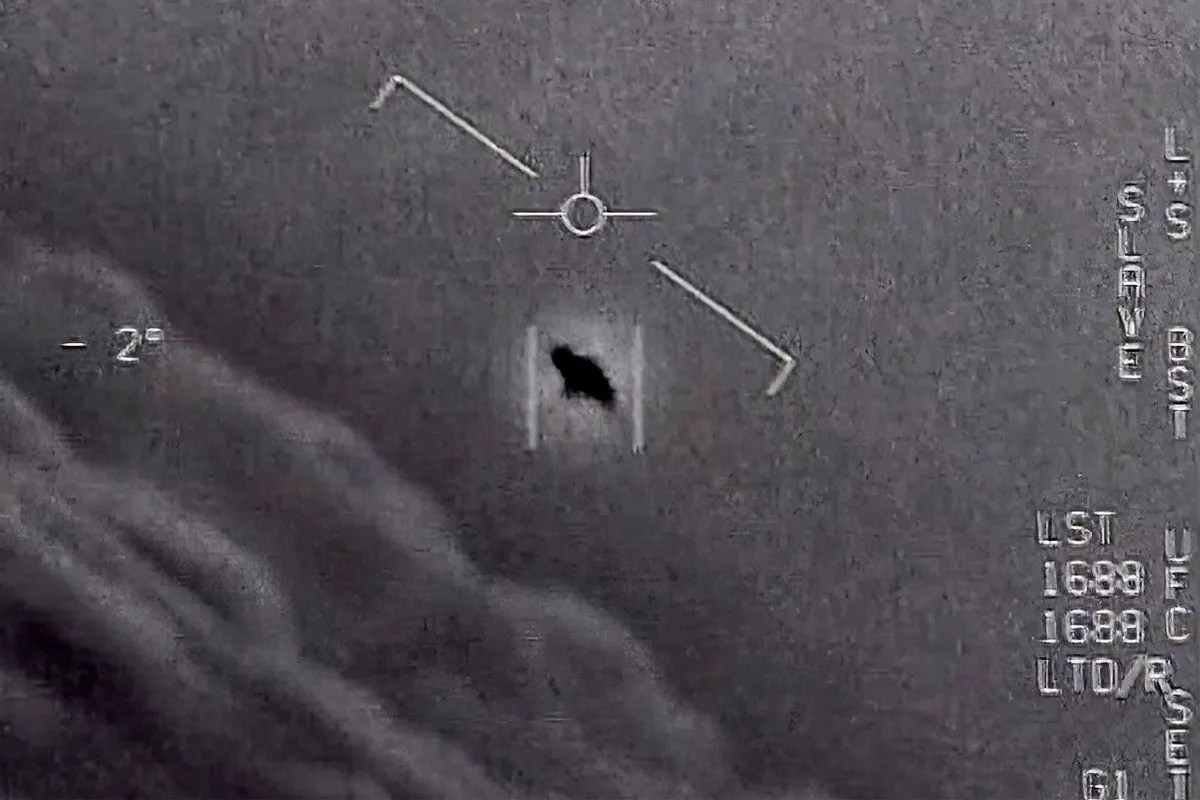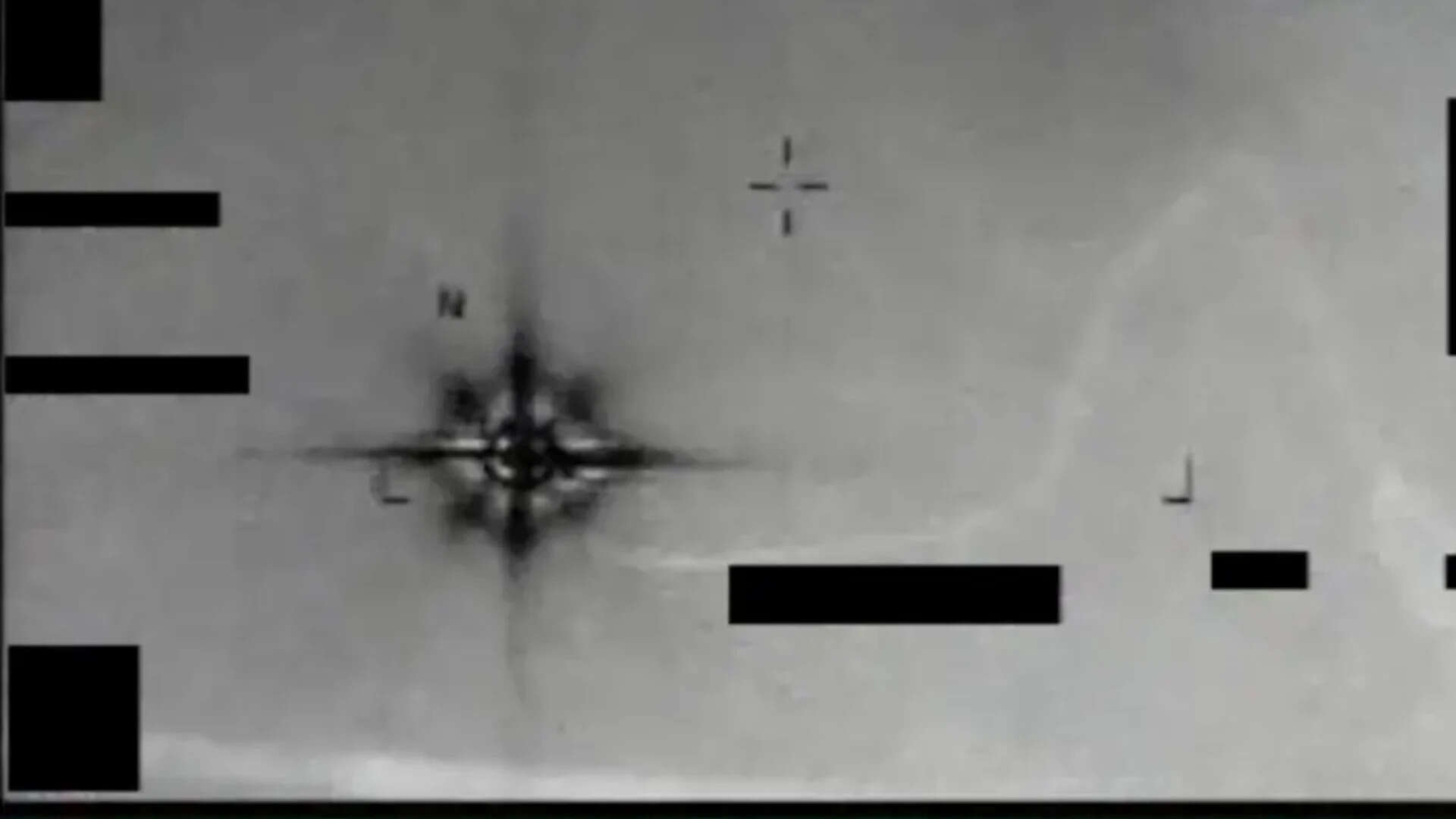
The release of the 2013 "Eight-Pointed Star" Unidentified Anomalous Phenomena (UAP) footage by the Department of Defense signals a shift from passive data collection to active public disclosure, creating a new baseline for multisensor verification. This specific event, involving an object exhibiting non-traditional geometric symmetry, requires a breakdown of three distinct analytical domains: the physics of the observed geometry, the sensor-fusion environment of 2013 versus contemporary standards, and the geopolitical utility of transparency mandates. Understanding this footage requires moving past the sensationalism of "mystery" and focusing on the mechanical constraints of the recording platform and the aerodynamic anomalies presented by the craft.
The Geometric Constraint and Sensor Artifacting
The "eight-pointed star" descriptor provides a specific morphological anchor for the analysis. In thermal and infrared imaging, sharp-edged geometries often indicate one of two things: a physical structure that defies standard lift-generating airframes or an optical artifact known as "diffraction spikes." Recently making waves recently: Ukraine Machines of War and the End of Human Infantry.
- Aperture Interference: When a high-intensity heat source or light source enters a camera system, the physical shape of the iris or the internal support structures (like the spider vanes in a reflecting telescope) can manifest as a star-shaped bloom. However, the 2013 footage maintains the star-like structure even as the object maneuvers relative to the sensor's optical axis, suggesting the shape is inherent to the object rather than a product of lens flare.
- Symmetry as a Signature: Standard aerospace engineering prioritizes lift through asymmetric airfoil profiles. A perfectly symmetrical eight-pointed star implies a propulsion system that does not rely on pressure differentials across a wing surface. This moves the object into the category of "trans-medium" or "omnidirectional" propulsion, where thrust is generated through means that do not require a specific forward-facing orientation.
The object's stability in the 2013 clip suggests a low-drag coefficient despite the lack of visible control surfaces. If this were a conventional drone or balloon, atmospheric turbulence would cause erratic yaw and pitch. The footage shows a steady flight path, indicating either high mass-to-volume ratio or an active stabilization system that compensates for wind shear in real-time.
The 2013 Technical Baseline
To quantify the validity of this footage, it is necessary to examine the hardware that captured it. The 2013 timeframe places this event in an era where the Navy’s Raytheon AN/ASQ-228 Advanced Targeting Forward-Looking Infrared (ATFLIR) pods were the primary sensor suite. More details on this are explored by ZDNet.
The ATFLIR system operates in the mid-wave infrared (MWIR) spectrum. A key takeaway from the "Star" footage is the lack of a thermal exhaust plume. In conventional combustion-based flight, the heat signature of the engine is significantly hotter than the fuselage. In this instance, the object displays a uniform thermal distribution. The absence of a "hot spot" eliminates standard turbojets or internal combustion engines as the power source.
The data bottleneck in 2013 was not the resolution of the sensors, but the classification of the processing algorithms. Much of the metadata associated with these captures—specifically range-to-target, closing velocity, and radar cross-section (RCS)—remains redacted. Without the telemetry data, the "star" shape could be a small object close to the lens or a large object at a distance. The Pentagon’s decision to release the video without the accompanying telemetry creates a curated transparency that satisfies public curiosity while protecting the exact sensitivity ranges of the radar systems used to track it.
The Three Pillars of the Transparency Mandate
The executive push for "maximum transparency" regarding UAP data serves a strategic function beyond simple public interest. It is a recalibration of the intelligence community's relationship with anomalous data.
The Stigma Reduction Mechanism
For decades, the primary barrier to high-quality UAP data was "reporting bias." Pilots and sensor operators avoided documenting encounters to protect their flight status. By declassifying legacy clips like the 2013 star, the administration creates a "safe harbor" for current personnel. This increases the volume of raw data entering the All-domain Anomaly Resolution Office (AARO), which is essential for training machine learning models to distinguish between foreign adversarial drones and truly unknown phenomena.
Signal vs. Noise Calibration
The modern battlespace is saturated with "clutter"—weather balloons, consumer drones, and radar spoofs. Declassifying old footage allows the civilian scientific community to assist in "noise" identification. If the 2013 star is eventually identified as a specific type of sensor malfunction or a classified domestic prototype, that finding becomes a filter that can be applied to thousands of hours of current surveillance footage, effectively cleaning the data stream for national security analysts.
Deterrence Through Disclosure
The public release of these videos serves as a subtle signal to foreign adversaries. By showing what the US military cannot identify, they are simultaneously demonstrating the extreme sensitivity of their persistent surveillance. The message is twofold: "We see everything in our airspace," and "We are confident enough in our technical superiority to admit when we find an anomaly."
Aerodynamic Paradoxes and Energy Requirements
If we assume the eight-pointed star is a solid craft and not an optical illusion, the energy requirements for its flight are significant. Standard flight relies on the Bernoulli principle. The star shape, with its multiple protruding points, creates massive amounts of parasitic drag.
To maintain a constant velocity and altitude in this configuration, the craft would require a thrust-to-weight ratio that exceeds any known civilian or open-source military technology. The "points" of the star would act as air brakes unless the craft is surrounded by a vacuum envelope or a plasma sheath that reduces skin friction.
The second limitation is the power-to-weight ratio. Traditional batteries or liquid fuels lack the energy density to keep a non-aerodynamic shape aloft for extended periods. This points toward two possibilities:
- The object is a highly sophisticated "lighter-than-air" (LTA) craft using internal rigid structures to maintain a star shape, though this does not explain the high-speed maneuvers reported by some observers.
- The object utilizes a non-kinetic propulsion system, such as high-frequency gravitational wave generation or electromagnetic vacuum engineering.
While the latter remains in the realm of theoretical physics, the "Five Observables" frequently cited by UAP researchers—sudden acceleration, hypersonic speeds without a sonic boom, and low observability—are all present in the broader context of the 2013 incident reports.
Political Leverage and Information Silos
The timing of this release, coupled with explicit executive support for transparency, suggests a shift in the "ownership" of the UAP narrative. Historically, this data was held within SAPs (Special Access Programs), creating silos that even Congressional oversight committees could not penetrate.
The current strategy involves "stripping the sensor." By releasing the video while keeping the underlying radar data classified, the Pentagon satisfies the legislative demand for disclosure without compromising the "exquisite" capabilities of the platforms that caught it. This allows the executive branch to claim the mantle of transparency while maintaining the operational security of the platforms involved.
The bottleneck for future analysis is the "classification of the context." A video of a star-shaped object is a data point; a video of a star-shaped object performing a 90-degree turn at Mach 4 while being tracked by three independent Aegis radar systems is a paradigm shift. The 2013 clip represents the former, but its release paves the tactical way for the latter.
Operational Conclusion for Strategic Analysis
To move from "mystery" to "intelligence," the focus must shift to the corroborating data. The 2013 Eight-Pointed Star video should be treated as a baseline for sensor calibration rather than a definitive proof of non-human intelligence. The strategic play for the upcoming year is the integration of AARO’s "Gremlin" sensor kits—portable, high-resolution suites designed to be deployed to "hotspots."
The goal is to achieve "Gold Standard" data:
- Simultaneous EO/IR (Electro-Optical/Infrared) video.
- Multi-static radar returns.
- SIGINT (Signals Intelligence) captures of any radio frequency emissions.
The 2013 footage is a catalyst for this infrastructure. It serves as the justification for increased funding into "Unidentified" detection systems, which will ultimately be used to identify 99% of targets as mundane or adversarial, leaving a statistically significant residue of true anomalies for deep-tier physics analysis. The most effective move for observers is to discount the visual "star" shape as primary evidence and instead demand the release of the associated "Range-to-Target" metadata, which is the only way to calculate the object's true size and speed.