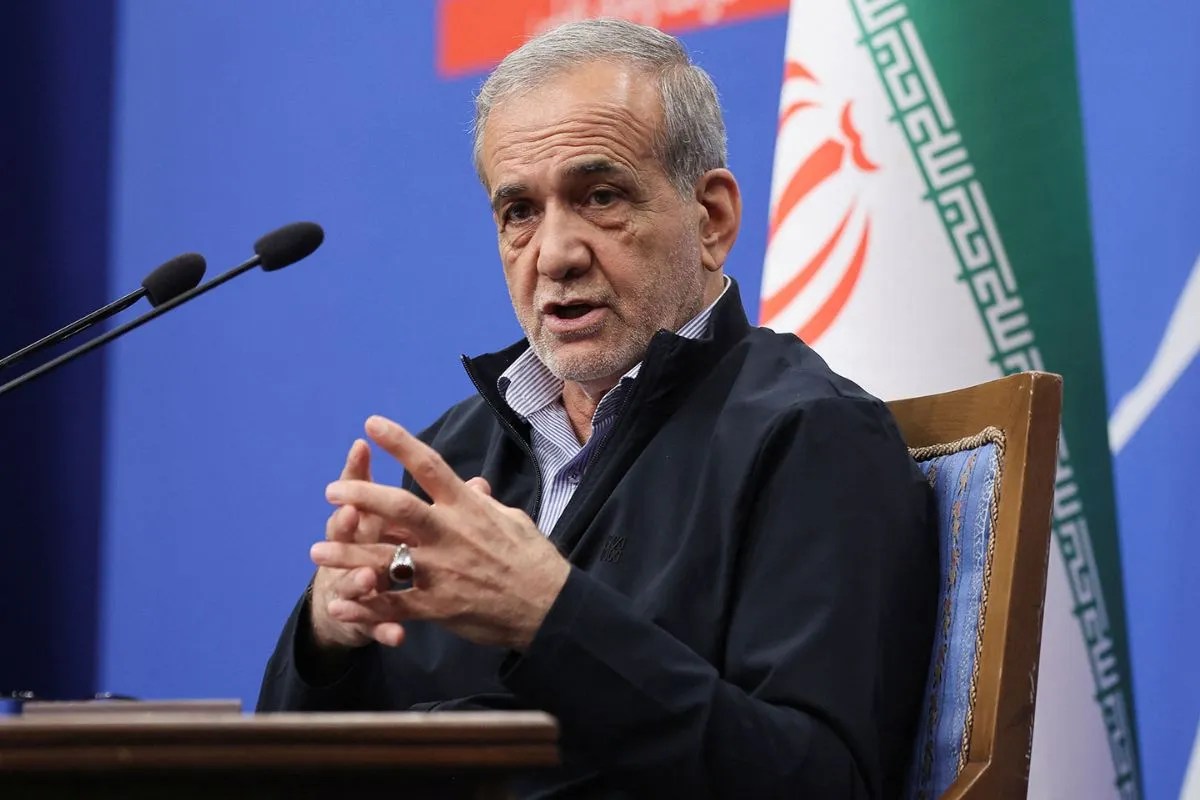
The Strait of Hormuz is not a tap that Tehran can simply turn off without drowning itself in the process. While Iranian President Masoud Pezeshkian recently issued a defiant retort to Donald Trump’s rhetoric—asserting that the waterway remains open to all except those who threaten Iran—the reality of maritime brinkmanship is far more calculated than a war of words suggests. The threat to "choke" the world’s most vital oil artery is a recurring theme in Persian Gulf geopolitics, yet the logistics of such a move reveal a desperate paradox. If Iran closes the strait, it severs its own economic jugular.
At the heart of the current tension is a collision between Trump’s "maximum pressure" heritage and a new Iranian administration trying to project strength while begging for sanctions relief. Pezeshkian’s statement was a direct response to the specter of a return to aggressive US isolationism. But the Strait of Hormuz, a 21-mile-wide passage through which roughly 20% of the world’s liquid petroleum flows, is governed by more than just local bravado. It is governed by the United Nations Convention on the Law of the Sea (UNCLOS) and the presence of the US Fifth Fleet.
The Geography of a Global Chokepoint
To understand the weight of Pezeshkian’s words, one must look at the seafloor, not just the headlines. The shipping lanes within the Strait are remarkably narrow. Only two miles wide in each direction, separated by a two-mile buffer zone. These lanes fall within the territorial waters of Iran and Oman. Under international law, specifically the concept of transit passage, foreign vessels have the right to move through these straits for the purpose of continuous and expeditious navigation.
Iran has long argued that it only recognizes "innocent passage," a more restrictive standard that allows a coastal state to suspend traffic if it deems the transit prejudicial to its peace or security. This legal distinction is the primary weapon in Tehran’s arsenal. By claiming the right to vet who passes, they transform a commercial highway into a political toll booth.
However, the "all except those" caveat in Pezeshkian’s speech is a specific shot at the United States and its allies. It suggests a selective blockade. In practice, a selective blockade is an act of war. It requires the Iranian Revolutionary Guard Corps (IRGC) to physically intercept, board, or strike specific tankers while letting others pass. This is not a sustainable military strategy; it is a recipe for immediate, devastating escalation.
The Oil Paradox and Iranian Self-Harm
The reason Iran has never actually closed the strait is simple. They need it more than anyone else. Unlike Saudi Arabia or the United Arab Emirates, which have invested billions in pipelines to bypass the Hormuz chokepoint and reach markets via the Red Sea or the Gulf of Oman, Iran is geographically trapped.
Nearly all of Iran’s oil exports—the lifeblood of an economy already ravaged by inflation—must pass through these same waters. If the IRGC sinks a tanker or litters the channel with naval mines, they aren't just blocking American interests. They are blocking the Chinese tankers that buy the vast majority of "shadow fleet" Iranian crude.
Beijing is Tehran's only significant customer. Any move that spikes global oil prices or disrupts Chinese energy security would alienate Iran's only powerful protector on the UN Security Council. Pezeshkian knows this. The Iranian clerical establishment knows this. The rhetoric is designed for a domestic audience and as a deterrent against Israeli or American strikes on Iranian nuclear infrastructure. It is a bluff backed by the high cost of the "what if."
The Ghost of the Tanker War
History provides the best manual for how this conflict actually plays out. During the 1980s "Tanker War" between Iran and Iraq, both sides targeted commercial shipping to cripple each other’s economies. Iran used mines and speedboats to harass vessels. The result was not a closed strait, but the largest US naval convoy operation since World War II: Operation Earnest Will.
If Trump or any Western leader moves to further restrict Iranian sales, the IRGC typically reverts to "gray zone" tactics. This includes:
- Limpet mine attacks that damage hulls without sinking ships.
- Drone strikes on Israeli-linked commercial vessels.
- Seizures of tankers under the guise of "environmental violations" or legal disputes.
These actions are calibrated to stay below the threshold of a full-scale kinetic war while keeping the "risk premium" on global oil prices high. Every time a commander in Tehran mentions the Strait, the price per barrel flinches. That flinch is the intended outcome, not the actual halting of trade.
The Trump Factor and the Return of Maximum Pressure
Donald Trump’s approach to the region has always been transactional and aggressive. His previous administration’s withdrawal from the JCPOA (the nuclear deal) and the subsequent assassination of Qasem Soleimani set a precedent of unpredictability. Pezeshkian’s recent "tough talk" is an attempt to establish a baseline of defiance before any potential negotiations or renewed sanctions.
The Iranian President is walking a razor's edge. Domestically, he was elected to fix the economy, which requires the lifting of sanctions. Internationally, he must appease the hardliners within the IRGC who view any concession to the "Great Satan" as a betrayal. By framing the Strait of Hormuz as "open to all but our enemies," he attempts to sound like a statesman of global trade while maintaining the threat of a regional spoiler.
But the world has changed since the last "maximum pressure" era. The rise of the BRICS bloc and the deepening military cooperation between Iran and Russia (notably in the drone and missile sectors) gives Tehran more perceived leverage. They believe they are no longer as isolated as they were in 2018. This confidence is dangerous. It leads to miscalculations where a "warning shot" in the Gulf hits a target it shouldn't, triggering a response that Pezeshkian cannot control.
The Technical Reality of Naval Blockades
Closing the Strait of Hormuz is technically difficult. The US Navy, along with a coalition of international partners, maintains a constant presence in the region. To "close" the strait, Iran would have to maintain continuous fire control over the entire 21-mile stretch.
The Iranian Toolkit
- Anti-Ship Cruise Missiles (ASCMs): Iran has a vast array of Chinese-derived and domestically produced missiles, such as the Noor and Ghadir, tucked into hardened silos along its rugged coastline.
- Swarm Boats: Hundreds of fast, armed speedboats designed to overwhelm a destroyer’s defenses through sheer numbers.
- Smart Mines: Sophisticated bottom-dwelling mines that are difficult to detect and can be programmed to ignore certain acoustic signatures.
The Allied Response
- Mine Countermeasures: Dedicated vessels and underwater drones designed to clear lanes within hours or days.
- Aegis Combat System: US destroyers capable of tracking and neutralizing dozens of incoming threats simultaneously.
- Aerial Supremacy: The ability to strike the missile launch sites on the Iranian coast within minutes of a launch.
The sheer lopsidedness of a conventional naval confrontation means Iran's only path is asymmetric. They don't need to win a battle; they only need to make the insurance rates for tankers so high that shipping companies refuse to enter the Gulf.
The Economic Shadow Play
The real battle isn't happening on the water; it's happening in the ledger books. When Pezeshkian speaks of the Strait, he is talking to the insurance markets in London and the oil traders in New York. If the "war risk" premium rises, the cost of global energy rises. This acts as a hidden tax on the Western consumer, which Tehran hopes will create political pressure on Western governments to back down.
However, this strategy is losing its potency. Global oil markets are increasingly resilient, with increased production from the US, Brazil, and Guyana. The world's reliance on the Persian Gulf, while still massive, is not the absolute hostage situation it was in 1973.
The Iranian leadership is playing a hand with fewer high cards than they admit. Their rhetoric about the Strait of Hormuz is a shield, not a sword. It is used to hide the fact that their domestic infrastructure is crumbling and their population is restless. A war in the Strait would be the end of the Islamic Republic as it currently exists. They are aware that the moment they actually execute the threat they’ve brandished for forty years, they lose the only leverage they have left.
Watch the movement of the "shadow fleet"—the aging tankers used by Iran to bypass sanctions. As long as those ships are moving through the Strait of Hormuz, the waterway is safe. The moment Iran stops its own ships from sailing, that is the only time the world should truly worry.
Track the daily "vessel density" metrics in the Bandar Abbas region to see if the rhetoric matches the reality of Iranian commercial activity.