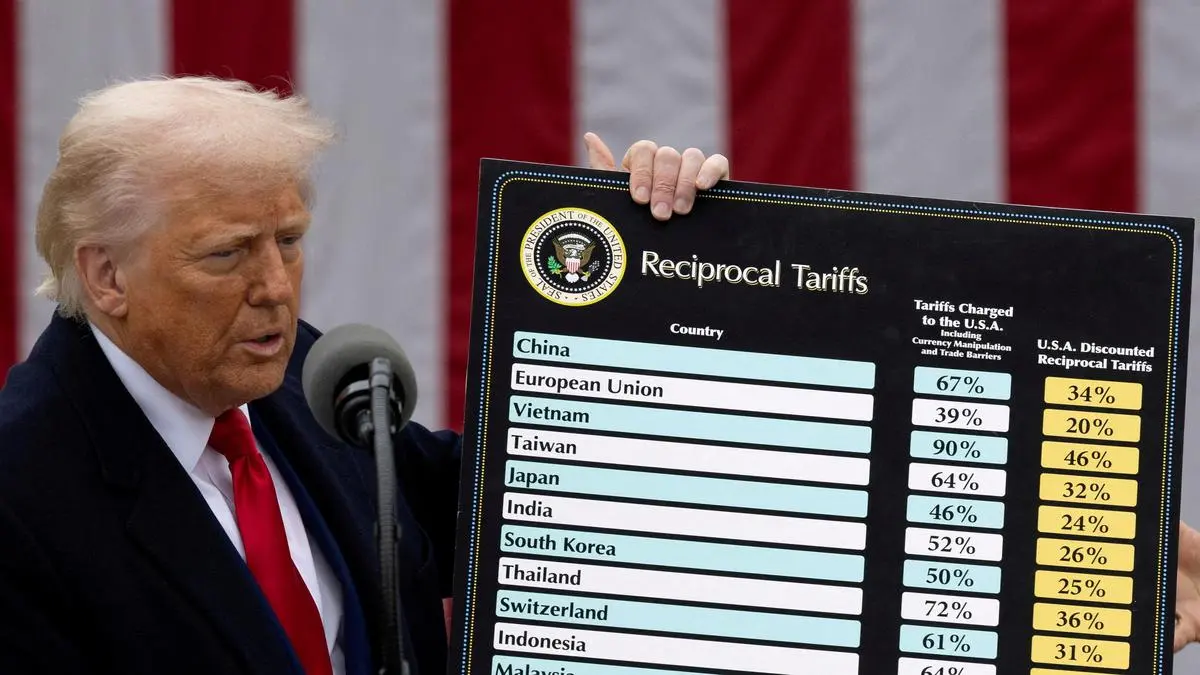
Donald Trump just dropped a 100% tariff on patented drugs, and the industry is reacting with the same tired script it’s used for decades. The CEOs are crying about "innovation," the economists are warning about "supply chain shocks," and the administration is taking a victory lap for "national security."
They are all wrong. They are arguing over the price of the curtains while the house is on fire.
This isn’t about trade deficits or "Liberation Day" anniversaries. This is a desperate attempt to use 18th-century tax tools to fix a 21st-century intellectual property crisis. If you think a 100% tax on a $50,000-a-year biologic is going to bring manufacturing back to Ohio, you don't understand how drugs are actually made.
Here is the cold, hard reality: The tariff isn't a wall. It’s a toll booth that the American patient will ultimately pay for.
The Manufacturing Myth
The administration’s logic is simple: tax the imports, and Big Pharma will build factories in the U.S. to avoid the hit. I’ve seen companies blow millions trying to onshore production of complex active pharmaceutical ingredients (APIs) only to realize that the "cost" isn't the labor—it's the regulatory sludge and the specialized talent.
A high-end patented drug isn't a sneaker. You don't just flip a switch and move a bioreactor from Switzerland to South Carolina. We are talking about decade-long lead times for facility validation. A 120-day "negotiation window" is a joke. It’s a shakedown, not a strategy.
By the time these "onshored" facilities are operational, the patents for the drugs they were built to produce will be nearing expiration. The "20% tariff that jumps to 100% in four years" is a stay of execution, not an incentive.
The MFN Trap
The "Most Favored Nation" (MFN) pricing deals mentioned in the executive order are the real poison pill. The government is essentially saying: "Sell it to us as cheap as you sell it to the French, or we’ll tax you into oblivion."
Sounds great for the taxpayer, right? Wrong.
When you force MFN pricing, you don't lower prices globally. You force companies to raise prices in those other countries to protect their U.S. margins. Or, more likely, they simply delay launching new, life-saving therapies in the U.S. altogether. If the profit margin vanishes because of a 100% tariff or a forced price cap, the drug simply doesn't cross the border.
The "lazy consensus" is that we are "negotiating" for better deals. We aren't. We are creating a pharmaceutical desert where only the most "cooperative" (read: politically connected) firms get to play.
Why the Patent is the Real Problem
Everyone is focused on the tariff, but the tariff only exists because of the patent.
In any other industry, if a company charges 1,000% markups, a competitor swoops in and undercuts them. In pharma, the government grants a 20-year legal monopoly. Then, when the monopoly behaves exactly like a monopoly, the government acts shocked and tries to tax the monopoly's imports.
It’s circular logic.
If we actually wanted to lower drug prices and secure the supply chain, we wouldn't be messing with customs duties. We would be looking at Compulsory Licensing.
Imagine a scenario where, if a drug company refuses to manufacture a critical medicine on U.S. soil or refuses to meet a fair price, the government simply breaks the patent. They allow any qualified U.S. manufacturer to produce the generic version immediately in exchange for a small royalty.
That is how you move the needle. You don't tax the drug; you kill the monopoly that makes the tax necessary.
The National Security Smokescreen
The administration calls this a "national security" issue. They aren't entirely wrong—relying on foreign adversaries for 80% of our generic drug ingredients is a massive liability.
But look at the fine print: Generics are exempt.
The very drugs we actually need for a stable society—antibiotics, blood pressure meds, basic saline—aren't even covered by this "bold" new 100% tariff. The order targets "patented" drugs. These are the high-margin, branded specialty drugs that drive stock prices, not the ones that keep a field hospital running during a pandemic.
This isn't a security plan. It’s a revenue grab disguised as a "Buy American" rally.
The Hidden Cost to You
If you are an American patient on a patented medication that isn't made here, you are about to become a pawn.
- The Pass-Through: Pharma companies will not eat a 100% cost increase. They will pass it to the insurers, who will pass it to your premiums.
- The Shortage: If a company decides the 100% tariff makes the U.S. market unprofitable, they will "de-prioritize" shipments. You’ll be told your life-saving medication is "backordered."
- The Innovation Tax: Why would a biotech firm in Cambridge or Zurich spend $2 billion developing a drug if they know a future executive order could overnight double their cost of entry to the world’s largest market?
The downside to my contrarian approach? Breaking patents is a nuclear option. It would cause a diplomatic firestorm and potentially slow down the development of the next generation of "miracle" drugs. But at least it’s an honest fight. Using tariffs to "fix" healthcare is like trying to perform heart surgery with a sledgehammer.
Stop asking how high the tariff should be. Start asking why we are protecting the monopolies that make the tariff "necessary" in the first place.