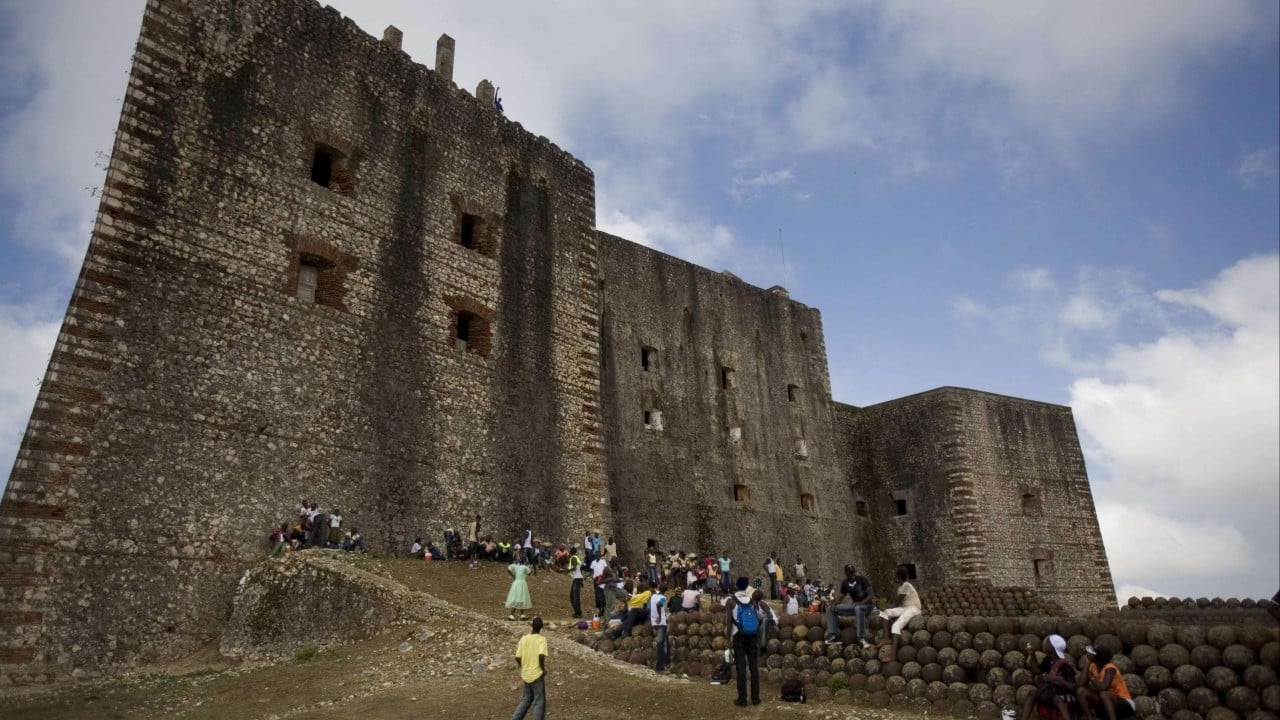
The heat in northern Haiti does not merely sit on your skin. It heavy-presses against your chest, thick with the scent of roasted coffee, charcoal smoke, and the ancient, metallic tang of limestone baking in the sun. On a clear day, the Citadelle Laferrière looks like a stone ship moored to the peak of Bonnet à l'Évêque, a defiant monument to a freedom won through blood and fire. It is a place where history is supposed to feel alive. It was never supposed to feel like a tomb.
When the gates of a historical fort become a funnel for thousands of desperate, excited, or panicked bodies, the physics of a crowd takes over. Individual agency vanishes. You are no longer a person; you are a fluid. You move not because you want to, but because the mass behind you has shifted its weight.
Thirty lives ended against those stones this week.
The Anatomy of a Bottleneck
Consider a young woman—let’s call her Djenane. She isn't real, but the shoes she would have worn, the dusty sandals scuffing against the steep incline, are seen everywhere in the Nord department. Djenane climbs the path toward the fort not for a dry history lesson, but for the soul of her country. Cultural festivals at these sites are the heartbeat of the community. They are rare moments of collective breath in a nation that has spent years suffocating under political instability and economic hardship.
She is surrounded. To her left, a father hoists a child onto his shoulders to keep them out of the sun. To her right, a group of teenagers laugh, their voices echoing off the ramparts. The air is vibrant.
Then, the vibration changes.
It starts as a ripple. Perhaps a gate didn't open on time. Perhaps someone tripped on a slick, uneven stone. In a confined space like a fortress designed for defense—designed, quite literally, to keep people out and trap them in killing zones—the architecture of the past becomes the predator of the present.
When Culture Minister Jean-Emmanuel Casséus confirmed the death toll, the numbers felt clinical. Thirty. It is a round, hollow figure. But the reality of a stampede is anything but clinical. It is the sound of ribcages straining. It is the terrifying realization that the ground is no longer beneath your feet because the crowd has lifted you.
Why the Stones Remained Silent
Haiti’s historical sites are not just tourist attractions; they are the physical manifestations of the first successful slave revolt in the world. They are symbols of power. However, symbols require maintenance. They require crowd control, modern infrastructure, and a government capable of managing the sheer volume of a population hungry for a moment of celebration.
The tragedy at the fort reveals a jagged truth about the "invisible stakes" of cultural preservation. When we talk about heritage, we often talk about the stones. We talk about the mortar. We rarely talk about the safety of the people who come to worship at those altars.
The Citadelle and its surrounding fortifications were built to withstand cannon fire and prolonged sieges. They were built by King Henri Christophe to prove that Black men could build wonders that rivaled the pyramids. But these structures were never designed for the 21st-century crush of a festival. They have narrow stairwells, sharp turns, and steep drops.
When the surge happened, the very features that made the fort impregnable in 1820 made it a deathtrap in 2026.
The Weight of a Confirmed Loss
There is a specific kind of silence that follows a disaster of this scale. It’s the silence of a minister standing before a microphone, knowing that "logistical failures" is a phrase too small to cover thirty coffins.
In the aftermath, the questions began to swirl like the dust on the road to Milot.
- Was there a limit on ticket sales?
- Were there enough security personnel to break the flow of the crowd?
- Did the lack of emergency exits turn a celebration into a cage?
The Ministry of Culture pointed to the overwhelming number of attendees, a surge that caught the local authorities off guard. But being caught off guard in a country with Haiti's history of crowded public gatherings is an admission of a deeper, systemic fragility.
If you have ever stood in a dense crowd, you know the moment the "vibe" shifts. It’s a subtle cooling of the blood. The air grows hot and thin. You look for an exit and realize there are only walls. For those thirty souls, the walls of their ancestors—the walls that were meant to protect the Haitian people—became the immovable force that took their breath away.
Beyond the Body Count
The loss of thirty people is a catastrophe for the families involved, but the wound goes deeper into the national psyche. Haiti is a land that has endured earthquakes that leveled cities and hurricanes that washed away harvests. To lose citizens to a celebration, to a moment of pride at a historical monument, feels like a betrayal by history itself.
We often think of safety as a series of boring checklists. Fire marshals, occupancy limits, barrier placements. They seem like "clutter" to the "real" event. But as the screams faded and the sun set over the mountains of the North, the absolute necessity of those invisible structures became hauntingly clear.
The Citadelle Laferrière still stands. Its stones are weathered but unbroken. It remains a testament to human will and the desire for a world where no one is owned by another. Yet, the tragedy serves as a grim reminder that even the most glorious monuments are nothing without the living breath of the people they were built to honor.
The sandals left behind on the path, the torn pieces of bright festival clothing, and the lingering echoes of the panicked climb remain. The mountain is quiet now. The Minister has finished his statement. The international news cycle will move on to the next headline, the next tragedy, the next number.
But for those who live in the shadow of the Bonnet à l'Évêque, the fort has changed. It is no longer just a ship of stone sailing through the clouds. It is a place that holds its breath, waiting for a day when its gates bring only joy, and the weight of the past no longer crushes the promise of the living.
A monument that kills its visitors is no longer a monument; it is a warning written in limestone.