The Middle East is currently a powder keg waiting for a spark, and the assassination of Iran’s Supreme Leader, Ali Khamenei, has been exactly that. The world watches, breath held, as the regional fallout escalates. For UK Prime Minister Keir Starmer, the situation has rapidly evolved from a geopolitical observation into a direct challenge to his authority and his strategic judgment. He is caught in a vice, pressured by Washington to lean into the offensive while navigating intense domestic skepticism about entanglement in another protracted conflict.
Starmer’s recent decision to allow the US to use British military bases for "specific and limited defensive purposes" isn’t just a tactical shift. It’s an admission that the initial, cautious stance the UK took has been rendered obsolete by the speed and brutality of Iran’s retaliatory strikes. You have to look at the math. Roughly 300,000 British citizens are in the region. When those individuals are suddenly caught in the crossfire of a regional barrage—with airports shuttered, hotels hit, and military bases like Akrotiri in Cyprus facing drone strikes—the definition of "defensive" changes overnight.
The shift from caution to necessity
Many observers criticized Starmer for being too slow to commit. The Conservative opposition and some voices in the US have accused him of sitting on the fence. But let’s be honest about the context. The ghosts of the 2003 Iraq war are still very much alive in British politics. Whenever a UK Prime Minister contemplates military action in the Middle East, the first question from the public and Parliament isn’t about strategic advantage. It’s about legality, exit strategies, and whether we are being dragged into a "regime change from the skies" project that lacks a viable endgame.
Starmer has been adamant that his government does not believe in that specific brand of intervention. He stood in the House of Commons and drew a firm line: he would not risk British lives or participate in offensive strikes without a proper, lawful basis and a thought-through plan. When he initially refused to let the US utilize British bases, he was adhering to a policy of strategic patience. He wanted to see how the conflict unfolded.
The problem is that Iran decided to force his hand.
By launching missiles and drones that directly threatened British personnel—notably in Bahrain, where 300 British troops were dangerously close to impact—Tehran effectively removed the luxury of sitting on the sidelines. Starmer’s pivot on Sunday wasn’t a retreat from his principles. It was a recognition that his primary duty is the safety of the citizens who elected him. You cannot claim to protect national interests while ignoring a direct, kinetic threat to your own people and your closest regional partners.
The friction with the White House
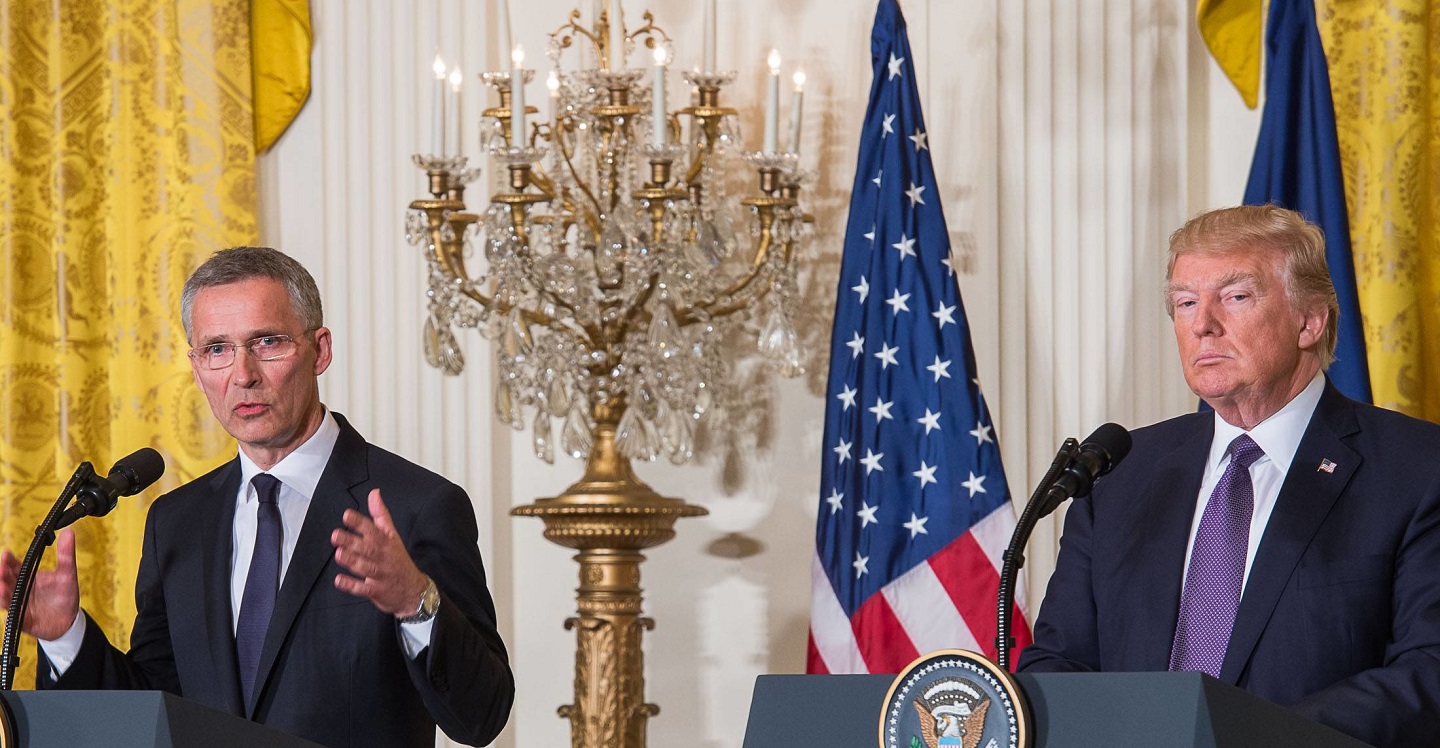
The relationship between Downing Street and the White House is strained. US President Donald Trump has made no secret of his disappointment with Starmer’s initial hesitation. There is a palpable tension between the American strategy—which appears focused on a decisive, overwhelming campaign to neutralize Iranian military capacity—and the British preference for a limited, controlled response.
This isn't just a difference of opinion. It’s a fundamental clash in worldview. Washington views this as an opportunity to break the Iranian regime’s back. London, burned by decades of involvement in the region that ended in messy stalemates, is terrified of the vacuum. If you destroy a regime from the air without a plan for what follows, you don't get peace. You get chaos. Starmer’s insistence on a "viable, thought-through plan" is a polite way of telling the US that they are playing with fire.
The tension creates a difficult reality for the UK. If Starmer supports the US fully, he risks domestic backlash and further entrenchment in a conflict that could last years. If he continues to push back, he risks fraying the special relationship at a time when intelligence sharing and defense coordination are at their most essential. He is playing a game of chicken with his biggest ally, and he is doing it while the ground in the Middle East is shifting under his feet.
The reality of regional escalation
What we are seeing is not just a skirmish. It is a systematic effort by Iran to push back against the US-Israeli operation. The strikes on the French naval base in Abu Dhabi and the attempted attacks on British facilities are a clear signal. Iran is telling the world that it will not suffer this loss of leadership silently. They are utilizing the full spectrum of their regional proxies to create a "circle of isolation" around their enemies.
This brings us to a hard truth about the effectiveness of air power. The US and Israel have demonstrated that they can strike the "heart" of Tehran. They have decapitated the top of the Iranian theocratic leadership. But destroying a supreme leader does not destroy a security apparatus. The IRGC and the broader military-intelligence complex in Iran are designed to survive exactly these kinds of shocks.
Starmer’s current strategy focuses on destroying the missiles and the launchers at the source. This is a cold, clinical approach. It is meant to degrade Iran’s ability to conduct these strikes without committing British forces to a full-scale invasion. It is the military equivalent of putting a tourniquet on a wound. It stops the bleeding, but it does not heal the underlying infection.
What the public misses
People often look at these headlines and assume that military decisions are purely political posturing. The reality is much grittier. When the Ministry of Defence assesses that British personnel are within a few hundred yards of a missile impact, the "politics" disappear immediately. The decision to allow the use of bases becomes a standard operating procedure for self-defense.
There is also a massive logistical challenge that is barely getting mentioned in the media. With 300,000 citizens in the region, the UK is currently facing one of the most complex non-combatant evacuation operations in its history. Every strike that hits a hotel, an airport, or a transport hub makes that extraction harder. Starmer is not just fighting a war; he is fighting a logistics crisis. If you look at the messaging from his cabinet, you see this tension between the need to defend interests and the desperate need to clear the region of British nationals.
The opposition is trying to frame this as weakness or as an "u-turn." That’s standard political theater. The truth is that the goalposts moved. A Prime Minister who doesn’t adjust their strategy when their citizens are being targeted is not showing strength; they are showing negligence.
The strategic necessity of restraint
Why does Starmer keep emphasizing that the UK is not joining the offensive strikes? Why make such a public point of it?
Because he is trying to preserve the diplomatic channel for later. If the UK becomes a full-fledged belligerent in the US-led war, it loses any remaining influence it might have as an honest broker. It becomes part of the target list for every militia across the Middle East. By limiting the UK's participation to defensive support, he is trying to maintain a distinction between "protecting ourselves" and "seeking to destroy the regime."
It is a narrow path. It is a path that makes few people happy. The Americans want more commitment. The anti-war contingent in his own party wants less. But it is the only path that aligns with a traditional British approach of acting as a stabilizer rather than an agitator.
If you look at the history of the region, the most successful interventions were those where the objectives were specific and limited. The failures were the ones where the goals were open-ended and ambitious. Starmer seems to have learned that lesson, even if the price of that knowledge is constant friction with his closest ally.
The days ahead
We are likely to see a period of intense, chaotic retaliation. Iran will continue to use its remaining assets to lash out, hoping to force the West to overreact and drag themselves into a quagmire. The US will continue to push for the total neutralization of the Iranian military infrastructure.
The UK’s role in this will be defined by how well Starmer can hold that line between defense and offense. He has to demonstrate that the UK is a reliable partner, that it can and will protect its own, and that it is not a pushover. At the same time, he must avoid the trap of becoming a junior partner in a war that has no clear end in sight.
You should expect the rhetoric from Downing Street to remain sharp. The government is signaling that it is done with the "reckless" behavior of the Iranian state. They are finished with the diplomatic niceties that characterized the era of the late Ayatollah. From here on out, the focus is on tactical defense and the immediate removal of British nationals from the blast zone.
The assassination of Khamenei hasn’t just changed Iran; it has changed the British government’s appetite for foreign engagement. Starmer is now a Prime Minister who has been forced to trade his caution for the messy reality of regional conflict. How he manages the next few weeks—how he handles the pressure from Trump, the safety of his citizens, and the inevitable fallout of the strikes—will likely define the remainder of his term.
The era of "wait and see" is over. We are now in the era of "defend or be hit." The Prime Minister has made his choice, and now he has to live with the consequences of that shift. Keep an eye on the diplomatic cables coming out of the Gulf and the statements from the Ministry of Defence over the coming days. The rhetoric is hardening, and the options are narrowing. This is not a drill, and it is not going away anytime soon.
For now, the focus is simple: get British people out, defend the bases, and hope that the current wave of destruction doesn't become the new normal for the next decade. If you are watching for a sudden end to this, you are looking for the wrong thing. This is a long game, and the board has just been completely reset.